

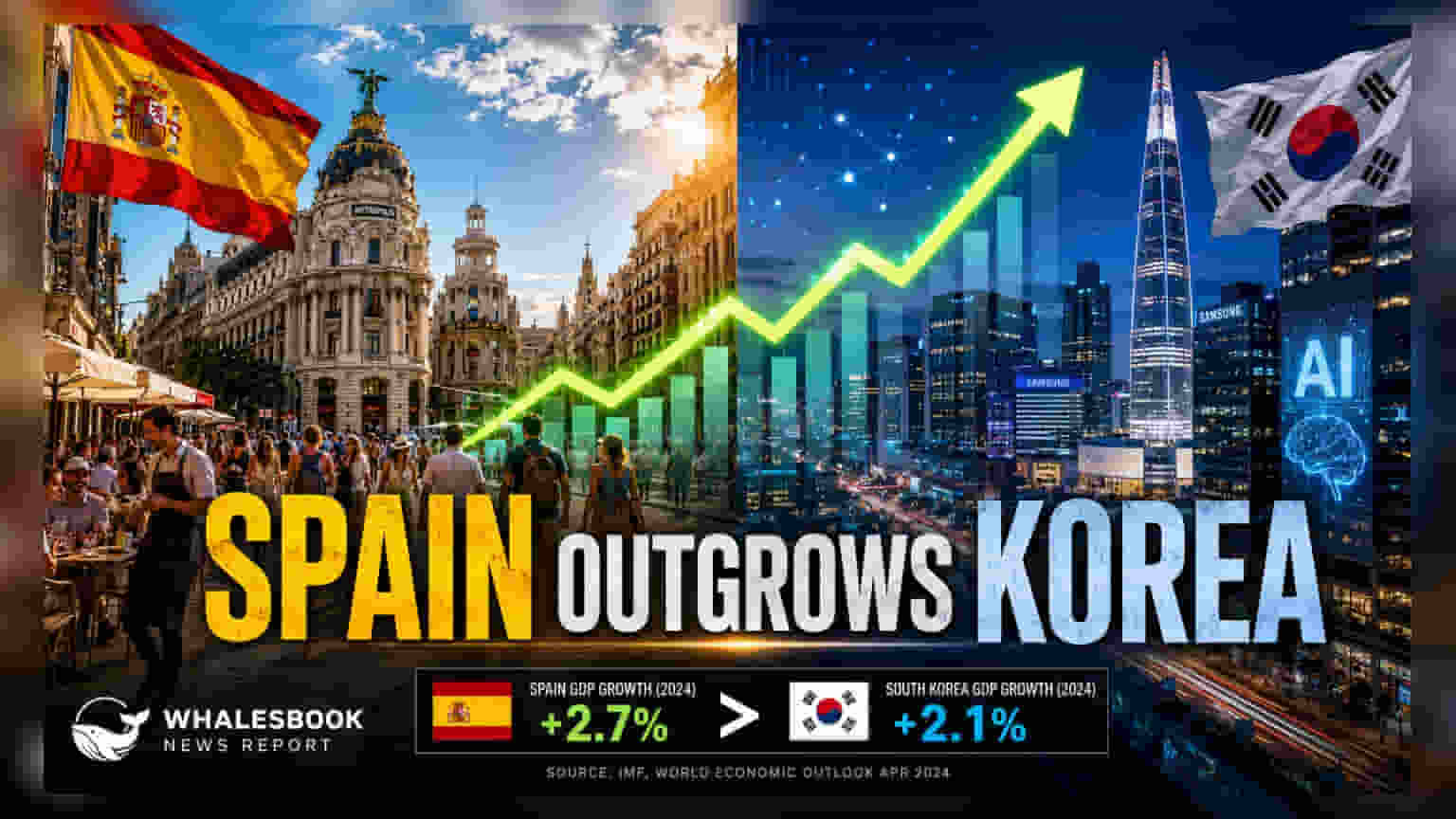
Spain has officially surpassed South Korea to join the $2 trillion GDP club, driven by a surge in tourism and a growing immigrant workforce. While the nation reports its lowest unemployment rate since 2008, investors should monitor potential long-term infrastructure strains and productivity gaps as pandemic-era stimulus funds phase out.
Spain has reached a significant economic milestone, with its gross domestic product exceeding that of South Korea to enter the $2 trillion economic bloc. This growth outpaces many G7 nations, supported by a labor market showing its most positive data since January 2008. While South Korea’s economic model relies heavily on artificial intelligence and high-tech manufacturing, Spain’s recent expansion follows a different path rooted in service-sector demand and demographic changes.
Labor and Tourism as Growth Engines
A primary factor in Spain’s recent economic performance is its shift in population policy. By integrating a significant number of foreign-born workers, the country has expanded its labor force and increased domestic consumer spending. Reports indicate that approximately 80% of job growth in the country since 2022 has been supported by this demographic trend. Alongside labor expansion, the tourism sector has emerged as a cornerstone of the economy, currently contributing nearly 13% to the total GDP. The country has seen record numbers of international arrivals, partly because travelers are shifting away from other regions facing geopolitical instability.
Additionally, Spain has benefited from its investment in renewable energy infrastructure. This focus has helped the nation navigate global energy price volatility more effectively than some of its European neighbors, contributing to relatively more stable inflation metrics. Despite these gains, the long-term economic outlook requires careful observation of structural factors.
Infrastructure and Productivity Challenges
While the headline GDP figures are strong, indicators of per-capita productivity remain mixed. Spain’s output per hour worked and overall productivity levels continue to lag behind several other major European economies. As pandemic recovery funds from the European Union begin to phase out, the pressure on the government to address infrastructure deficits is increasing. Current reports suggest that rapid population growth is putting strain on housing and public services, which may necessitate higher levels of public spending in the coming years.
Furthermore, although Spain has begun to move into the technology sector—notably through investments in areas like chip manufacturing—closing the innovation gap with more tech-heavy economies like South Korea remains a long-term goal. Investors tracking this economy will likely monitor whether the nation can sustain its growth by transitioning from labor-intensive sectors toward higher-productivity, technology-driven industries. The key monitorable for the coming quarters will be how the country manages the withdrawal of EU stimulus support while simultaneously addressing infrastructure needs and maintaining stable employment levels.