 Whalesbook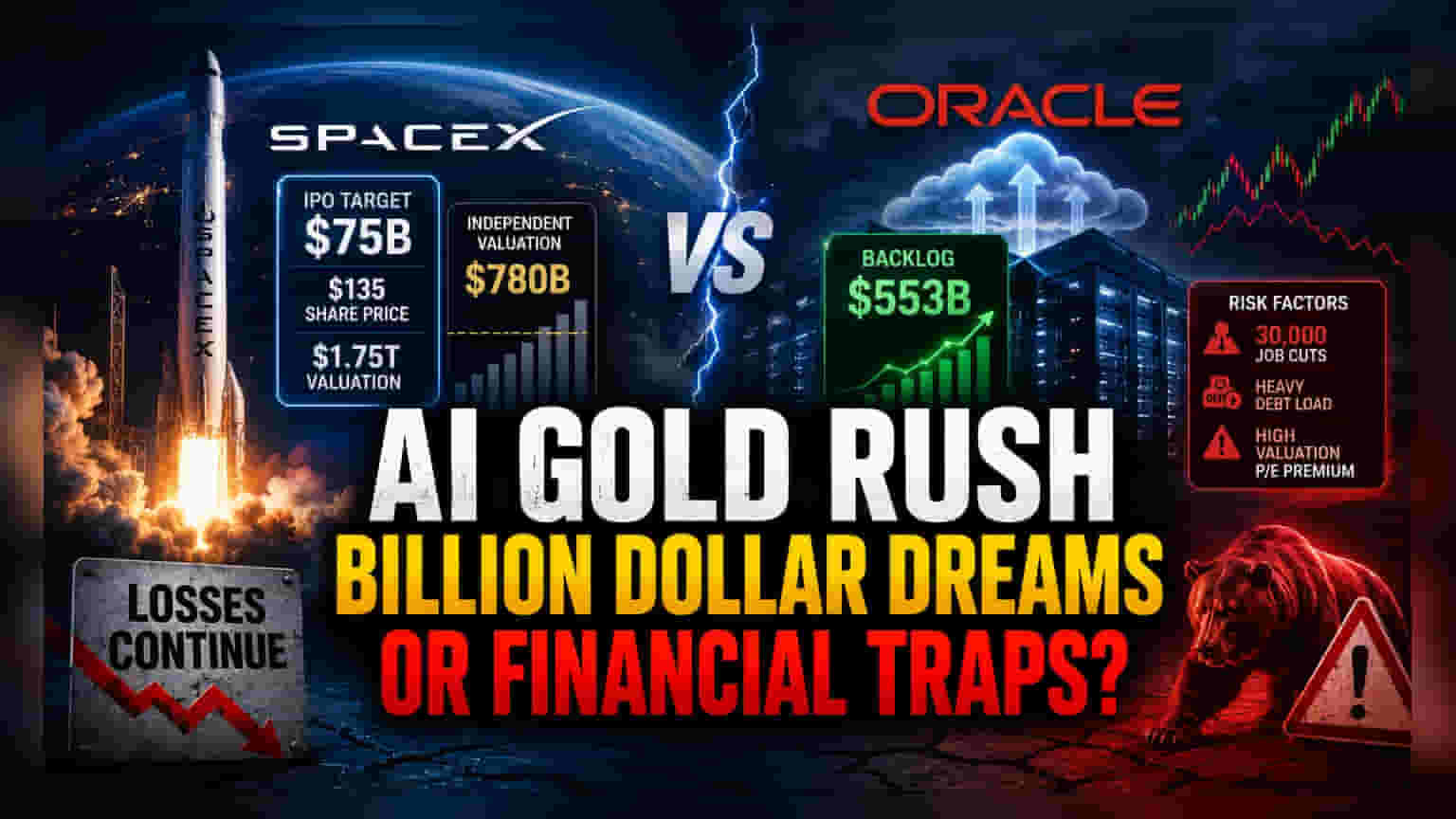


The Valuation Gap
The financial environment is hitting a critical juncture, characterized by a collision between historic capital raises and cautious institutional sentiment. SpaceX’s anticipated $75 billion initial public offering has effectively rewritten the rulebook, opting for a fixed $135 share price that bypasses traditional bookbuilding. While this strategy projects a massive $1.75 trillion valuation, it simultaneously highlights a divergence between aggressive corporate positioning and independent assessments, such as those from Morningstar, which have pegged the firm’s fundamental value closer to $780 billion. This gap underscores a speculative fervor currently driving capital toward infrastructure-heavy AI plays.
Oracle’s Cloud Contradiction
Oracle’s impending fiscal fourth-quarter results on June 10 serve as a litmus test for the sustainability of its cloud-focused growth strategy. Despite recent revenue gains driven by AI-demand, the company’s stock has faced significant volatility as investors weigh the benefits of its $553 billion performance obligation backlog against the heavy capital expenditure required to fund its expansive data center rollout. The narrative is no longer solely about top-line growth; it is increasingly about the company's ability to maintain cash flow margins while navigating a period of aggressive debt-funded expansion.
The Forensic Bear Case
The optimism surrounding these high-profile tech plays ignores several structural vulnerabilities that demand scrutiny. First, SpaceX’s governance remains a point of contention, particularly following the related-party transaction involving xAI, which critics argue lacks independent market verification. Furthermore, SpaceX continues to report substantial net losses, complicating the argument for such an unprecedented valuation. For Oracle, the risks are equally pronounced. The firm is currently executing significant workforce reductions—reportedly nearing 30,000 roles—which signals a desperate attempt to protect margins as it navigates an increasingly expensive pivot toward AI. Additionally, with its P/E ratio trading at a significant premium to its historical median, any failure to meet elevated earnings expectations could trigger sharp re-ratings as the broader market enters a risk-off phase.
Future Outlook
Analysts remain divided, with price targets for Oracle ranging from $190 to $400, reflecting extreme uncertainty in how the firm will manage its balance sheet over the next three years. As the Federal Reserve’s interest rate policy remains a constant shadow over these high-multiple stocks, the immediate trajectory for both SpaceX’s market entry and Oracle’s performance will likely hinge on whether investor appetite for AI-led growth can outweigh mounting concerns over debt-servicing capacity and the broader macroeconomic cooling trend.