

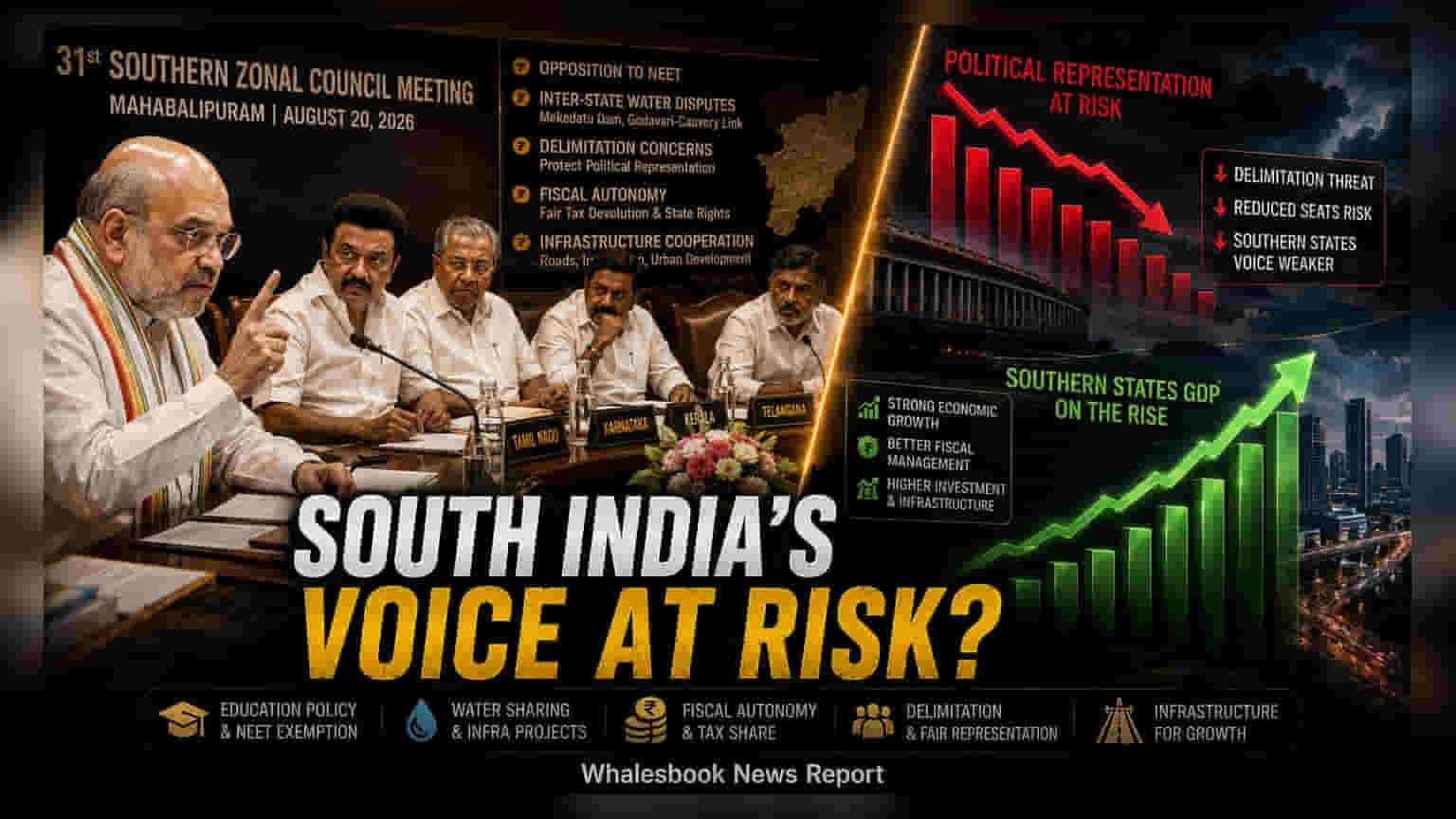
Southern Chief Ministers met Union Home Minister Amit Shah today at the 31st Zonal Council meeting in Mahabalipuram. They pushed for NEET exemptions, protection of parliamentary representation during delimitation, and inter-state water cooperation. These policy discussions influence regional infrastructure timelines and state fiscal planning.
Union Home Minister Amit Shah chaired the 31st Southern Zonal Council meeting in Mahabalipuram on August 20, 2026. The gathering brought together Chief Ministers from southern states to address several federal and regional concerns, ranging from education policy to inter-state infrastructure and fiscal autonomy.
A primary point of discussion was the opposition to the National Eligibility cum Entrance Test (NEET). Tamil Nadu leaders reaffirmed their long-standing request for an exemption, arguing that the centralized exam negatively impacts students from rural and economically disadvantaged backgrounds. This remains a critical policy area for private education providers and medical colleges in the state, as admission rules are subject to legislative changes. For investors, the stability of educational policies is a recurring theme to monitor in the region.
Infrastructure and Water Projects
Infrastructure development was another central theme, with inter-state water sharing disputes taking center stage. Leaders discussed projects such as the Mekedatu dam and the Godavari-Cauvery interlinking project. These large-scale infrastructure initiatives are highly sensitive to inter-state cooperation. For construction and engineering companies involved in these projects, the consensus between states is often a prerequisite for timely project approvals and execution. Any disagreement between states typically leads to delays, potentially impacting the order execution timelines for firms involved in these government contracts.
Fiscal and Political Representation
The meeting also highlighted concerns regarding the upcoming delimitation exercise. Southern states expressed worry that a shift in parliamentary representation based on population data could penalize states that have successfully implemented family planning and population control measures. This has led to calls for constitutional safeguards to protect their political voice.
Additionally, fiscal autonomy was raised, with Karnataka highlighting the impact of changes in tax sharing under the 15th Finance Commission. State governments play a vital role in regional economic activity through capital spending on roads, irrigation, and urban development. When states report fiscal pressure or a reduction in central tax transfers, it can affect their ability to fund these infrastructure projects.
Going forward, the key monitorable for investors and stakeholders is whether these discussions translate into concrete policy changes or project approvals. The ability of the central and state governments to find common ground on water sharing and fiscal transfers will likely determine the pace of future infrastructure commissioning and regional economic growth.