 Whalesbook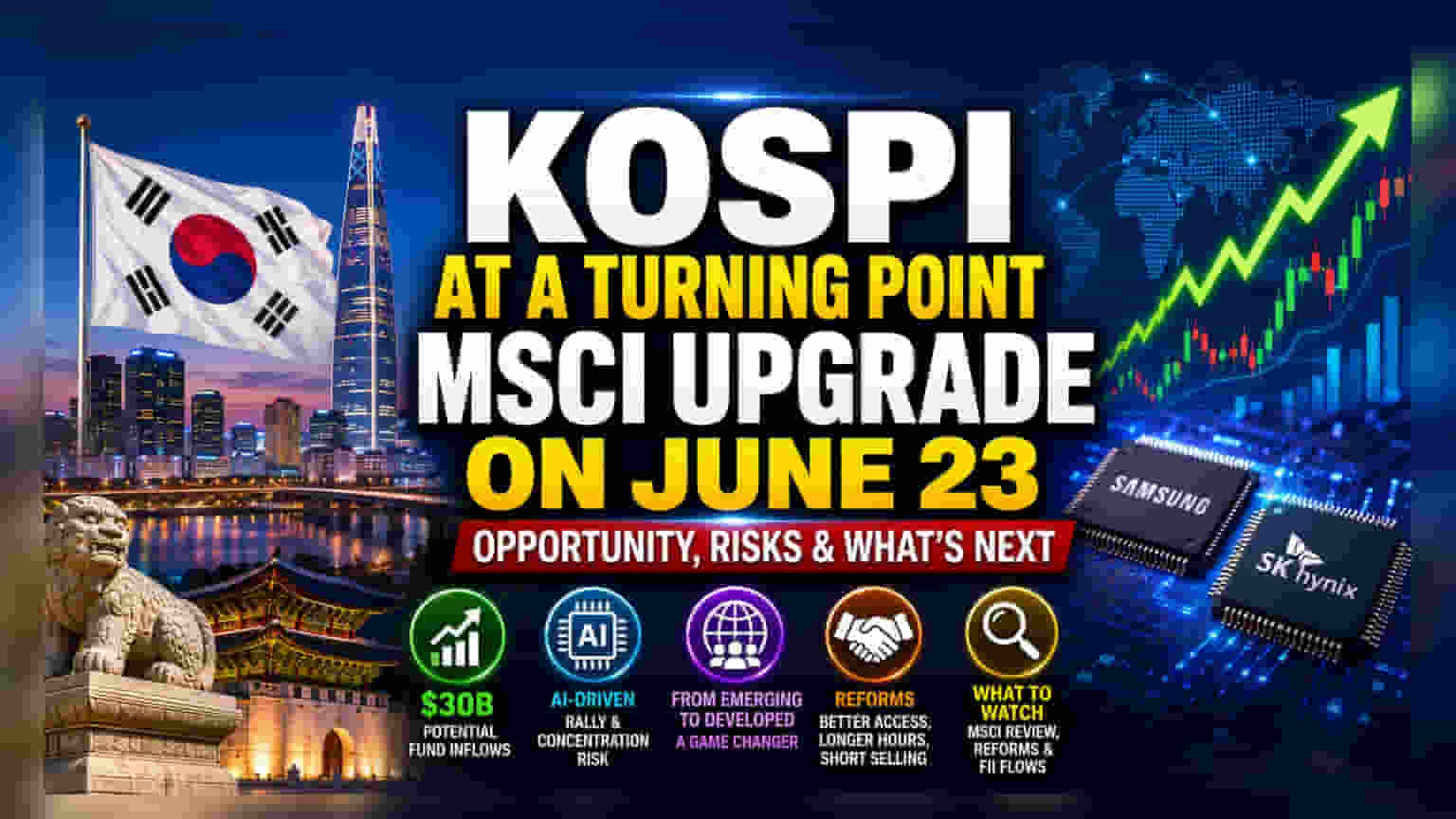


South Korea’s Kospi index, fueled by a major AI-led rally, faces a crucial MSCI review on June 23. The country aims for a shift to 'developed market' status to potentially draw billions in foreign investment and bridge valuation gaps. This move highlights the impact of governance and market accessibility on global capital flows.
What Happened
South Korea’s benchmark stock index, the Kospi, is at a major turning point. Investors are focusing on the upcoming MSCI annual market classification review scheduled for June 23. The core issue is whether MSCI Inc. will upgrade South Korea from an 'emerging market' to a 'developed market' status. This shift is a significant goal for the nation, as it aims to improve its standing in the global financial ecosystem. The Kospi has seen a strong rally this year, gaining over 90%, largely powered by global interest in artificial intelligence and semiconductor technology.
The Logic Behind the Upgrade
For years, South Korea has faced what investors call the 'Korea Discount.' This is a situation where many Korean companies trade at lower valuations compared to their global peers, despite strong financial performance. The government and regulators believe that moving to developed market status would help solve this. The primary expectation is that such a change would lead to significant fund inflows. Estimates suggest that if reclassified, the market could attract roughly $30 billion as passive investment funds rebalance their portfolios to include more Korean stocks. This would likely shift the narrative around the market, moving it from a high-growth emerging bet to a core destination for global capital.
The AI Concentration Risk
While the prospect of an upgrade is a positive signal, the current rally comes with its own set of risks. The Kospi’s recent performance is heavily tied to two major companies: Samsung Electronics and SK Hynix. Together, these two giants make up more than half of the index's total weight. This creates a concentration risk. If the global demand for artificial intelligence chips cools down, or if these two companies face operational challenges, the entire index could see significant volatility. Investors should be aware that the index is effectively functioning as a proxy for the global AI supply chain, rather than reflecting the broader health of the entire Korean economy.
Reforms and Accessibility
MSCI’s previous hesitation to upgrade South Korea was largely due to concerns over foreign investor access. Historically, restrictions on currency trading and heavy compliance requirements made it difficult for international investors to enter or exit positions easily. To address this, the South Korean government has been implementing reforms. These include plans to extend trading hours for the Korean Won and the resumption of short selling. The success of these reforms is a critical monitorable, as MSCI will likely look for evidence that these changes are durable and effective before making any reclassification decisions.
What Investors Should Track
The most important monitorable is the upcoming MSCI review date. While many experts believe an upgrade is a 'matter of time,' there is no guarantee it will happen this year. Investors should also watch for any commentary regarding the durability of recent market reforms. Furthermore, as the Kospi has historically competed with other large markets—including India—for a share of global capital, any shifts in South Korean market rules or foreign institutional flow trends will be relevant to global asset allocation. Ultimately, the stability of the Korean market will depend on whether these reforms can encourage long-term investors to enter, rather than just relying on the current AI-driven momentum.