

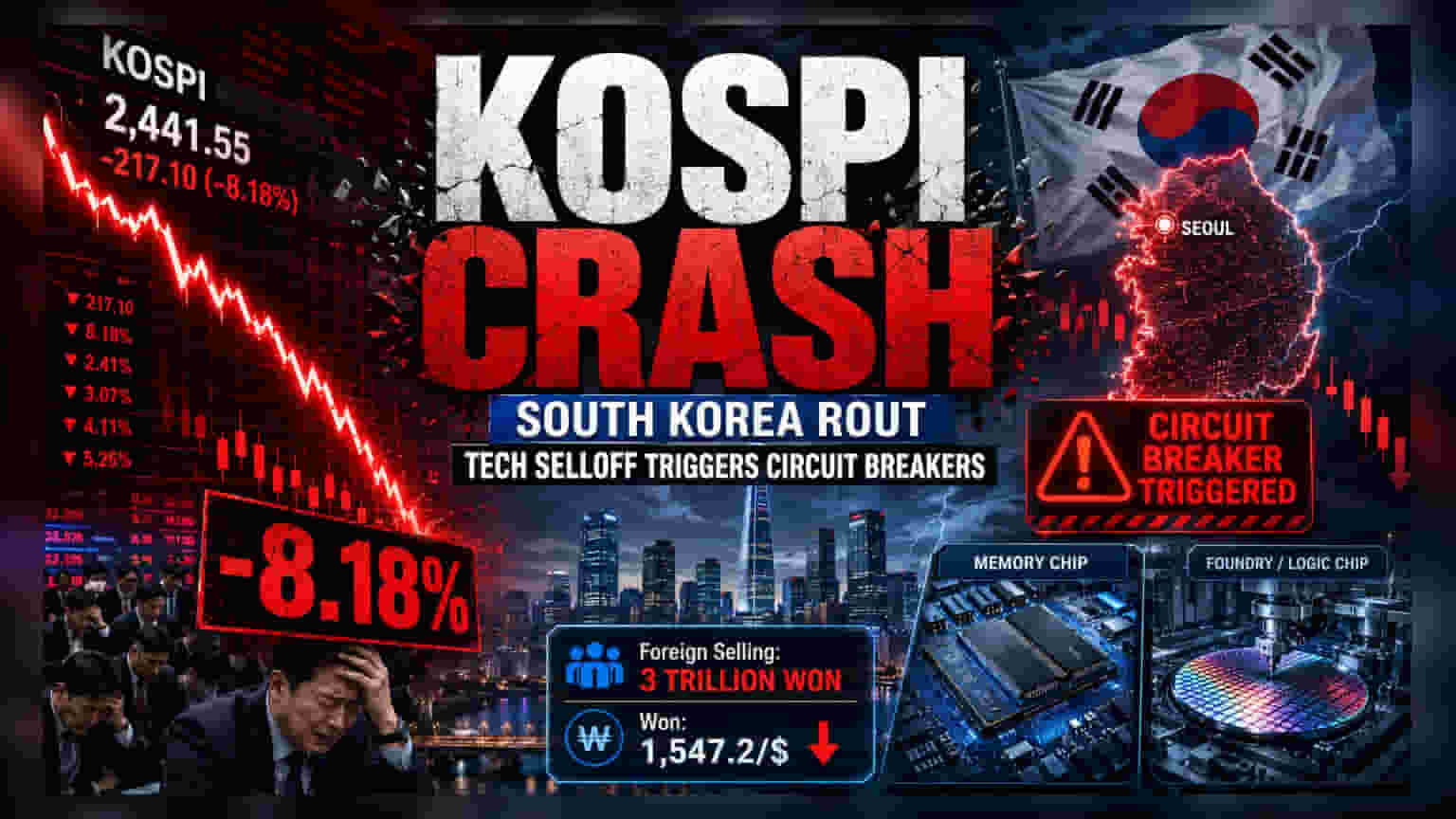
South Korea’s KOSPI index plunged over 8% on Friday, triggering circuit breakers as investors reacted to a sharp selloff in global technology stocks. The decline was led by heavyweights Samsung Electronics and SK Hynix, driven by concerns over rising AI costs. Foreign investors offloaded 3 trillion won in shares, while the currency also weakened against the dollar.
What Happened
South Korean equities saw a severe market rout on Friday, with the benchmark KOSPI index falling by 8.18% to close at 8,199.81 points. The speed and intensity of the selling forced authorities to trigger circuit breakers twice during the week to manage volatility. This marks the fifth time circuit breakers have been activated on the index this year and the eleventh time in its history, reflecting extreme investor anxiety. The drop confirms the index’s worst weekly performance in more than three months.
Tech Sector Weighting Impacts Index
Because the South Korean market is heavily concentrated in the semiconductor and technology sectors, the selloff in major companies caused a disproportionate impact on the broader index. Samsung Electronics and SK Hynix, which together account for more than half of the KOSPI’s total weighting, both saw their stock prices slide by over 9%. When these heavyweights decline, it creates a drag that pulls down the entire market, regardless of performance in other sectors.
Global Tech Spillover
The downward pressure on Korean stocks largely mirrored a trend originating from Wall Street. Investor sentiment soured after US technology shares reversed gains on Thursday, hitting the Nasdaq. The primary concern among global investors currently revolves around the massive spending on artificial intelligence by large tech companies. Market participants are questioning whether the high costs of these AI investments will yield sufficient returns, a sentiment that has temporarily outweighed positive signals about AI chip demand from companies like Micron and Qualcomm.
Foreign Outflows and Currency Pressure
The market decline was accompanied by significant capital movement. Foreign investors were net sellers of South Korean equities, offloading shares worth 3 trillion won during the session. This exit of capital put downward pressure on the local currency, with the South Korean won trading at 1,547.2 against the US dollar, a decline of 0.26% from the previous close. When foreign money leaves a market, it often leads to both stock price pressure and currency depreciation.
What Investors Should Track
For those watching global market trends, the next important indicators will be the stability of US technology indices and any commentary from major semiconductor manufacturers regarding actual order books versus AI spending. Investors may watch to see if this selloff represents a short-term panic driven by profit-booking or if it signals a deeper concern about the sustainability of tech spending. Monitoring the flow of foreign institutional investment in the coming week will also be crucial to understanding whether the selling pressure is broad-based or temporary.