

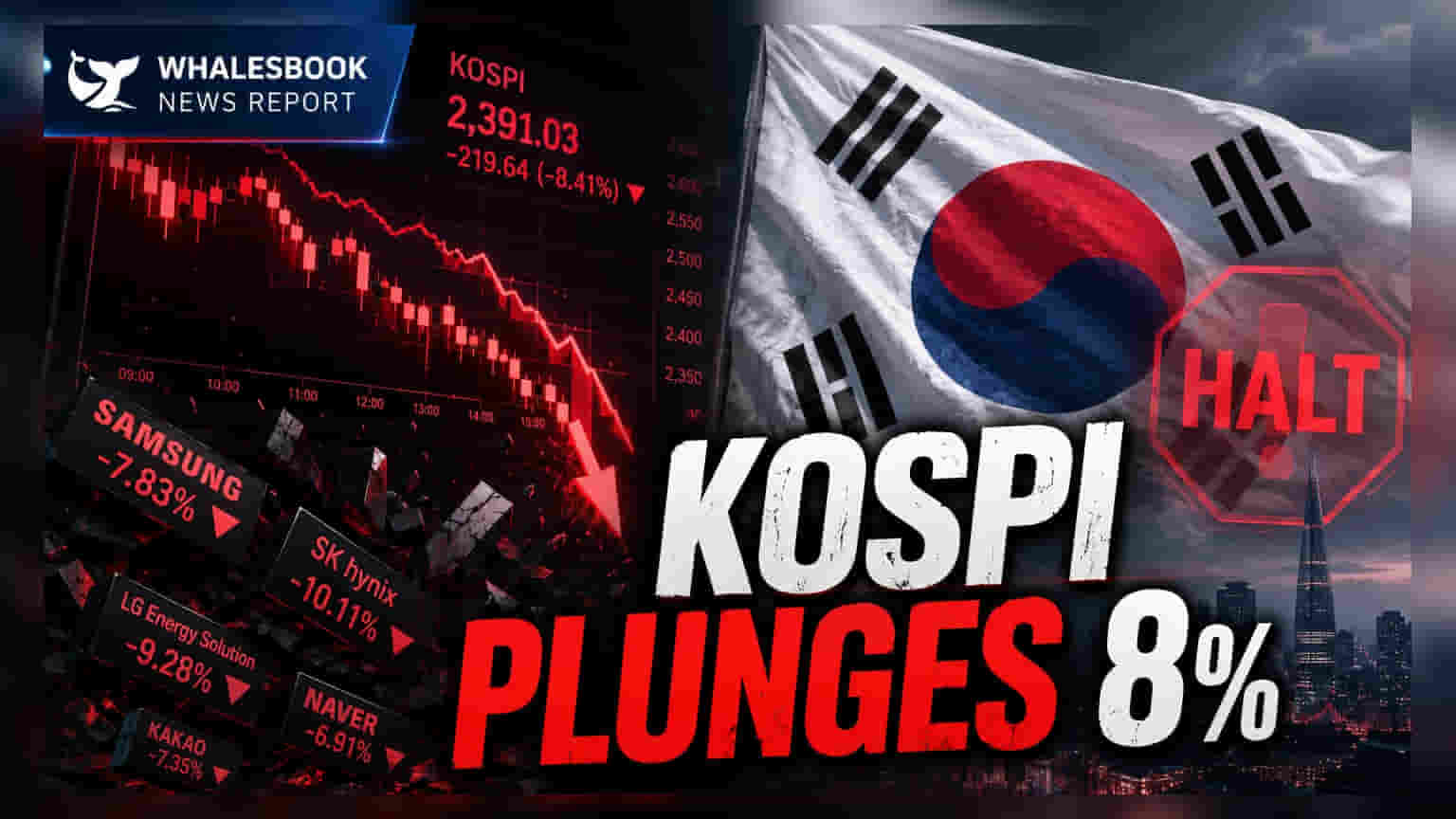
South Korea's benchmark Kospi index triggered a 20-minute trading suspension on Tuesday following an abrupt 8% decline. This automated circuit breaker was activated to curb panic selling and restore stability in a volatile market environment.
Trading on South Korea's benchmark Kospi index was temporarily suspended for 20 minutes on Tuesday after the market experienced a sharp 8% downward movement. The suspension was triggered by the exchange's circuit breaker mechanism, which is designed to pause trading during periods of extreme price fluctuations to prevent panic selling and allow the market to stabilize.
Understanding Circuit Breakers
Circuit breakers are automated safety measures used by stock exchanges globally, including in India, to maintain orderly market conditions. When an index falls beyond a pre-defined percentage threshold within a single session, the exchange halts trading for a specific period. This cooling-off phase gives participants time to digest information and reassess their positions, preventing a rapid, uncontrolled spiral in asset prices.
Market Context and Investor Impact
While the specific catalyst for this sudden sell-off in the South Korean market was not immediately identified, such events often signal heightened investor anxiety regarding regional economic conditions or global financial stability. For investors with exposure to South Korean markets or companies with significant business links to the region, this volatility highlights the importance of monitoring broader Asian market trends.
In major markets like India, similar circuit breakers exist to protect retail investors from extreme intraday crashes. For example, the BSE and NSE implement market-wide circuit breakers at 10%, 15%, and 20% thresholds of the Sensex or Nifty. Such mechanisms are standard market infrastructure designed to protect the integrity of the trading system during periods of high uncertainty.
The next crucial update for market observers will be any official commentary from regulators or financial institutions regarding the specific drivers of this sell-off. Investors often monitor these situations to determine if the decline is driven by localized factors, such as specific company news, or broader regional macroeconomic pressures that could impact global investor sentiment.