

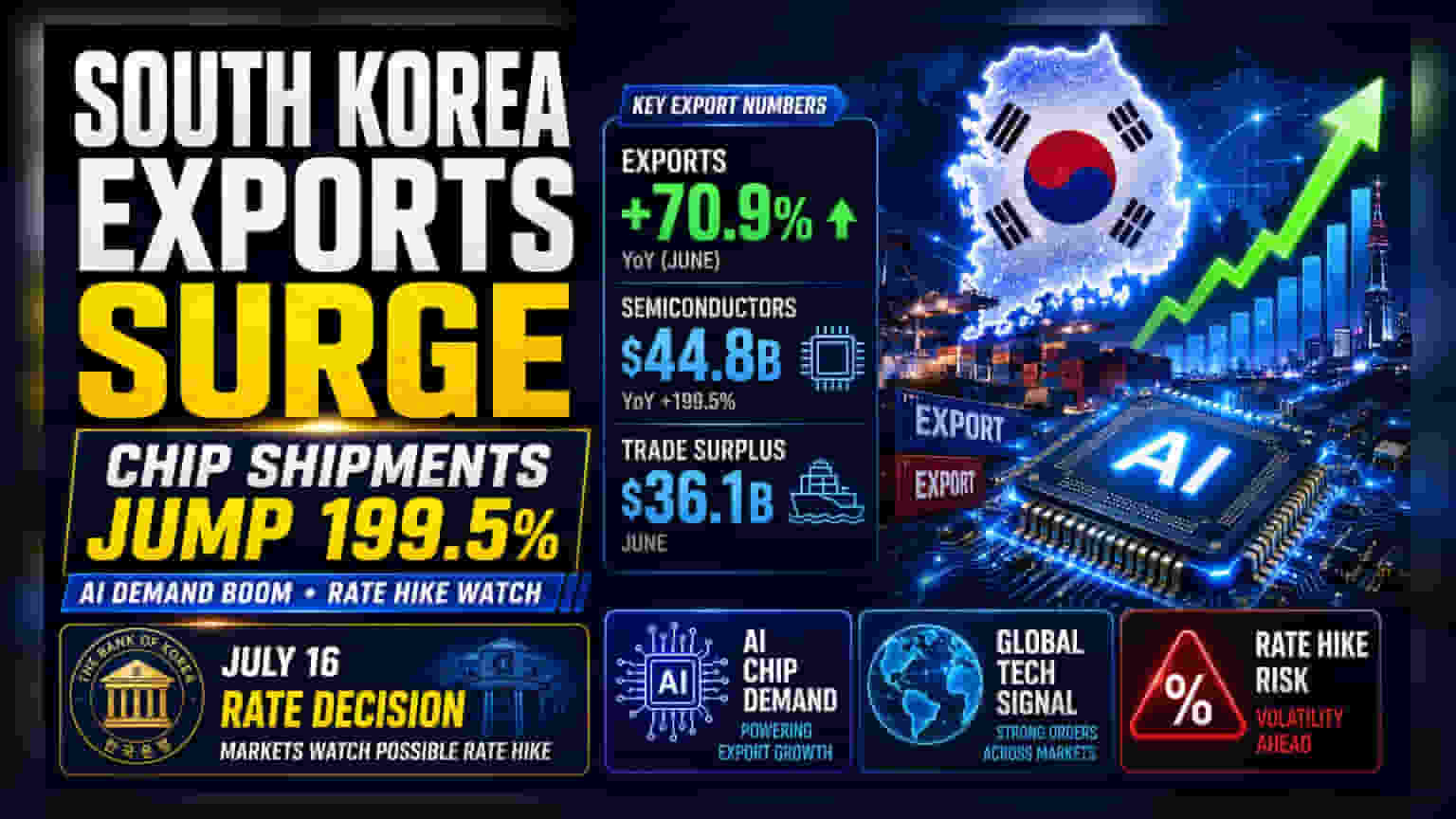
South Korea’s exports jumped 70.9% in June, driven by a near-200% surge in semiconductor shipments. While the AI-led boom is boosting trade surpluses, the country’s central bank is now signaling potential interest rate hikes to manage rising inflation, a trend that global investors are watching closely.
What Happened
South Korea, a major global hub for semiconductor production, reported a massive jump in export numbers for June 2026. On an unadjusted basis, the country’s exports rose by 70.9% compared to the same month last year. When adjusted for the number of working days, the growth was 59.5%. This strong performance created a trade surplus of $36.1 billion. The primary driver of this growth was the semiconductor sector, which saw shipments skyrocket by 199.5%, reaching $44.8 billion. Computer products and petroleum exports also contributed to the growth, rising 308.8% and 49.8% respectively.
The Global AI Impact
The data provides clear evidence of the massive global demand for AI-related technology. Semiconductors are the building blocks for artificial intelligence and data centers. The surge in Korean chip exports confirms that the global investment in AI is not just hype but is leading to real, tangible orders for high-end hardware. This "chip supercycle" is providing a strong buffer for the South Korean economy against weaknesses in other industrial sectors.
Why Investors Should Watch Interest Rates
While the export boom is positive for the economy, it has triggered a reaction from the Bank of Korea. The governor has suggested that the wealth generated by this boom is spilling over into consumer spending and wages, which could lead to higher inflation. To prevent the economy from overheating, the central bank is considering a move to raise interest rates at its upcoming meeting on July 16. For global investors, this is a key development. If major economies like South Korea move toward higher interest rates, it reflects a broader global trend of borrowing costs staying high to fight inflation.
Impact on Indian Markets
Indian investors might wonder how South Korean trade data affects their portfolios. While there is no direct impact on Indian stock prices from this specific report, the data is a proxy for global tech health. A massive rise in chip demand is generally a positive signal for the broader technology and electronics manufacturing sector, including companies in India that are part of the global semiconductor or electronics assembly value chain. However, the risk of higher interest rates in major economies can sometimes create pressure on global liquidity, which is something foreign institutional investors (FIIs) often monitor when allocating capital to emerging markets like India.
What Investors Should Track Next
The next critical milestone is the Bank of Korea's policy meeting on July 16. Investors will look to see if the central bank actually raises interest rates, as this will confirm how much the current export boom is forcing policy changes to combat inflation. Additionally, global market participants will track if this surge in chip demand continues in the coming months, as sustained growth would reinforce the strength of the AI-led demand cycle.