

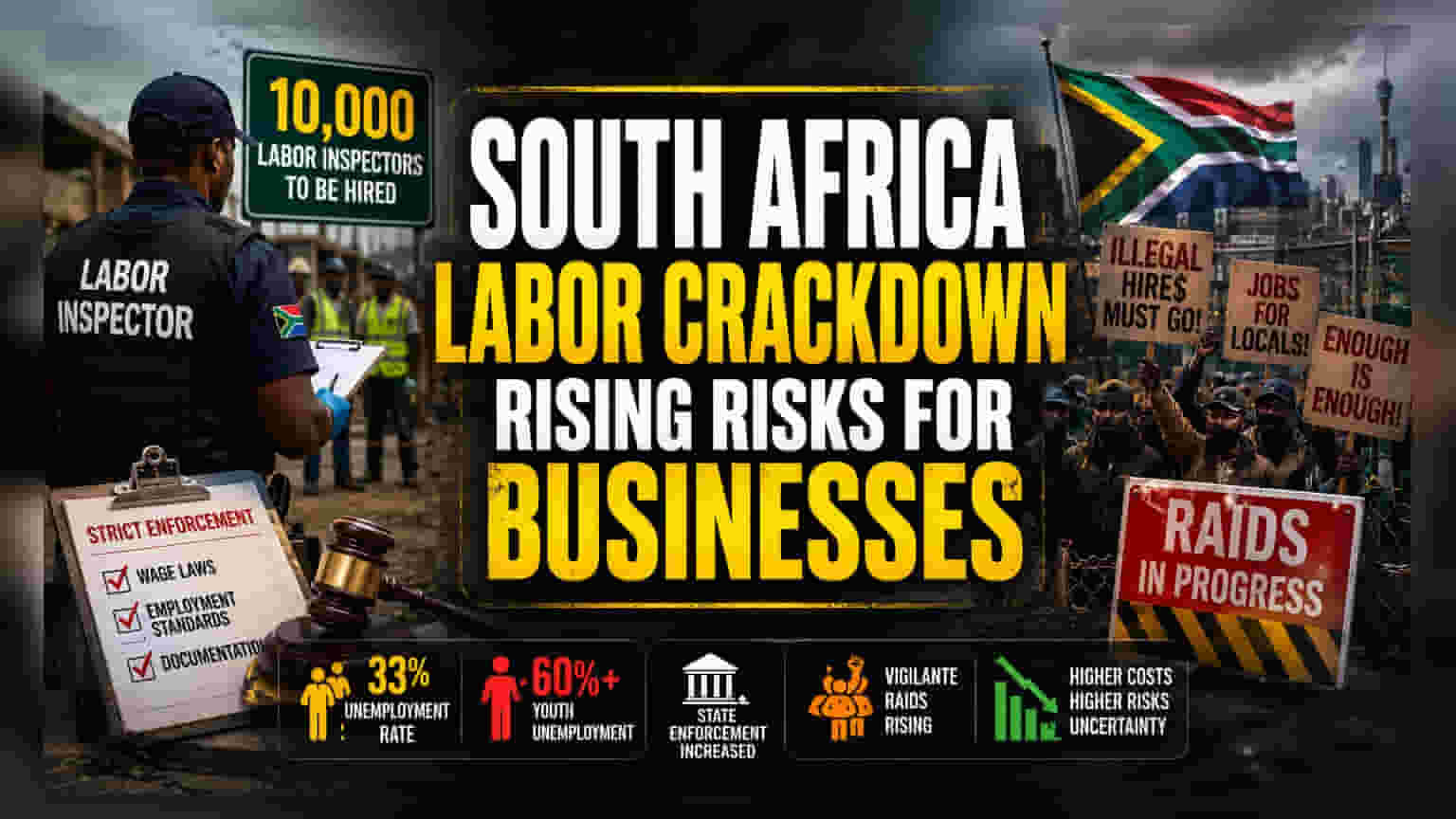
South Africa is intensifying its crackdown on undocumented labor, with plans to hire 10,000 labor inspectors. This, combined with active vigilante groups, creates operational risks and rising compliance costs for businesses. Investors should note the potential for supply chain disruptions and labor market volatility in the region.
What Happened
South Africa is currently enforcing stricter immigration and labor laws, creating a challenging environment for businesses operating in the country. The government is ramping up enforcement to combat the hiring of undocumented foreign nationals. As part of this policy shift, the government is planning to hire 10,000 labor inspectors to enforce wage laws and employment standards. Alongside state enforcement, businesses are also facing pressure from vigilante groups conducting raids. This dual pressure—from both official regulators and social groups—is forcing companies to re-evaluate their labor sourcing and operational strategies.
The Squeeze on Business Operations
For many small and medium-sized enterprises, the current labor model has often relied on flexible, lower-cost staffing to maintain margins. Strict enforcement of minimum wage laws and documentation requirements effectively ends this model for many. Businesses that have relied on undocumented labor now face two major threats: legal penalties and operational closures enforced by the state, and disruptive actions from vigilante groups. This is pushing up operational costs, as businesses must now navigate a more rigid labor market where non-compliance carries a higher risk of immediate shutdown.
The Economic Context
This aggressive stance on labor enforcement is rooted in the country's severe unemployment crisis. South Africa’s national unemployment rate stands at approximately 33%, with youth unemployment exceeding 60%. The government’s stated goal is to protect local employment opportunities. Officials argue that businesses hiring undocumented workers gain an unfair cost advantage by avoiding legal labor obligations. However, this policy is creating a divide, as some sectors rely heavily on migrant labor to maintain economic activity in struggling urban areas. Balancing the need for local job protection with the functional requirements of the informal and service economies remains a central challenge.
Risks for Investors
Investors with exposure to businesses operating in South Africa should be aware of several operational risks. First, there is the risk of supply chain and service disruptions if the labor force is suddenly reduced due to compliance enforcement. Second, the social tension creates an unpredictable business environment, which could impact consumer demand and daily operations. Companies that cannot easily adjust their labor model to meet new, stricter compliance standards may face margin pressure or, in extreme cases, be forced to cease operations in certain areas.
What Investors Should Track Next
Investors should closely monitor the effectiveness of the government’s new labor enforcement initiatives and any subsequent changes in labor availability. Key indicators include updates on the hiring of labor inspectors, any new regulatory filings regarding wage compliance, and shifts in operational costs for major companies operating within the region. Additionally, observing the frequency of vigilante activity will be important for assessing the stability of the local business environment.