

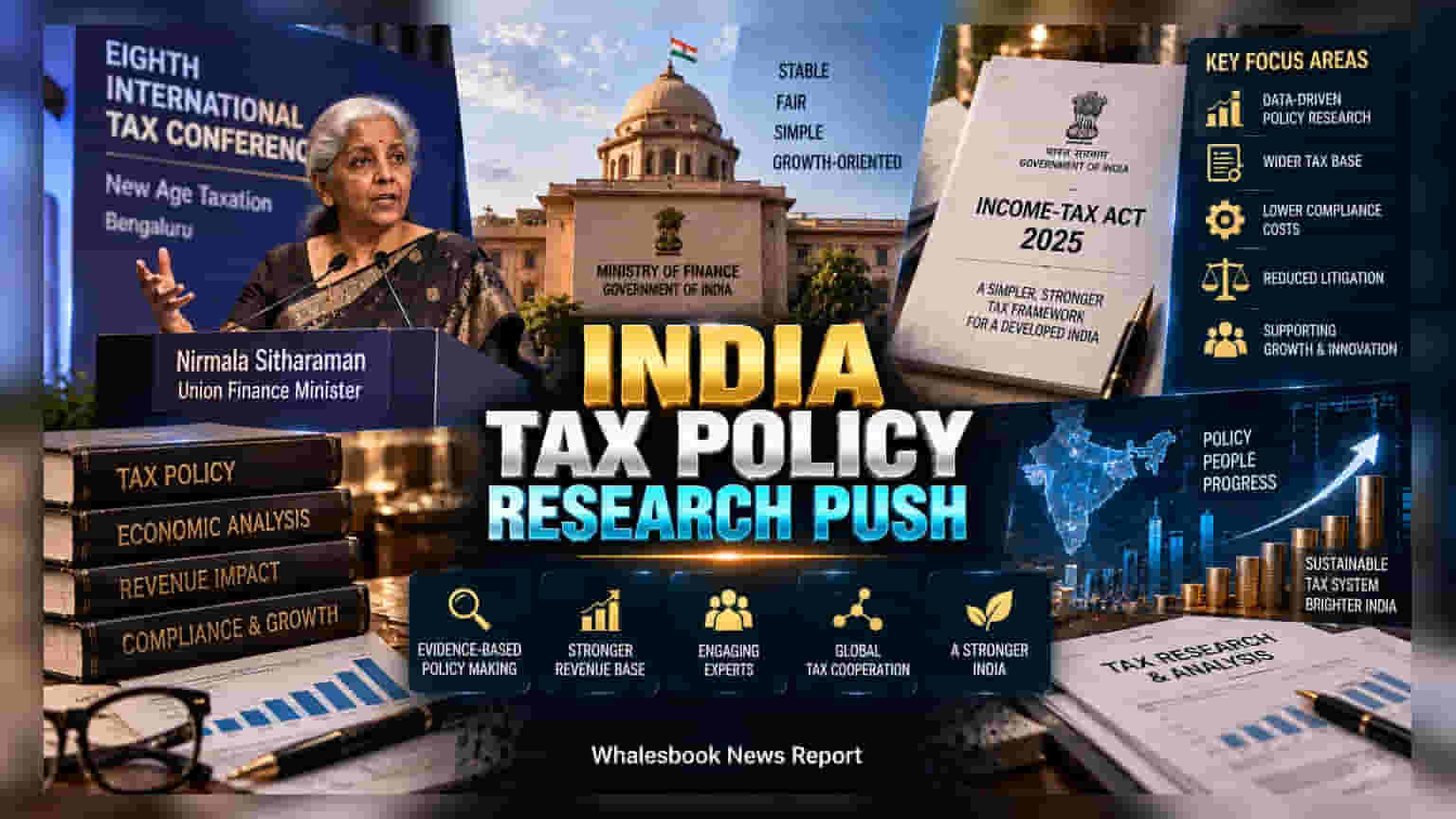
Finance Minister Nirmala Sitharaman has called on the International Tax Research and Analysis Foundation (ITRAF) to provide evidence-based research for India's evolving tax framework. She emphasized that policy should move beyond individual sector demands to focus on long-term economic stability and data-backed national priorities.
Union Finance Minister Nirmala Sitharaman recently addressed the Eighth International Tax Conference on 'New Age Taxation' in Bengaluru, urging the International Tax Research and Analysis Foundation (ITRAF) to play a more active role in the country's fiscal planning. Her call comes as India continues to refine its tax framework, including the ongoing transition toward the new Income-tax Act, 2025.
The Finance Minister highlighted that India has a wealth of skilled tax professionals, lawyers, and economists, but stressed that their expertise needs to be better organized. She suggested that current tax consultations often focus too heavily on requests for lower tax rates, exemptions, or benefits for specific industries. Instead, she urged researchers to provide detailed data on how tax changes would affect revenue, compliance costs, and the wider tax base. This shift toward evidence-based analysis is intended to help the government create tax policies that are balanced, sustainable, and less prone to frequent litigation.
For businesses and investors, the move toward data-driven, long-term policy research is a significant development. Tax policy stability is a crucial factor for long-term capital investment. The government is currently managing a delicate balance: ensuring enough tax revenue for the nation while creating a supportive environment for innovation and business growth. The Finance Minister noted that this work is becoming more complex due to global challenges, including volatility in prices for essential imports like crude oil and fertilizers, as well as geopolitical uncertainties that impact trade.
Sitharaman also pointed to the government’s efforts to modernize India's tax approach, including the recent renegotiation of tax treaties with countries like Mauritius, Singapore, and Cyprus. These steps are part of a broader goal to restore India's right to tax capital gains at the source, ensuring a fair share of revenue. However, such policy shifts often come with execution risks and periods of adjustment that can affect investor sentiment.
The history of policy changes, such as adjustments to the Securities Transaction Tax (STT) on derivatives, demonstrates that tax updates can trigger immediate reactions in equity markets, affecting liquidity and trading volumes. As India works toward its long-term economic vision, the government is likely to continue prioritizing measures that simplify tax laws, raise thresholds, and reduce legal disputes. Investors and businesses should watch for how upcoming policy proposals translate research into practical, stable frameworks, as this will determine the level of regulatory certainty in the Indian market over the coming years.