

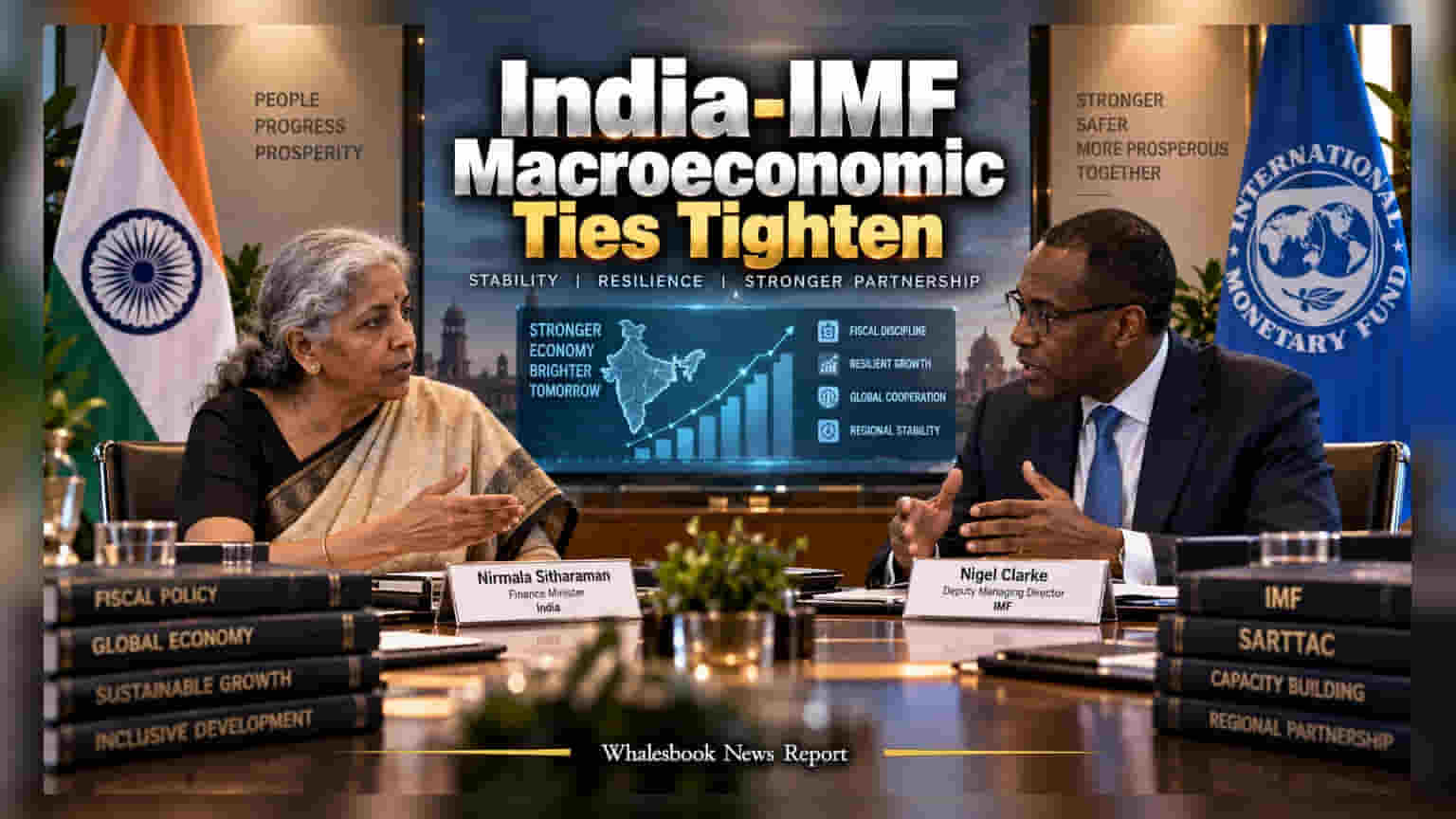
Finance Minister Nirmala Sitharaman met with IMF Deputy Managing Director Nigel Clarke in New Delhi on September 7 to discuss India’s economic growth and fiscal policy. The IMF praised India's ability to maintain economic resilience and commitment to fiscal discipline despite global challenges. For investors, this institutional alignment is a key indicator of India's ongoing macro stability.
Finance Minister Nirmala Sitharaman held high-level bilateral discussions with International Monetary Fund (IMF) Deputy Managing Director Nigel Clarke in New Delhi on September 7. The meeting focused on aligning India's economic policies with global standards and reviewing the country's trajectory amid a complex international environment.
The IMF official acknowledged India’s strong economic performance and highlighted the government's consistent efforts to control public debt and maintain fiscal discipline. For investors and market observers, such institutional recognition often reinforces confidence in India’s sovereign credit profile and long-term investment attractiveness. Maintaining a disciplined fiscal path is a key factor that global rating agencies and foreign portfolio investors track when assessing the country's economic risk.
Discussions also covered India's resilience in the face of external pressures. Clarke noted that the government’s proactive policy measures have helped the economy withstand shocks from regional instability, particularly the fallout from the ongoing crisis in West Asia. These geopolitical tensions have previously caused volatility in global supply chains, affecting trade dynamics for emerging economies. The IMF’s assessment provides a positive view on how domestic policy management can buffer against these global headwinds.
The meeting also touched upon the South Asia Regional Training and Technical Assistance Center (SARTTAC), an IMF-backed initiative based in New Delhi. This center helps regional countries improve their financial policy frameworks and administrative capabilities. India’s role as a major contributor to this project was a key talking point, reflecting the country's growing influence in shaping regional economic cooperation.
Looking ahead, investors and policy watchers will likely monitor how the government balances its growth-oriented spending with the need for fiscal consolidation. As global trade dynamics continue to shift, the sustainability of India's growth against potential external shocks remains a primary factor for the market. Continued engagement with institutions like the IMF serves as a framework for the government to maintain its focus on macroeconomic stability.