

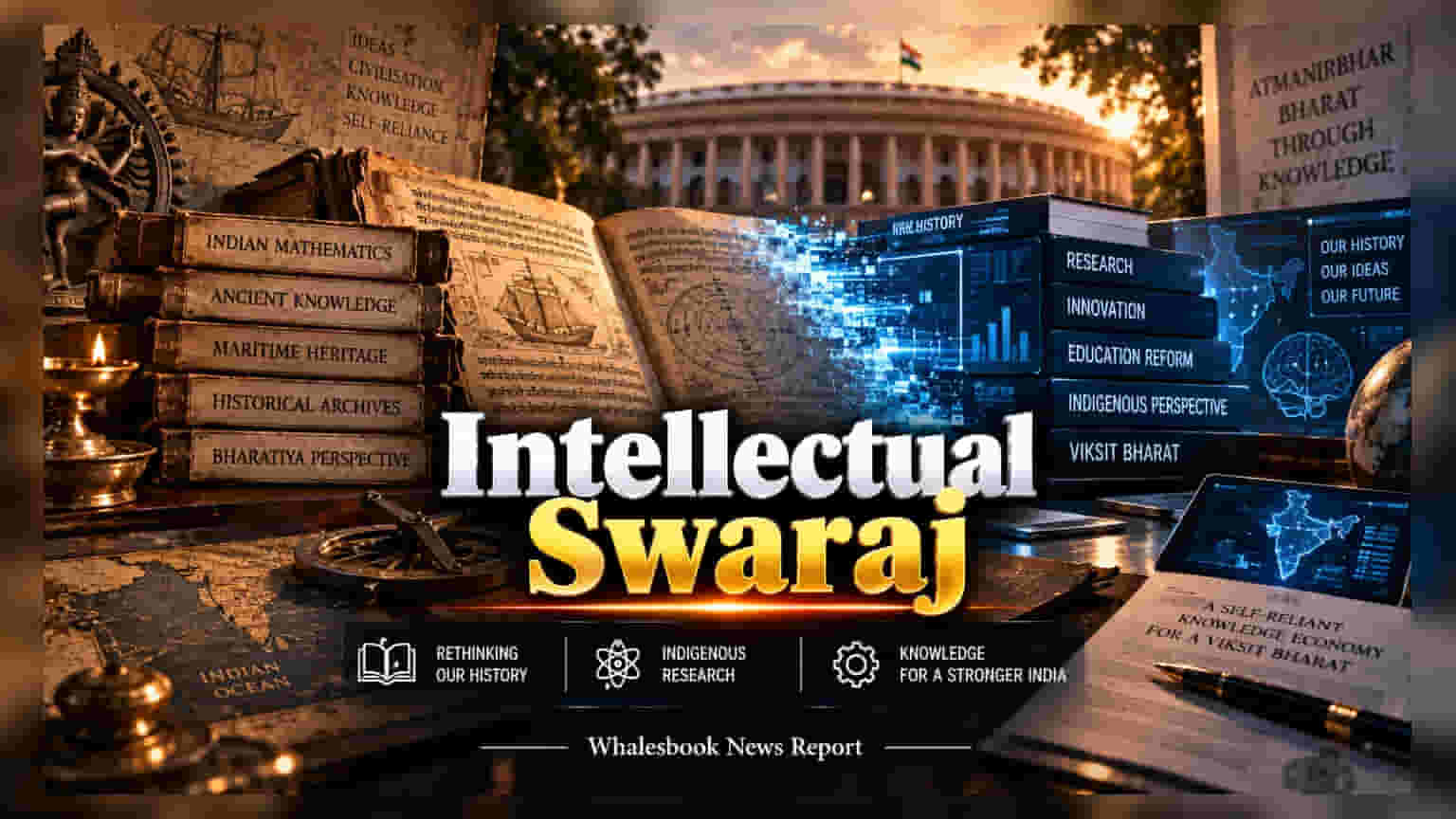
Finance Minister Nirmala Sitharaman has called for 'intellectual swaraj,' urging India to reframe its historical and cultural understanding through indigenous frameworks. The initiative emphasizes decolonizing academic research and moving beyond colonial-era narratives. While the vision focuses on heritage and research, long-term observers track how such shifts in policy discourse influence the broader administrative landscape in Indian educational institutions.
Finance Minister Nirmala Sitharaman has outlined a vision for 'intellectual swaraj,' a concept aimed at empowering India to reassess its historical, mathematical, and maritime contributions through a more indigenous lens. Speaking at a recent event, she suggested that while the nation secured economic independence following the reforms of 1991, it is now entering a phase where it must also seek intellectual independence by shedding colonial-era academic frameworks.
The vision advocates for a research approach that goes beyond standard textbook narratives, encouraging the use of wider, locally sourced archives and the application of new analytical questions. This push is part of a broader government objective often linked to the 'Viksit Bharat' vision, which seeks to integrate cultural identity with national development goals.
While this initiative is primarily focused on cultural and academic policy rather than corporate or financial markets, it remains a subject of interest for those monitoring long-term changes in institutional governance. Policy analysts often observe such shifts to understand the government’s evolving approach to education, research funding, and administrative control within central institutions. In India, policy and regulatory stability are key factors that observers follow, as they can influence the direction of national research agendas and educational curriculum standards.
However, the proposal has prompted a debate regarding academic autonomy. Critics and members of the academic community have raised concerns about the potential for increased centralization in higher education. Detractors argue that if the goal is to expand the understanding of history, an environment that allows for a diversity of viewpoints is essential. There is concern that an emphasis on a specific national narrative might inadvertently discourage competing historical perspectives or limit the scope of independent research.
The fundamental disagreement among observers centers on whether this government-led initiative will foster a genuine intellectual renaissance or if it may narrow the parameters of acceptable historical study. As the government continues to refine its educational and research policies, the key monitorable will be how these principles of 'intellectual swaraj' are implemented within universities and research bodies. Observers will be watching for any official changes to administrative structures, the vetting of new research subjects, and the resulting impact on the freedom of debate within academic spaces.