Services Boom Continues: India's Economy Shows Strength Amidst Manufacturing Woes – RBI Decision Looms!

Overview
India's services sector activity rose to 59.8 in November, up from 58.9, showing resilience according to a private survey. This growth contrasts sharply with the manufacturing sector, which saw activity slow to a nine-month low of 56.6 due to weaker domestic demand and trade effects. This divergence signals an economic rebalancing, with services supporting overall activity. The focus now shifts to the Reserve Bank of India's policy meeting on December 5, where economists are divided on a potential interest rate cut amidst mixed economic indicators.
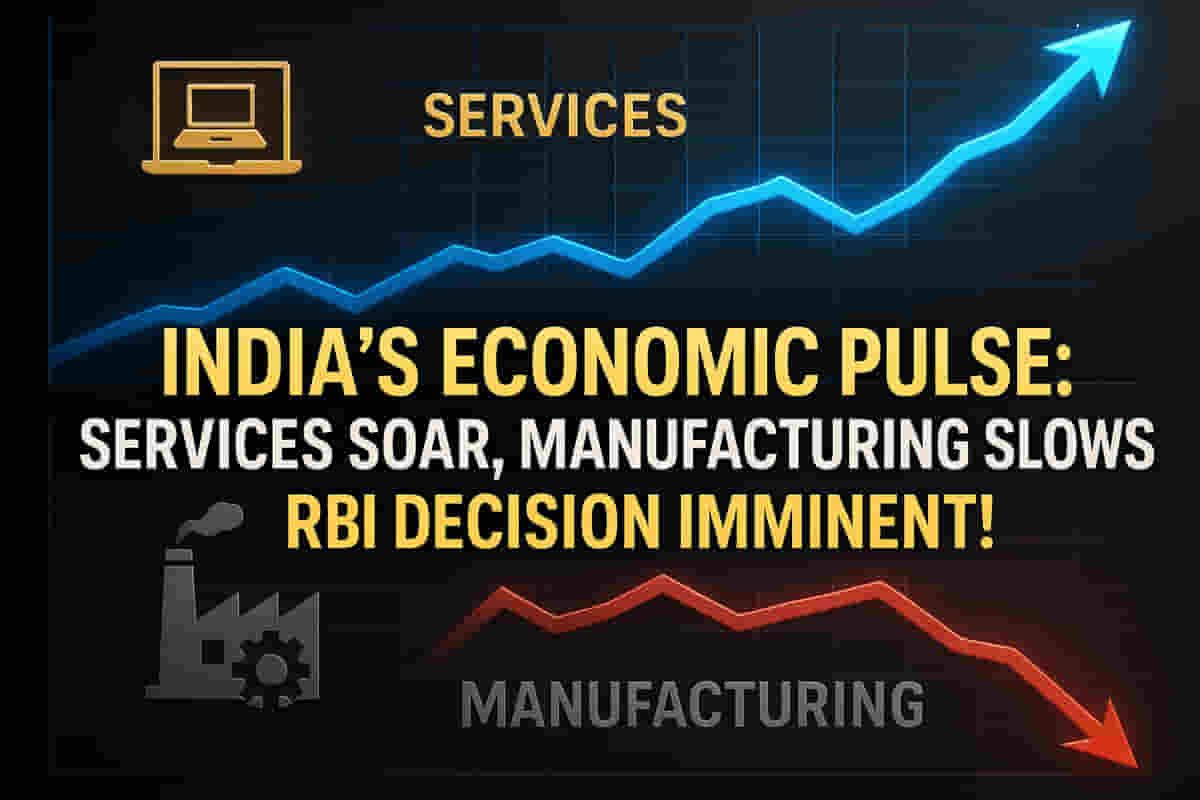
Services Sector Shows Resilience in November
India's services sector continued its robust performance in November, with activity levels rising significantly. According to a private sector survey released on December 3, the HSBC Services Purchasing Managers' Index (PMI) increased to 59.8 from 58.9 in October.
This uptick marks a return to stronger growth after two consecutive months of moderation. While the index has remained below the 60 mark for the second month, its overall strength underscores the sector's vital role in supporting the Indian economy.
Manufacturing Sector Faces Headwinds
In stark contrast to the services sector, manufacturing activity experienced a slowdown in November. The manufacturing PMI slipped to 56.6, reaching a nine-month low. This decline is attributed to softer domestic demand and the ripple effects of international trade policies, including earlier US tariff announcements.
Economic Rebalancing in Play
The divergence between the services and manufacturing sectors highlights a gradual rebalancing of India's economic drivers. The services sector is increasingly acting as a key support for overall economic activity, even as factory output shows signs of losing momentum.
Broader Macroeconomic Indicators
This pattern is consistent with other major economic indicators. The Index of Industrial Production (IIP) for October, released on December 1, showed a modest rise of just 0.4 percent, the slowest pace recorded in 14 months. This follows a stellar first half of the fiscal year, during which GDP grew by an impressive 8 percent, though the second half is anticipated to be more subdued.
Focus on Reserve Bank of India Policy
The economic landscape now turns to the Reserve Bank of India's upcoming policy meeting. Economists are divided on whether the Monetary Policy Committee will implement another 25 basis point rate cut. While the slowdown in manufacturing and weak IIP figures strengthen the case for further monetary easing, policymakers must also consider the strong second-quarter GDP expansion of 8.2 percent.
The RBI is set to announce its policy decision on December 5.
Impact
- The continued strength in the services sector is a positive sign for India's overall economic growth and stability. It helps offset weaknesses seen in manufacturing.
- The slowdown in manufacturing could impact industrial output, employment, and related supply chains.
- The Reserve Bank of India's decision on interest rates will significantly influence borrowing costs for businesses and consumers, potentially affecting investment and spending.
- Impact rating: 8
Difficult Terms Explained
- Purchasing Managers' Index (PMI): A survey-based economic indicator that reflects the health of the manufacturing and services sectors. A reading above 50 indicates expansion, while a reading below 50 suggests contraction.
- Index of Industrial Production (IIP): A measure used to gauge the performance of various industrial sectors in the economy, indicating the volume of production.
- Basis Points: A unit of measure used in finance to denote the percentage change in interest rates or other financial figures. One basis point is equal to 0.01% (1/100th of a percent).
- GDP (Gross Domestic Product): The total monetary value of all finished goods and services produced within a country's borders in a specific time period, serving as a broad measure of economic health.
Stock Investment Ideas Sector

Market Rallies Cautiously! Nifty 50 Snaps Losing Streak; Top Stock Picks Revealed!
Brokerage Reports Sector