

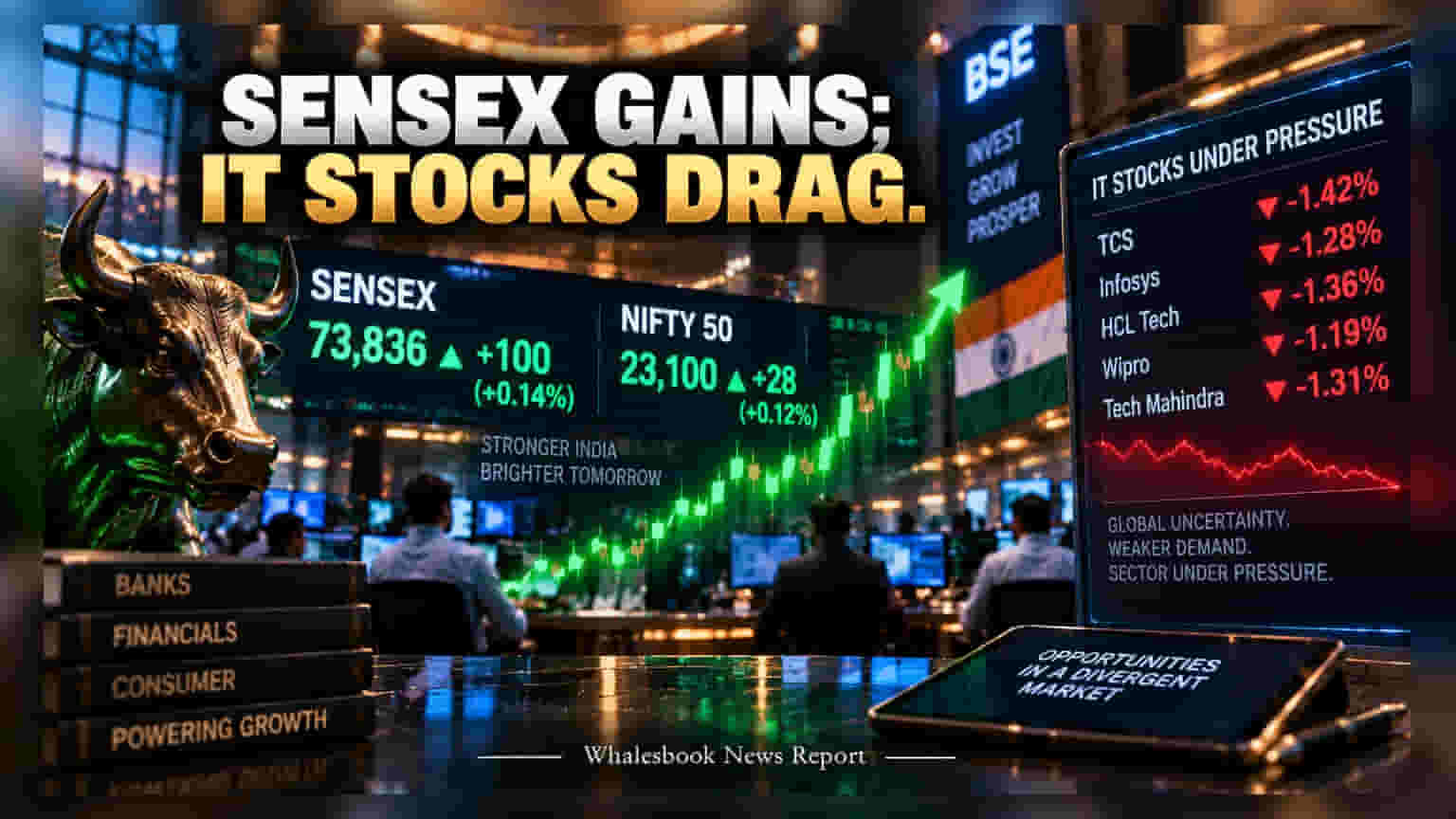
The S&P BSE Sensex gained 100 points in early Friday trade, driven by buying in financial and consumer stocks. However, the Nifty 50 faced resistance at the 23,100 level as IT shares remained under pressure. This highlights the current gap between companies relying on domestic demand and those dependent on global software spending.
Indian equity markets opened in positive territory on Friday, with the S&P BSE Sensex rising by 100 points. The broader Nifty 50 index is currently testing the 23,100 mark, a key level that indicates the market's current momentum. While the overall sentiment remains resilient, the performance is uneven across different sectors.
The IT sector is currently facing pressure, which has acted as a drag on the benchmark indices. Technology companies in India, which derive a significant portion of their revenue from international markets like the US and Europe, are dealing with concerns over global demand and shifting interest rate expectations. When international clients reduce their technology spending or delay projects due to economic uncertainty, Indian IT firms typically see their revenue growth and profit margins come under pressure. This cautious outlook from global clients is often reflected in the trading movement of these stocks.
Supporting the market during this session are the financial and consumer-facing sectors. Banks and financial institutions often benefit from strong domestic credit growth and steady consumer spending. This domestic support has prevented steeper declines, helping the Sensex and Nifty maintain their positive start despite the weakness in technology stocks. For investors, this creates a split-market scenario where domestic-led businesses show stability while export-linked sectors face global challenges.
This divergence is a reminder that the headline index number does not always show the full story of what is happening inside the portfolio. Investors may focus on how individual companies manage their costs and demand, rather than just the movement of the index. Going forward, the market will likely track economic data and global cues to see if the technology sector can find stability or if the current pressure will persist. Watching how these sectors react to upcoming quarterly earnings and management commentary on demand will be the next step for those following the market.