 Whalesbook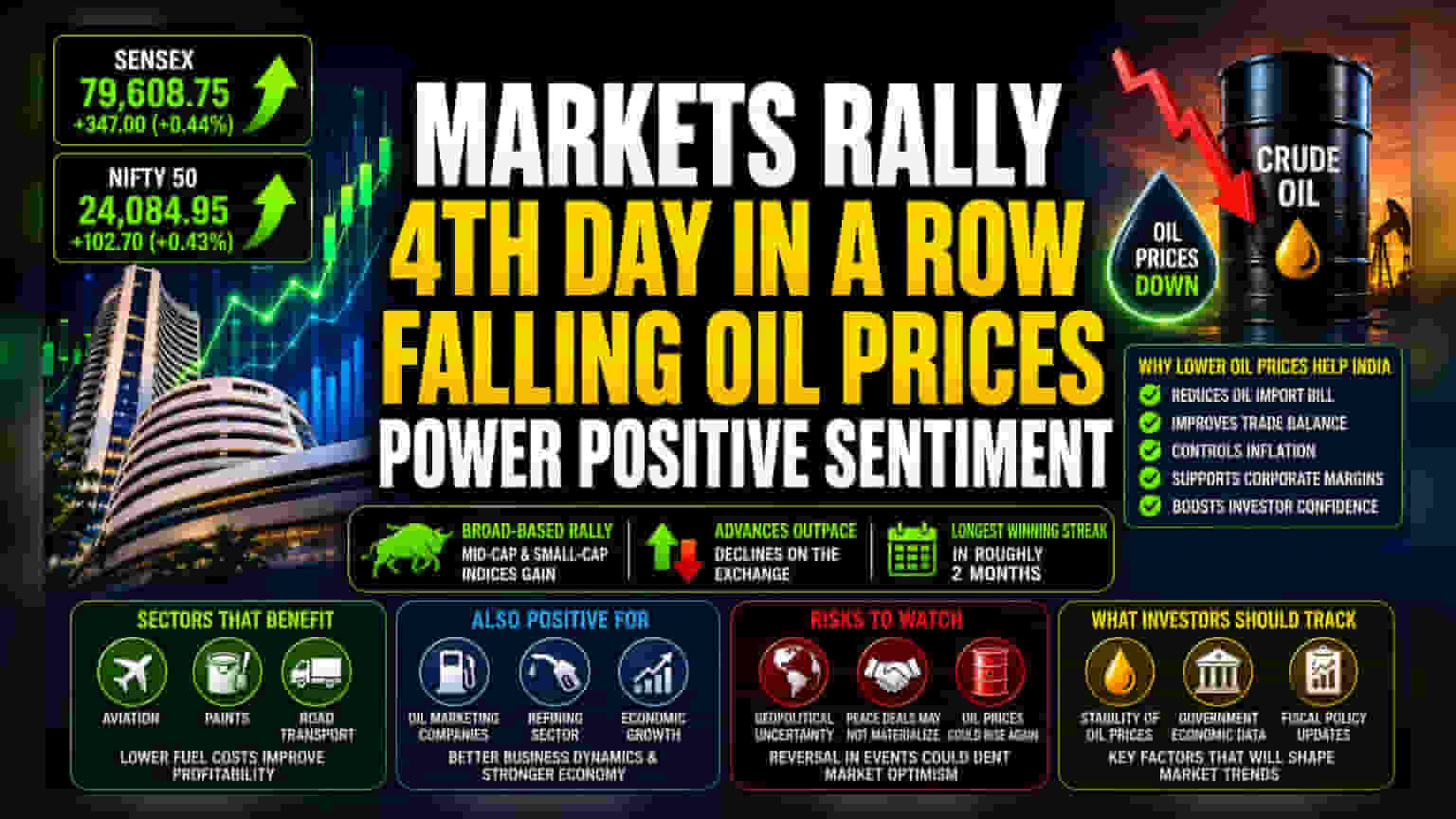


Indian stock markets continued their upward trend for the fourth straight session, with the Nifty 50 finishing above 24,085. The rally was supported by a decline in global crude oil prices, fueled by potential geopolitical developments in the Middle East. Lower oil prices are significant for the Indian economy, as they help manage the country's import bill and reduce inflationary pressure.
What Happened
Indian stock indices, the Sensex and the Nifty 50, recorded their fourth consecutive day of gains on Wednesday. The S&P BSE Sensex added 347 points to close at 79,608.75, while the NSE Nifty 50 index rose 102.70 points to finish at 24,084.95. This marked the longest winning streak for the markets in roughly two months. Market activity was broad-based, with both mid-cap and small-cap indices showing gains, and more stocks advancing than declining on the exchange.
Why Falling Oil Prices Matter
The primary driver of this market sentiment was a drop in global crude oil prices. For the Indian economy, crude oil is a critical commodity because the country imports a vast majority of its oil requirements. When global oil prices fall, it creates a positive chain reaction for the Indian financial system.
Lower crude prices help reduce India’s oil import bill. This supports the country's trade balance and keeps the Current Account Deficit under control. Furthermore, lower oil costs often help reduce inflationary pressure in the economy. Since oil is a major input cost for transportation and manufacturing, cheaper fuel can potentially help businesses protect their profit margins and reduce costs for consumers.
How Investors May Read This
Investors often view the oil price as a key health indicator for the Indian equity market. When oil prices are high, it creates pressure on corporate earnings and the government's fiscal position. Conversely, a drop in prices is typically viewed as a boost to market sentiment.
In terms of sectors, the impact can be varied. Industries that consume a lot of fuel, such as aviation, paint manufacturers, and road transport companies, generally benefit when oil prices stay low, as their raw material or operating costs drop. On the other hand, oil marketing companies, which are responsible for refining and selling fuel, also closely track these price changes as it affects their overall business dynamics.
The Risks Behind The Rally
While the market reacted positively, investors should remember that geopolitical developments—such as peace deals or conflict—are often unpredictable. The current market optimism is tied to reports of a potential U.S.-Iran peace agreement. If these developments do not materialize as expected or if geopolitical tensions flare up again, global crude oil prices could rise quickly. Such a reversal would likely reduce the current market optimism.
What Investors Should Track
For now, the key monitorable for investors is the stability of oil prices. Markets will be watching whether this drop in oil costs is sustained or if it proves to be temporary. Beyond oil prices, investors may also track the upcoming commentary from the government regarding economic data and fiscal management, as these factors continue to influence long-term market trends.