

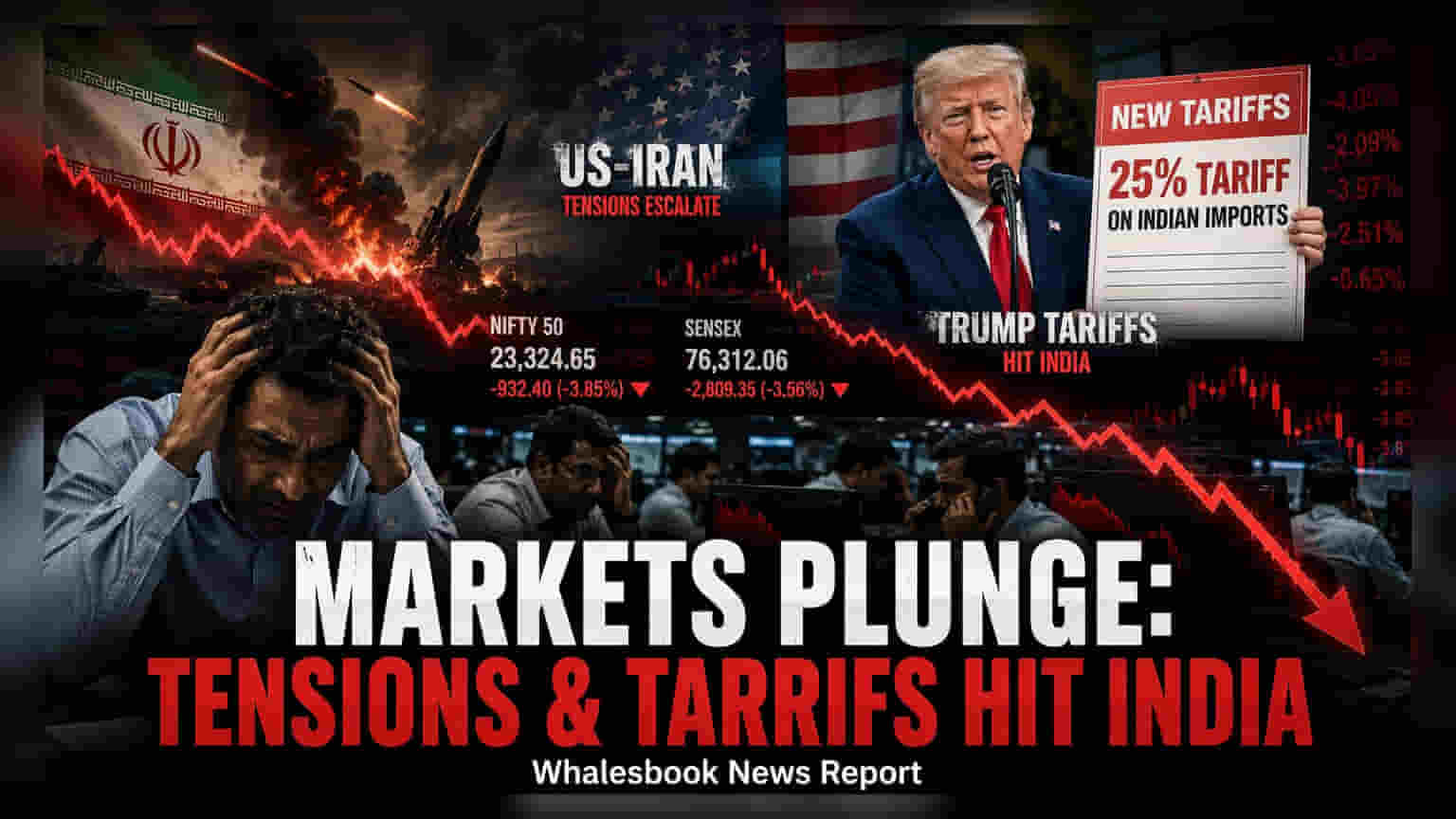
Indian markets fell sharply on Wednesday, wiping out Rs 4.25 lakh crore in value as crude oil prices surged and new US tariff proposals hit pharma stocks. Investors are reacting to rising geopolitical instability in the Red Sea and potential trade barriers for generic drug exports.
Detailed Coverage
Indian equity markets faced a sharp selloff on Wednesday, with the BSE Sensex and Nifty50 both dropping more than 1% as global instability rattled investor confidence. The broader market correction erased approximately Rs 4.25 lakh crore in investor wealth, bringing the total market capitalization on the BSE to about Rs 480 lakh crore.
Impact of Rising Crude Oil Prices
The sudden rise in geopolitical friction between the US and Iran has created significant concerns regarding global energy supplies. Reports of tankers diverting from the Red Sea due to safety fears have pushed Brent crude prices above $92 per barrel, while US WTI crude surpassed $85. For India, a major importer of crude oil, higher prices pose a dual threat: they increase the country's import bill and add pressure to domestic inflation levels. A sustained rise in oil prices often forces companies to deal with higher logistics and input costs, which can weigh on profit margins across energy-intensive sectors.
Pharma Sector Under Pressure
The pharmaceutical sector faced intense selling after US President Donald Trump proposed a phased tariff plan on imported generic medicines. The proposal aims to increase duties over two years, ultimately reaching 200%. This is a significant development for Indian pharmaceutical companies that rely heavily on the US market for export revenue. Shares of major players including Lupin, Piramal Pharma, Glenmark, and Cipla fell by as much as 4%, dragging the Nifty Pharma index down by nearly 2%. Investors are now evaluating the potential impact on future export volumes and profitability if these protectionist measures are implemented.
Currency and Bond Market Reaction
Adding to the equity market decline, the Indian rupee weakened by 11 paise to open at 96.36 against the US dollar. The combination of expensive oil and a stronger dollar typically creates a challenging environment for the domestic currency. Simultaneously, global interest rate trends are affecting asset allocation. The 10-year US Treasury yield climbed to 4.63%, and the 30-year bond yield rose to 5.137%. When yields on safer government bonds increase, they often attract capital away from riskier assets like stocks, as investors seek stability in higher interest-bearing fixed-income instruments. Market participants will be monitoring the next moves in crude oil pricing and official trade policy updates to determine the duration of this current volatility.