

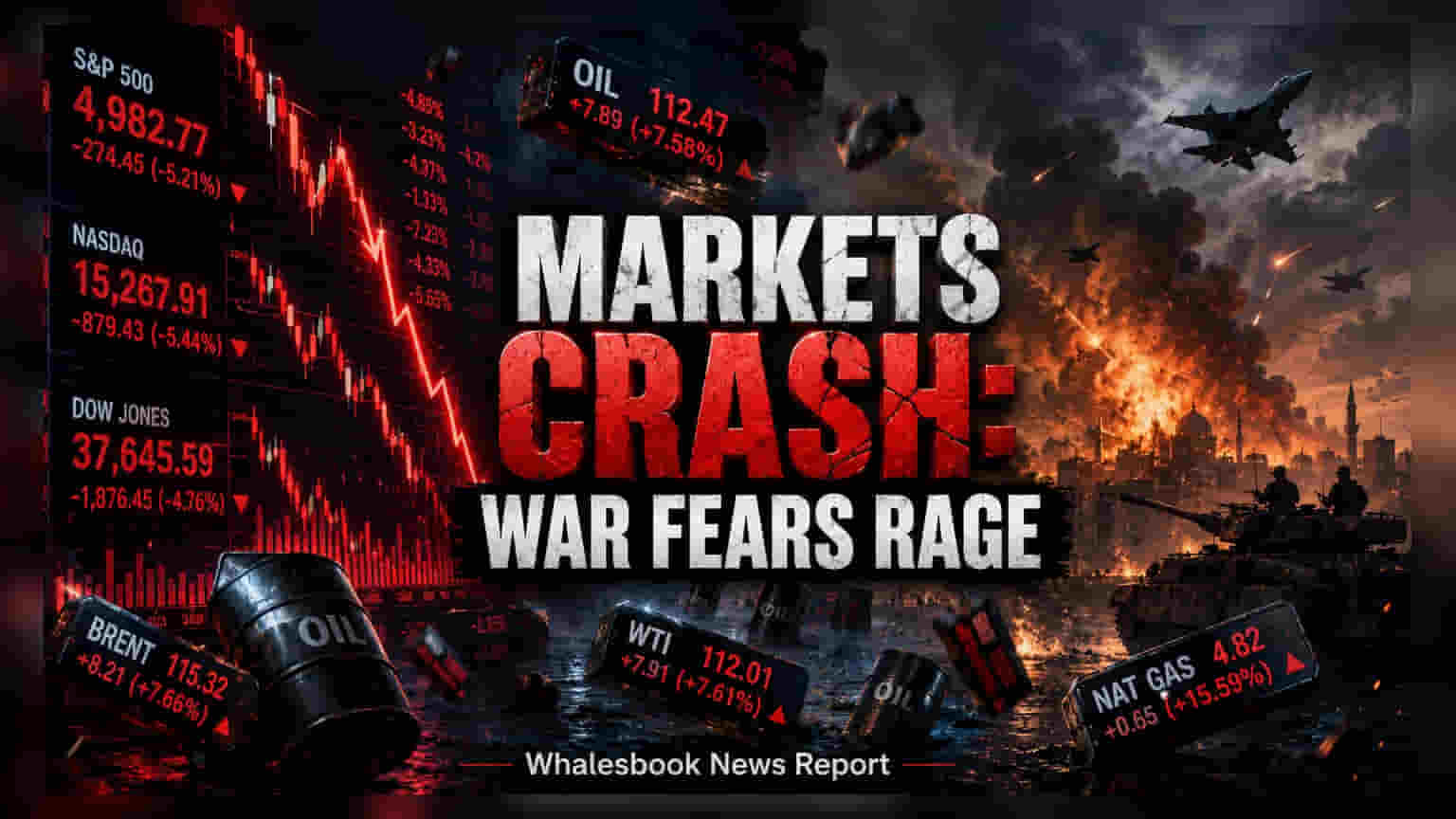
Indian stock indices declined on Wednesday as rising geopolitical tensions between the US and Iran pushed crude oil prices toward $76 per barrel. The surge in energy costs and heightened market volatility triggered a sell-off across sectors, with investors moving away from riskier assets.
Indian equity markets faced a sharp sell-off on Wednesday as geopolitical instability in the Middle East rattled investor sentiment. The BSE Sensex fell by 591.29 points, or 0.76 percent, to 77,589.43, while the NSE Nifty 50 dropped 180 points, or 0.74 percent, to 24,218.70. This movement reflects a broader trend of profit-booking as market participants react to the sudden escalation of conflict between the United States and Iran.
The primary concern for the domestic market is the direct impact on energy prices. Brent crude oil jumped by 2.6 percent to $76.1 per barrel, building upon a previous 3 percent gain. For India, which imports a vast majority of its crude oil requirements, rising oil prices typically signal potential pressure on the country's import bill and inflationary concerns. Investors often fear that sustained high oil prices could squeeze the profit margins of companies across manufacturing, logistics, and consumer sectors due to higher input and transport costs.
Adding to the unease is a notable rise in the India VIX, or the volatility index, which tracks market expectations of near-term fluctuations. The index surged more than 7 percent to 12.47, indicating that traders are bracing for increased uncertainty. When this fear gauge rises, it often leads to reduced risk appetite, causing institutional investors to trim their exposure to equities in favor of safer assets.
Geopolitical developments have also created a complex backdrop for the banking and currency markets. Higher oil prices can influence the value of the rupee against the US dollar, which in turn affects the cost of imports and corporate debt serviceability for companies with high foreign currency borrowings. Market participants will be monitoring the duration and severity of the conflict, as persistent disruption in the Strait of Hormuz could further impact global supply chains and energy security. The next few sessions will likely be determined by how these geopolitical tensions evolve and whether international diplomacy can mitigate the risk of further regional instability.