

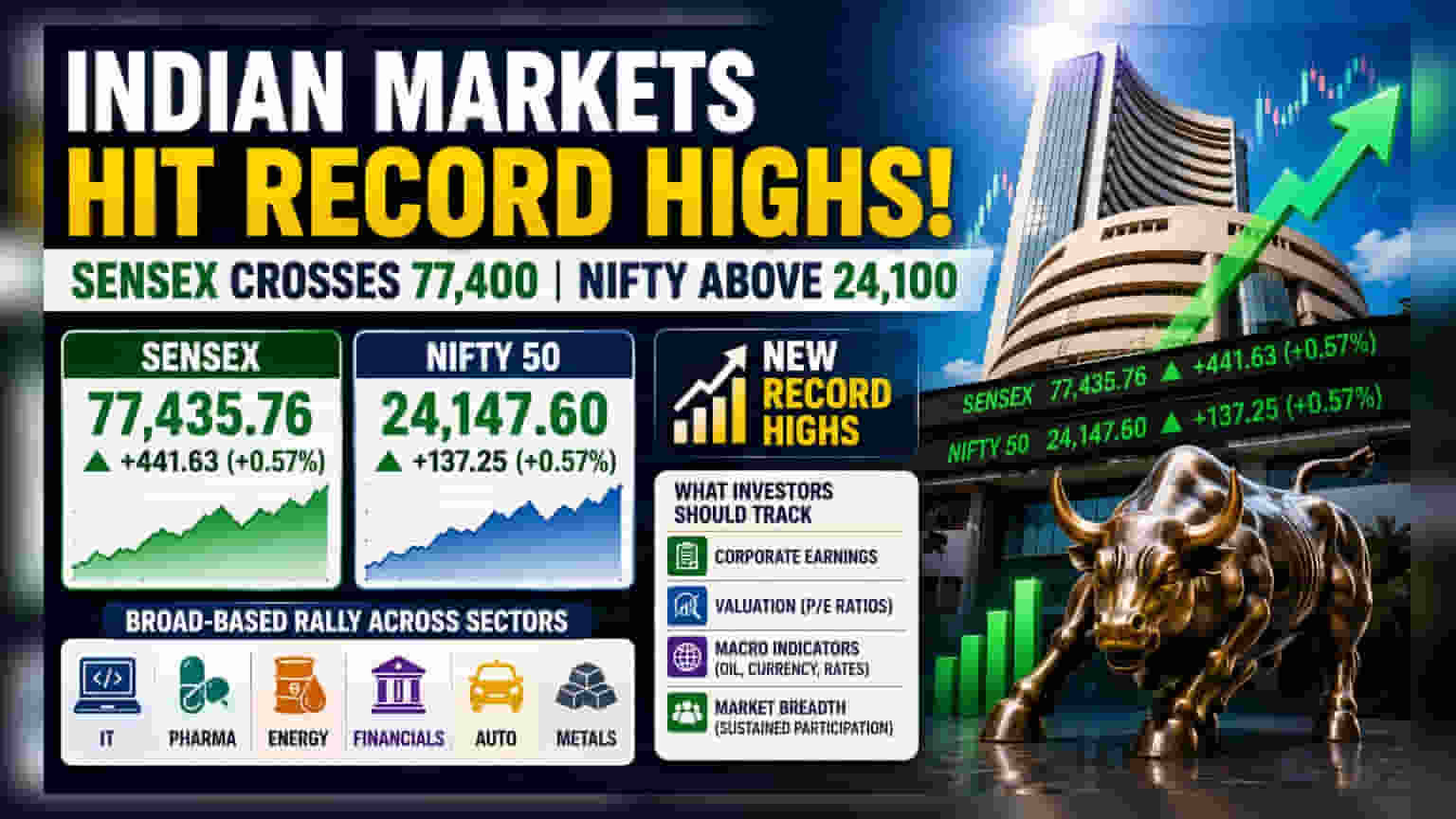
The BSE Sensex and NSE Nifty touched fresh record highs on Thursday, with Sensex crossing 77,400 and Nifty surpassing 24,100. This broad-based rally reflects strong market sentiment, though investors often evaluate such peaks by looking at valuation levels and earnings growth to gauge sustainability.
What Happened
Indian equity markets touched new heights on Thursday, June 25, 2026, as both the BSE Sensex and NSE Nifty climbed to fresh record levels in early trade. The BSE Sensex surged over 440 points to breach the 77,400 mark, hitting an intraday peak of 77,435.76. Simultaneously, the Nifty 50 index gained more than 137 points, crossing the 24,100 level to reach 24,147.60.
This upward movement comes amid a prevailing bullish sentiment in Indian equities, characterized by buying interest across multiple sectors. The rally marks a continuation of the positive momentum seen in recent trading sessions, where market participants have responded to resilient sector performance and steady investor confidence.
Understanding Market Peaks
When stock markets hit record highs, it often generates mixed reactions among investors. On one hand, new peaks signal a healthy economy and growing investor confidence, reflecting the collective expectation that businesses will continue to thrive and generate profits. On the other hand, record highs can sometimes lead to concerns about whether stock prices have outpaced the actual growth in corporate earnings.
Financial analysts often emphasize that a market index is a barometer of the economy. When the index rises, it usually reflects positive expectations for future corporate performance. However, savvy investors often look beyond the headline numbers to see if the gains are supported by solid fundamentals, such as rising revenue and improved profit margins across companies.
Why Broad-Based Rallies Matter
One of the most important aspects of a market rally is its "breadth." A rally is considered healthier when it is broad-based, meaning gains are spread across various sectors like IT, pharma, energy, and financial services, rather than being concentrated in just a few companies.
Recent market data has indicated that Indian indices are benefiting from participation across different industries. This diversification can be a positive sign, as it suggests that the market's strength is not reliant on a single sector or a handful of stocks. When a broad range of companies participate in the rally, it often indicates that the economic growth narrative is shared across the business landscape, which can provide more stability than a narrow, momentum-driven rise.
What Investors Can Track
As the markets hover at record levels, the focus for many participants shifts to the factors that could sustain or challenge this growth. Investors may monitor several key areas:
- Corporate Earnings: Future market direction is often tied to whether companies can meet or exceed earnings expectations in upcoming quarters.
- Valuation Comfort: Market participants typically assess the Price-to-Earnings (P/E) ratio to determine if stocks are getting too expensive relative to their historical averages.
- Macroeconomic Indicators: Global cues, such as changes in crude oil prices, currency fluctuations, and interest rate policies by central banks, often influence investor appetite for risk.
- Market Breadth: Continued tracking of whether the rally remains broad-based or if it becomes concentrated in a few sectors helps in understanding the underlying health of the current trend.
By focusing on these fundamental drivers rather than just the daily price movement, investors can better navigate the market environment during periods of record-high valuations.