

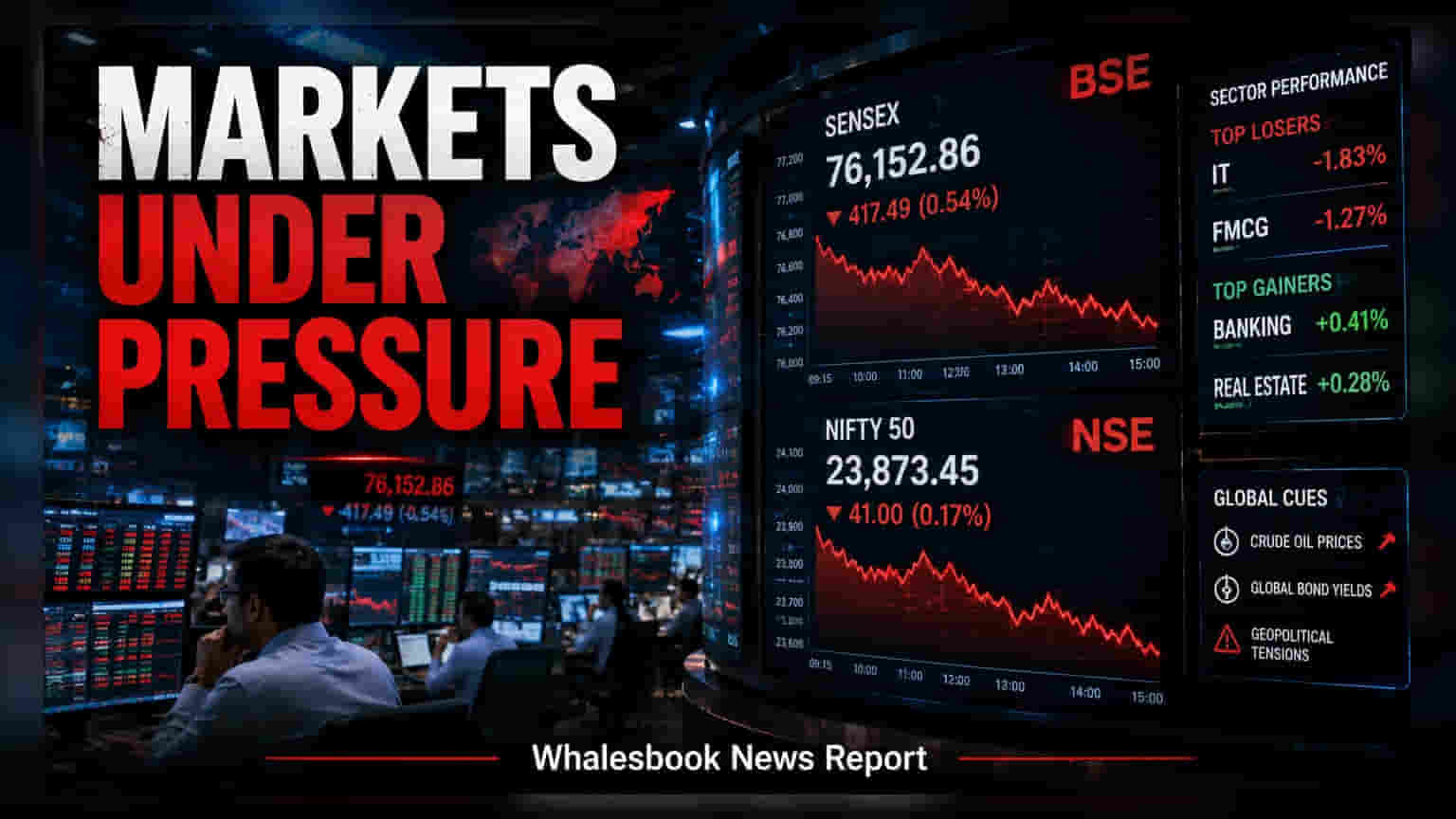
The BSE Sensex dropped 417.49 points to close at 76,152.86 on September 3, 2026, marking the fourth consecutive session of declines. Indian markets faced pressure from rising global crude oil prices, geopolitical tensions, and elevated bond yields. While sectors like banking and real estate showed some resilience, weakness in the IT and FMCG space dragged the indices lower.
On September 3, 2026, the Indian stock market continued its downward trend, with the BSE Sensex shedding 417.49 points to end the session at 76,152.86. This marked the fourth consecutive day of losses for both the Sensex and the NSE Nifty 50, which declined by 41 points to finish at 23,873.45. Despite a briefly positive opening, the markets were unable to hold onto gains as selling pressure intensified throughout the day.
Why Global Factors Are Weighing on Markets
The current weakness in the Indian indices is largely tied to external macroeconomic pressures. Rising global crude oil prices are a significant concern for the Indian economy, as they increase the nation's import bill and can fuel inflation. Furthermore, ongoing geopolitical tensions are creating an environment of uncertainty, causing investors to remain cautious. Adding to this is the impact of elevated global bond yields; when yields rise, money often flows out of emerging market equities toward these safer fixed-income assets, which has contributed to the selling pressure seen over the last few sessions.
Diverging Sectoral Performance
While the overall market sentiment remained cautious, the performance varied across different sectors. The selling was most intense in the IT and FMCG sectors, where investors appeared to be reducing their exposure. This trend suggests that participants are currently hesitant to hold high-valuation stocks in the face of broader market uncertainty. In contrast, the banking and real estate sectors showed signs of resilience, indicating that pockets of buying interest remain active even during a wider market decline.
What Investors Should Monitor
For investors, the recent four-day losing streak highlights a period of high volatility. The market is struggling to establish a stable support level as investors react quickly to shifting global signals. The immediate focus for the market will likely be on whether crude oil prices stabilize and if there are any signs of relief in global bond yields, as these factors are heavily influencing current liquidity flows. As the market attempts to find a firm base, investors are keeping a close watch on these global indicators, which will likely dictate the direction of the indices in the near term.