

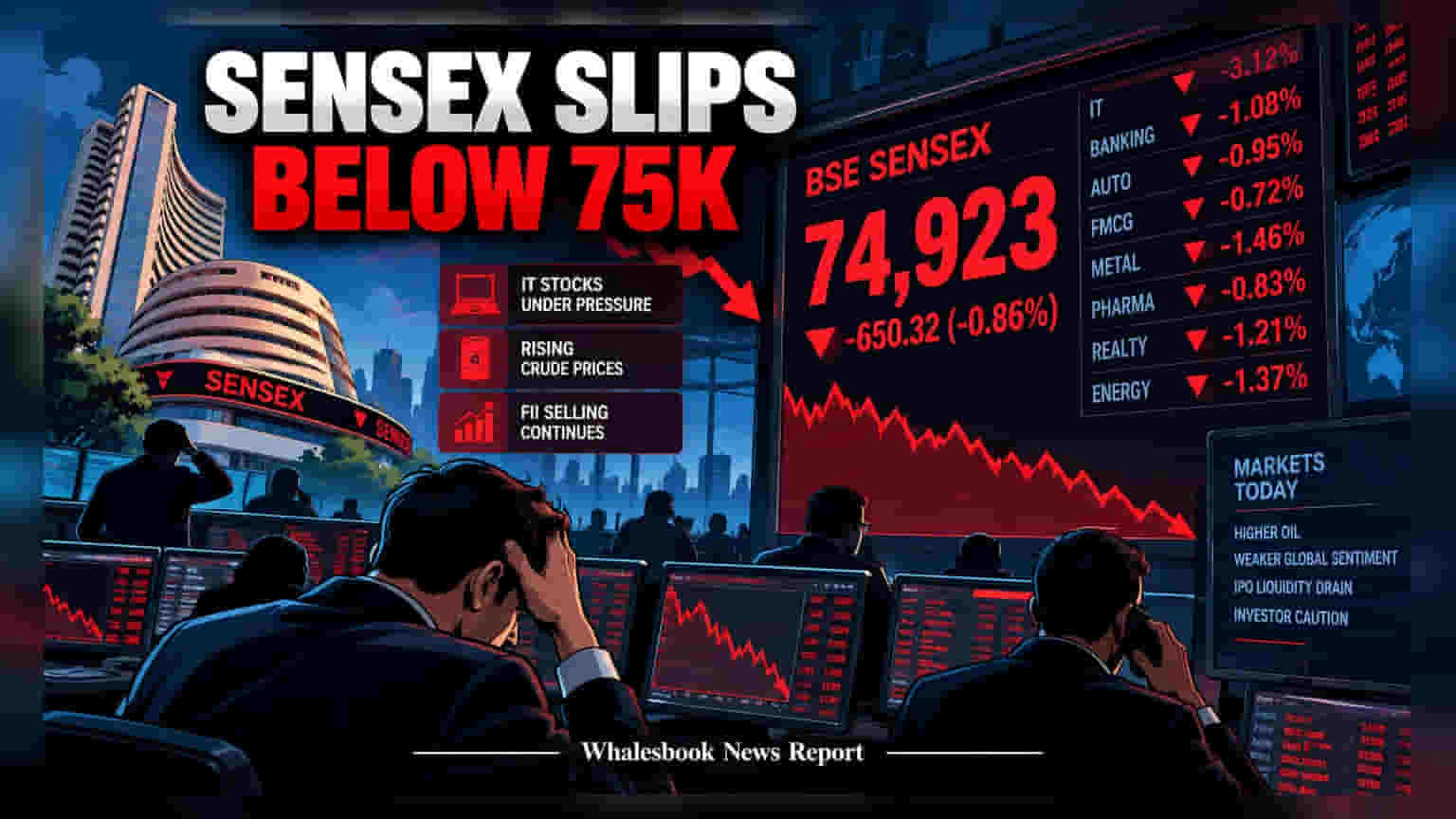
The BSE Sensex fell over 650 points on September 9, 2026, dipping below the 75,000 mark as major IT stocks faced a sharp sell-off. The market is struggling with a combination of rising crude oil prices, geopolitical tensions, and a structural liquidity shift where investors are moving capital from established stocks into new IPO listings.
The Indian equity market witnessed a sharp reversal on Wednesday, with the BSE Sensex dropping more than 650 points to slide below the 75,000-mark. The Nifty 50 also recorded significant selling pressure as investors reacted to a combination of domestic and global challenges.
The decline was led primarily by the IT sector, which has been a major pillar for Indian benchmarks. Major technology companies, including Infosys, Tech Mahindra, HCL Technologies, and Tata Consultancy Services, saw their share prices fall by 2% to 4% during early trade. This broad-based weakness in technology stocks suggests that investors are re-evaluating the value of these companies, as uncertainty surrounding global corporate earnings continues to cloud the outlook.
Beyond the specific performance of IT stocks, the market is dealing with a significant liquidity issue. There is a noticeable trend where capital is being pulled out of the secondary market and redirected into the primary market to chase new Initial Public Offerings. Market data indicates that while Foreign Institutional Investors have been net sellers in the broader equity market, they are simultaneously pumping billions into recent IPO listings, seeking short-term gains. This shift in capital is leaving large-cap stocks without the necessary buying support to sustain their valuations.
The macroeconomic environment is also adding to the pressure. Brent crude oil prices have surged toward the $100 per barrel threshold, largely driven by escalating tensions between the US and Iran. Since India relies heavily on imported energy, higher oil prices typically hurt the country's fiscal position and fuel inflationary concerns, which directly impacts corporate profit margins for many sectors.
Investors are currently monitoring how these geopolitical risks influence energy prices and whether the current liquidity drain from established stocks into IPOs will continue. For now, the combination of a high-cost energy environment and the diversion of capital is creating a challenging atmosphere for benchmark indices. The next few sessions will be important for tracking whether the selling pressure in the IT sector stabilizes or if it signals a broader caution among institutional investors regarding future growth expectations.