

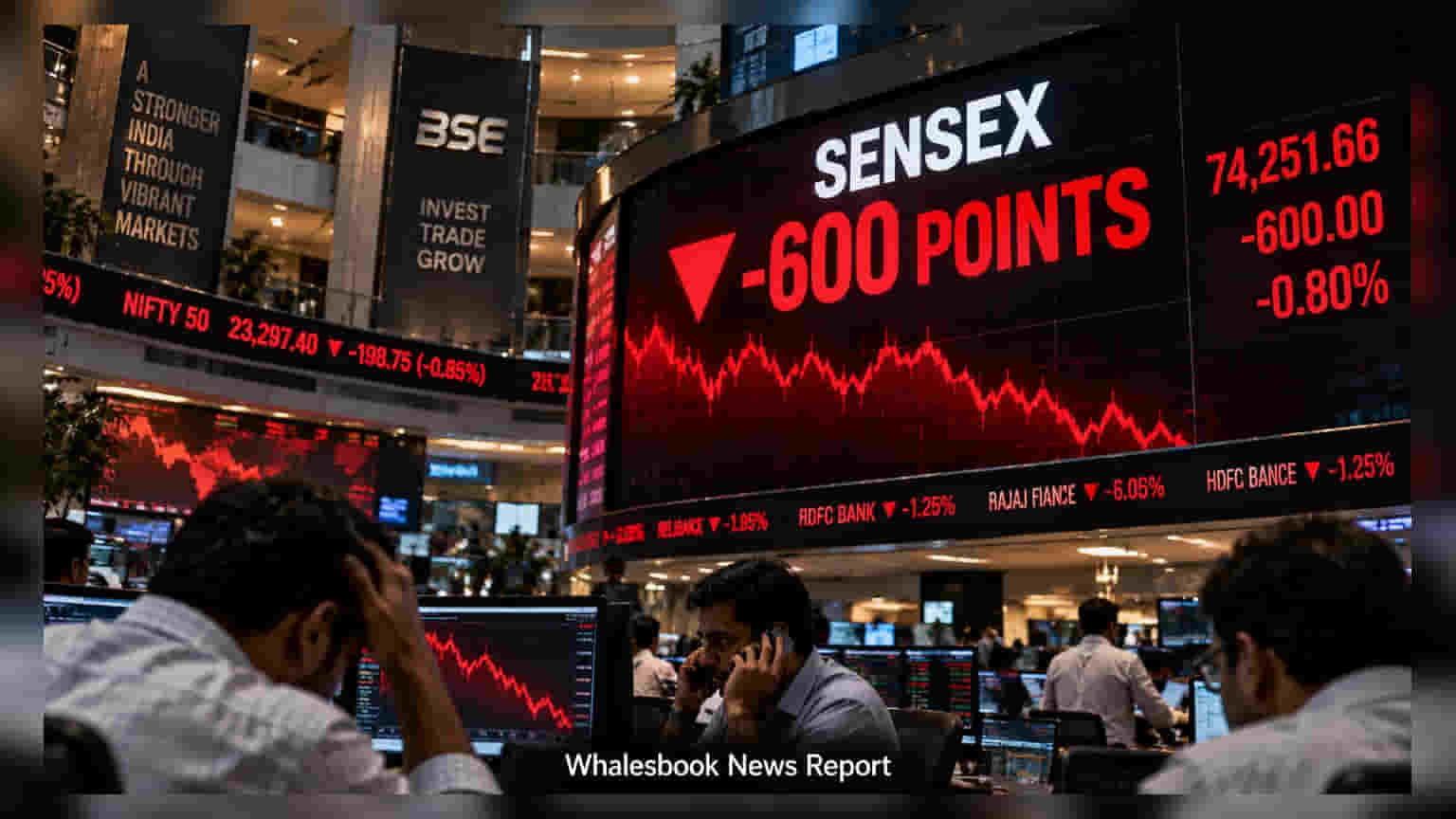
Indian stock markets faced a sharp sell-off on Wednesday, with the BSE Sensex falling 600 points and the Nifty 50 sliding below the 23,300 support level. The decline was largely led by heavy selling in the financial sector, notably a 6% drop in Bajaj Finance. Investors are now closely watching for signs of stability as market volatility increases.
Indian equity markets opened with significant selling pressure on Wednesday, causing the benchmark indices to retreat from recent levels. The BSE Sensex fell by 600 points, while the Nifty 50 index dropped below the crucial 23,300 mark. For many investors, breaching this 23,300 level is significant because it is often viewed as a psychological support, a price point where buying interest historically helps prevent further declines.
Impact of Financial Heavyweights
A major factor behind this drop was the negative performance of key financial stocks. Bajaj Finance became a primary driver of the decline, with its shares plunging 6% during the session. In the Indian stock market, indices like the Nifty 50 are weighted, meaning that large companies have a bigger impact on the total movement of the index. When a heavy-weight stock like Bajaj Finance falls sharply, it exerts downward pressure on the entire index, even if other smaller stocks are performing differently.
Understanding Market Volatility
The current environment reflects a shift in investor sentiment, as market participants re-evaluate their risk exposure. When indices decline rapidly, it often triggers technical selling, where computer programs or traders automatically sell stocks as they cross certain price thresholds. This creates a chain reaction that can accelerate a market fall in the short term. The high volume of trading activity observed today suggests that investors are reacting to changing market conditions by adjusting their portfolios, leading to increased volatility across major sectors.
What Investors Should Monitor
As the market adjusts, investors typically watch for a few specific indicators. First is the ability of the index to stabilize around these lower levels. If the index can hold above current support points, it may suggest that the selling has eased. Conversely, if the downward momentum continues, participants often look for signs of value buying from institutional investors. The key monitorable for the coming sessions will be whether the financial sector can recover or if the selling pressure persists. Investors often review their risk management strategies during such volatile periods, ensuring their portfolio allocation remains aligned with their long-term goals rather than reacting to short-term price fluctuations.