

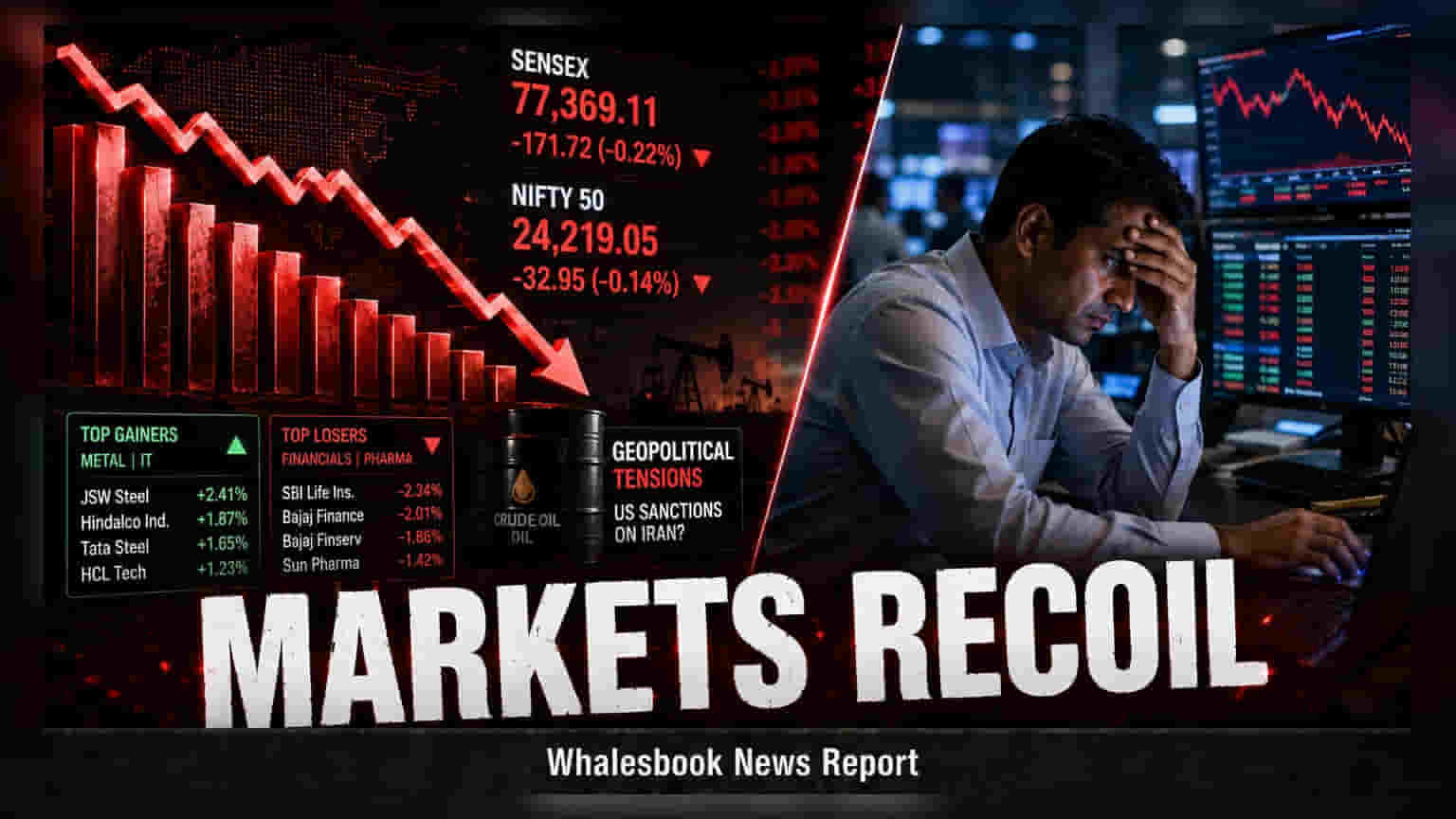
Indian markets closed lower on August 24, 2026, as investor caution regarding potential U.S. sanctions on Iran and rising crude oil prices weighed on sentiment. While the broader indices retreated, specific sectors like metal and IT offered some support to the market.
Indian stock market indices ended in the red on August 24, 2026, as investors turned cautious amidst rising global uncertainties. The BSE Sensex closed at 77,369.11, down by 171.72 points or 0.22%. Similarly, the Nifty 50 index declined by 32.95 points or 0.14%, settling at 24,219.05 and slipping below the 24,250 support level.
The decline was primarily driven by geopolitical tensions, specifically reports regarding potential U.S. economic sanctions against Iran. This development, coupled with persistent concerns over elevated global crude oil prices, kept market participants on edge throughout the session. These factors often impact India's import bill and inflation outlook, causing investors to adopt a wait-and-watch approach.
Sectoral Divergence
Despite the overall market dip, there was a clear divergence in sectoral performance. The metal and IT sectors demonstrated resilience, helping to limit the downside. Investors appeared to favor metal stocks, with names like JSW Steel, Hindalco Industries, and Tata Steel featuring among the top gainers on the Nifty 50. HCL Technologies also saw buying interest, adding support to the IT index.
Conversely, the financial services and pharma sectors faced significant selling pressure. The Nifty PSU Bank index and overall financial services space were laggards, leading to a broader drag on the indices. Major stocks that ended the day in the red included SBI Life Insurance, Bajaj Finance, and Bajaj Finserv. The selling in these heavyweight financial stocks contributed directly to the Sensex's decline.
Risks and Future Outlook
Looking ahead, the market is approaching the monthly F&O expiry, which often brings higher volatility as traders adjust their positions. The combination of potential geopolitical risks from the Middle East and fluctuating crude oil prices remains a key concern for investors. If crude oil prices continue to rise, they could impact corporate profit margins and investor sentiment in sectors sensitive to fuel costs.
Investors may monitor how indices behave around the 24,000 support level, which technical analysts often watch for signs of further correction or stability. Furthermore, any updates on the U.S.-Iran diplomatic situation will remain a crucial trigger for global energy prices and equity markets in the coming days.