 Whalesbook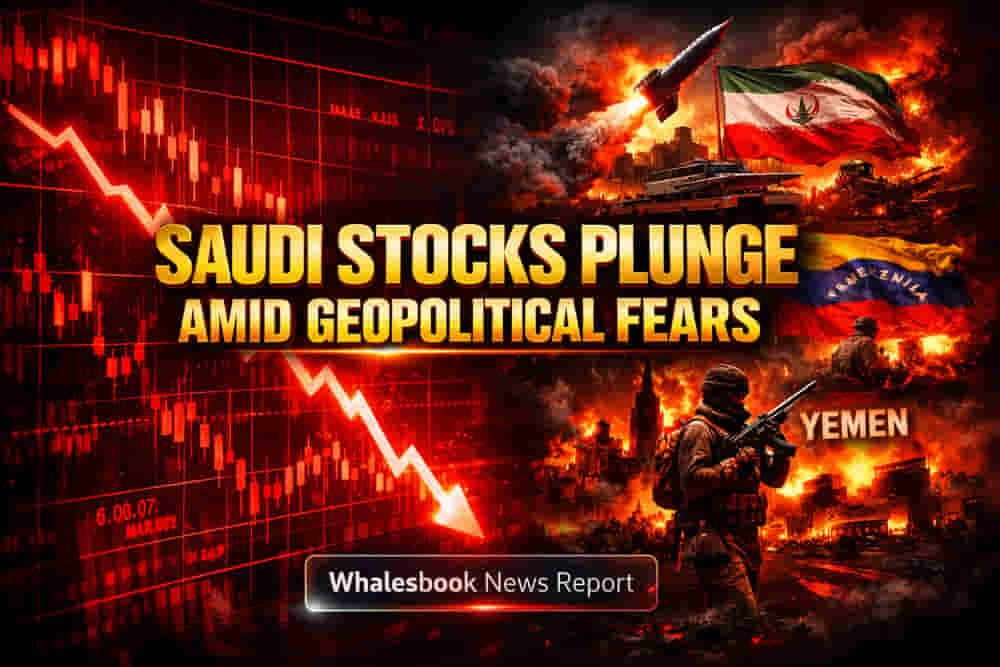
Saudi Equities Tumble Amid Geopolitical Storms
Saudi Arabian stock markets experienced a significant downturn on Sunday, January 4, marking their sharpest decline in nearly nine months. The Tadawul All Share Index, the kingdom's benchmark index, fell by 1.8%, closing at its lowest point since October 2023. This slump underscores investor concerns over a confluence of escalating geopolitical tensions and the lingering effects of subdued oil prices.
The Core Issue: Regional Instability Fuels Investor Fears
The current market weakness is largely attributed to a volatile geopolitical landscape. Investors are grappling with fallout from rising tensions not only in Venezuela but also closer to home, with ongoing concerns in Iran and Yemen. In Yemen, Saudi Arabia has called for negotiations amidst clashes between forces it backs and rival separatists supported by the United Arab Emirates. Meanwhile, Iran is experiencing protests against its regime, which the Supreme Leader has attributed to external incitement.
These regional security concerns contribute to a heightened geopolitical risk premium for the broader Middle East market. Junaid Ansari, head of research and strategy at Kamco Investment Co, noted that while there are currently no indications of direct confrontation or escalation, particularly concerning Yemen, the sentiment is clearly affected by these developing situations. The instability in Iran, in particular, is adding to investor apprehension across the region.
Financial Implications: A Harsh Year and Lingering Oil Price Woes
The year 2025 proved to be the worst for Saudi equities since 2015. This extended period of underperformance is attributed to a combination of factors, chief among them being persistently subdued oil prices. Lower oil revenues have constrained public spending, a critical driver of economic activity in Saudi Arabia, and have also put pressure on corporate earnings. This economic backdrop creates a challenging environment for market growth.
Market Reaction: Broad-Based Declines and Contrasting Neighbors
The impact was felt across the board, with all sectoral indices on the Tadawul All Share Index ending lower on Sunday. This broad-based decline signifies a widespread investor sell-off. In stark contrast to Saudi Arabia's performance, markets in neighboring countries such as Qatar, Oman, and Bahrain managed to close with modest gains, indicating that the current pressures are more specific to the dynamics within Saudi Arabia and its immediate geopolitical sphere.
Expert Analysis and Future Outlook: Divided Opinions Prevail
Looking ahead, analysts remain divided on the prospects for the Saudi market in the new year. Some foresee potential for healthy returns, anticipating that changes in foreign investment limits could attract significant capital inflows. Others, however, express caution, believing that the markets may continue to lack the necessary momentum for a substantial recovery. The immediate impact of any potential disruptions in the global oil markets, which resume trading on Monday after the weekend holiday, will be closely watched.
Impact
This news has a significant impact on regional economic stability and investor confidence. Fluctuations in Saudi equities, a major global market, can influence broader emerging market sentiment. Furthermore, the underlying geopolitical tensions and their potential to affect oil supply and prices carry global implications, particularly for energy-dependent economies. The market's sensitivity to these events highlights the inherent risks in regions prone to geopolitical instability.
Impact Rating: 7/10
Difficult Terms Explained
- Geopolitical Tensions: Conflicts, rivalries, and political disputes between nations or regions that can affect international relations and stability.
- Tadawul All Share Index: The main stock market index in Saudi Arabia, representing the performance of most publicly traded companies on the Saudi Stock Exchange.
- Sectoral Indices: Stock market indexes that track the performance of companies within a specific industry or sector, such as energy, finance, or technology.
- Geopolitical Risk Premium: An additional return demanded by investors to compensate for the potential negative impact of political instability or conflict in a specific region or country.
- Subdued Oil Prices: A period where the price of crude oil remains relatively low, impacting the revenues and economies of oil-exporting nations.
- Public Spending: Government expenditure on goods, services, infrastructure, and social programs, which is often a key economic driver for oil-rich nations.
- Corporate Earnings: The profit a company makes over a specific period, reported in its financial statements.