

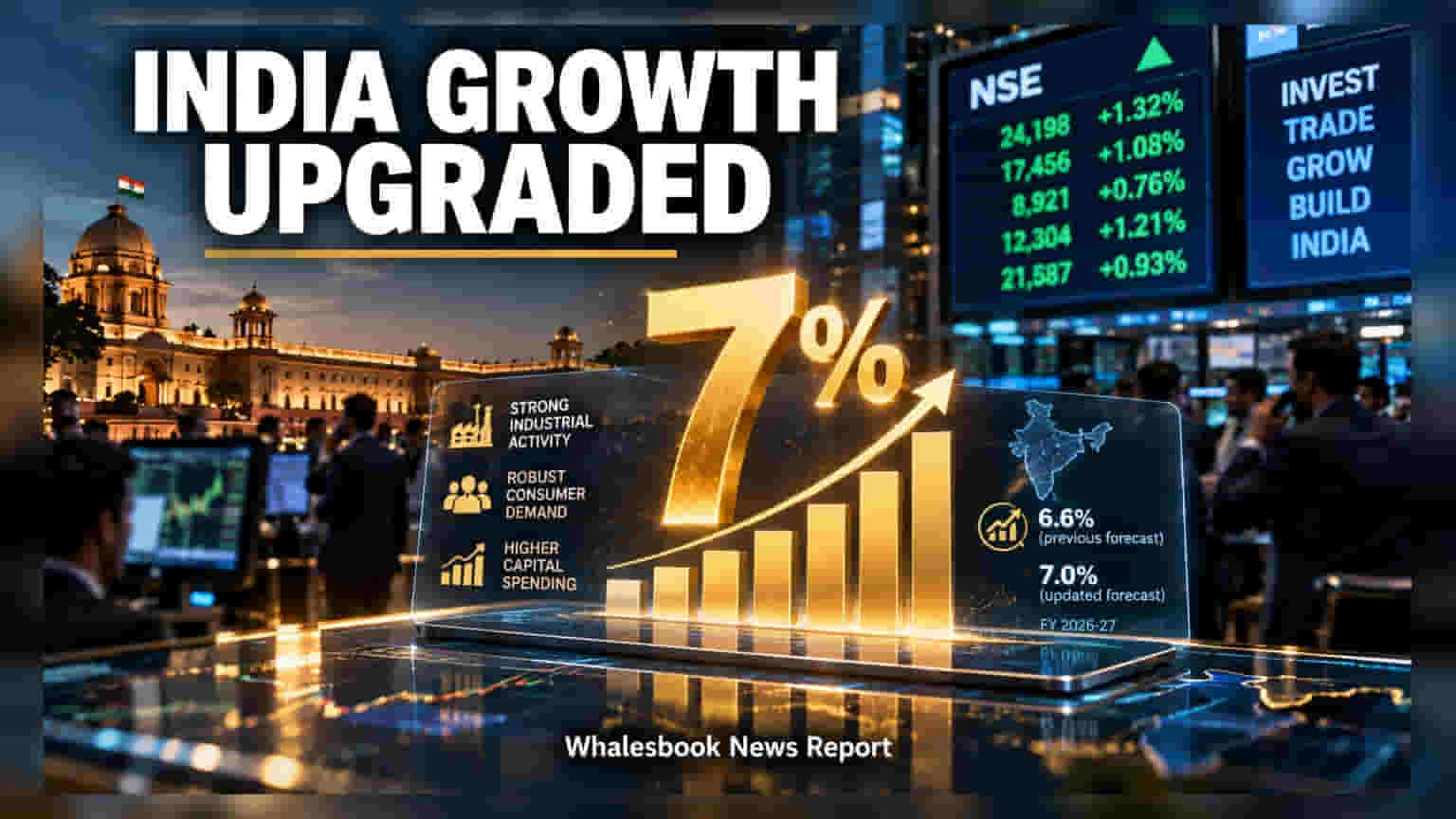
S&P Global has raised India's economic growth forecast for 2026-27 to 7% on the back of strong industrial performance and government spending. While growth is accelerating, risks such as food inflation and potential interest rate hikes remain key monitorables for investors. Meanwhile, the government has directed banks to stay open this Sunday to manage upcoming strike disruptions.
S&P Global has revised its GDP growth forecast for India for the fiscal year 2026-27, lifting the projection to 7% from the previous estimate of 6.6%. The agency noted that this growth is being supported by steady industrial activity, strong consumer demand, and the government's continued focus on capital spending. This upgrade aligns with recent optimistic outlooks from other global agencies. However, the report also suggests that growth could slow in the second half of the fiscal year as the immediate benefits from past tax and policy changes begin to settle.
Inflation and Interest Rate Risks
While the growth outlook is positive, investors may watch for signs of inflationary pressure. The agency highlighted that erratic monsoon patterns could impact agricultural production, potentially keeping food inflation elevated. Higher inflation often limits the room for the Reserve Bank of India to cut interest rates. In fact, S&P analysts indicated that the central bank might consider a policy rate hike of 0.25% before the fiscal year concludes to keep inflation in check. For investors, the balance between growth and managing interest rates remains a crucial factor for market sentiment in the coming quarters.
Energy Strategy and Trade Context
Finance Minister Nirmala Sitharaman recently addressed concerns regarding India's energy sourcing strategy. Amid reports of potential new tariffs on nations importing Russian energy, the Minister reiterated that India’s primary focus remains on energy security and securing cost-effective crude oil. The government intends to maintain a pragmatic approach to energy procurement, prioritizing the needs of the domestic population and the operational requirements of Indian refineries over international trade friction. This stance suggests that India will continue to seek the most stable energy supply routes available, regardless of shifting global policies.
Bank Operations and Regulatory Updates
Investors should also note potential operational disruptions in the banking sector. Bank unions have called for a three-day nationwide strike from September 28 to 30, citing demands for a five-day work week and changes to incentive schemes. To minimize the impact on customers, the Ministry of Finance has directed public sector and regional rural banks to keep their branches operational on Sunday, September 27. The Reserve Bank of India has also authorized the opening of currency chests and ATM-linked branches to ensure liquidity remains available during the strike period.
Additionally, the Supreme Court of India is currently examining the selection process for Election Commissioners. The judiciary is reviewing the 2023 law that replaced the Chief Justice of India with a Union Cabinet Minister on the selection panel. The court is considering whether a larger Constitution Bench is needed to ensure the independence of the election body, a matter that reflects the ongoing interaction between the executive and the judiciary on governance processes.