

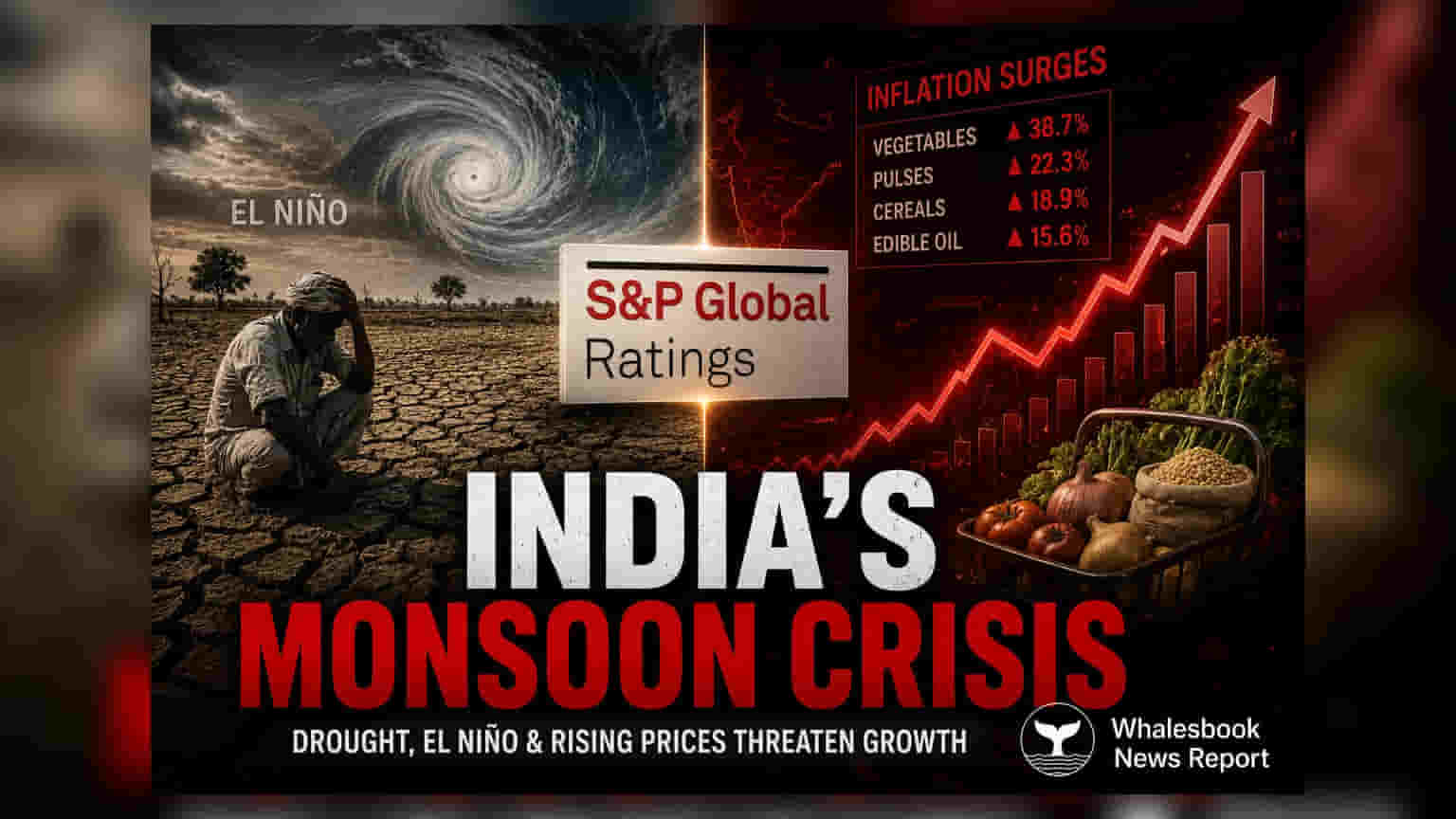
S&P Global Ratings expects below-average monsoon rainfall, potentially pushing India's inflation to 5.1% in FY27. This shift may tighten rural demand and pressure government finances. Investors should track sectors like agrochemicals, tractors, and FMCG, which are historically sensitive to rainfall variations.
A weaker-than-expected monsoon season could pose significant challenges for the Indian economy in the current fiscal year. According to a report by S&P Global Ratings, rainfall is projected to reach approximately 90% of the long-period average, with El Nino conditions increasing the likelihood of erratic weather patterns. This environmental factor is now a key point of observation for investors, as it could influence both consumer spending power and corporate profitability across multiple sectors.
Inflation Risks and Monetary Policy
The report indicates that a deficit in rainfall often leads to spikes in food prices, which form a major portion of India’s consumer price index. S&P projects that this could drive inflation to 5.1% in fiscal year 2027, rising from the 3.9% level recorded in May 2026. If these forecasts hold, the Reserve Bank of India may find it difficult to lower interest rates, opting instead to maintain a tight monetary policy. High interest rates generally increase borrowing costs for businesses and consumers, which can slow down economic expansion.
Impact on Rural Demand and Government Spending
Rural consumption is a vital engine for many Indian industries. A dry spell threatens this demand, potentially forcing the government to increase spending on welfare programs such as fertilizer subsidies and the Mahatma Gandhi National Rural Employment Guarantee Act (MGNREGA). While these measures help protect rural livelihoods, they also place pressure on the government’s efforts to narrow its fiscal deficit. However, India holds substantial food grain reserves and has a more diversified economy today, with the services and manufacturing sectors now playing a larger role than in decades past, which may act as a buffer against total agricultural decline.
Sectoral Exposure and Banking Stability
Certain industries are more vulnerable to weather shocks than others. Historically, weak monsoon cycles have correlated with volume declines of approximately 10% for the tractor and agrochemical sectors. Two-wheeler manufacturers may see potential volume drops between 5% and 10%, while FMCG companies might experience a 2% to 5% reduction. Additionally, while total power supply is expected to remain stable, hydroelectric generation could face a 10% to 15% decline in specific regions.
In the financial sector, banks are expected to absorb these pressures with resilience. However, there is a risk of moderated rural credit demand and a slight weakening in asset quality for loans tied to agriculture. Microfinance institutions are generally considered to have higher exposure given their reliance on rural and farm-linked income. Despite these risks, improved irrigation infrastructure, expanded crop insurance, and higher minimum support prices are expected to limit widespread credit stress. Investors will likely monitor future rainfall data and monthly food inflation reports to gauge the actual impact on corporate earnings in the coming quarters.