

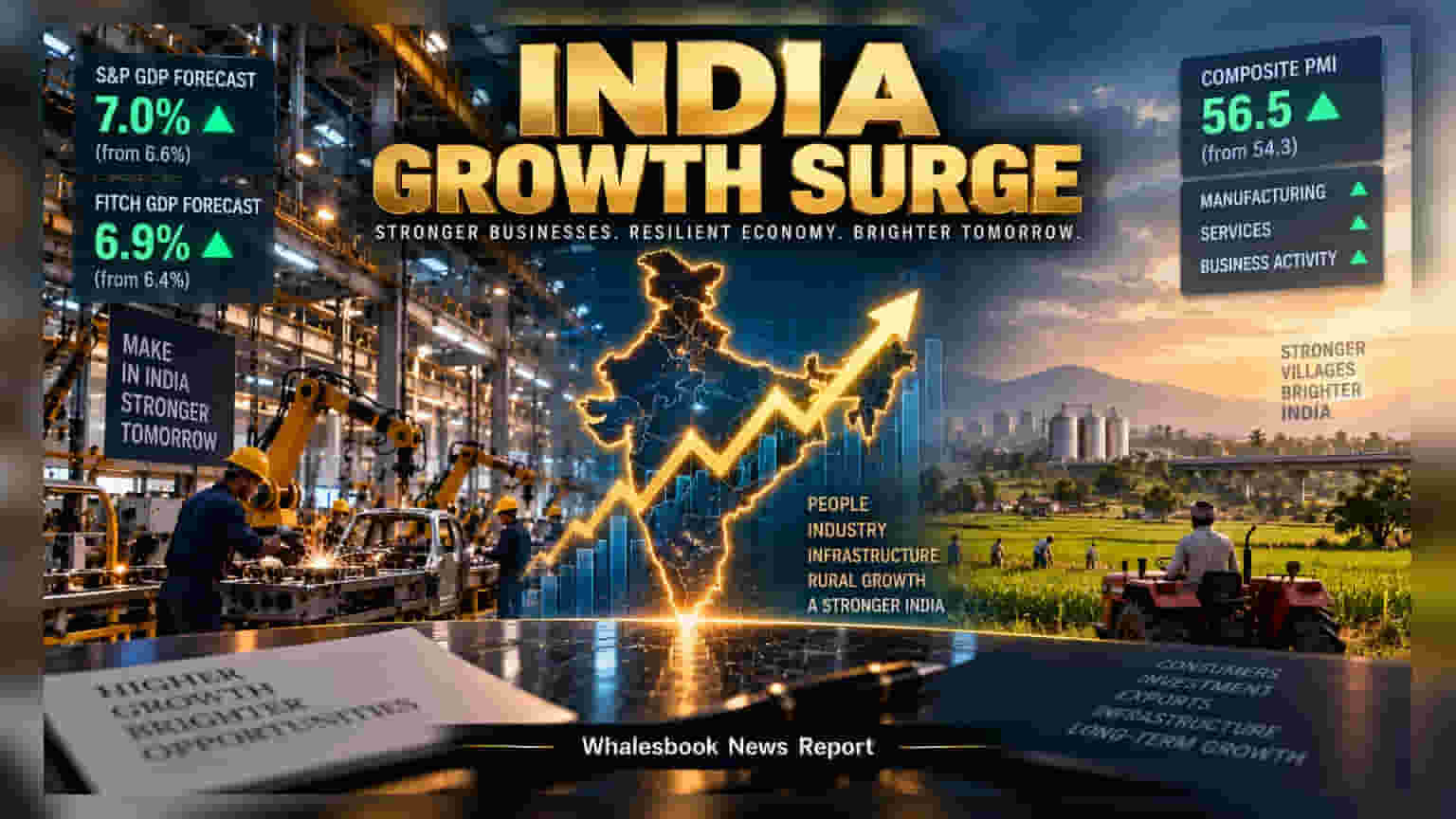
Global rating agencies S&P and Fitch have upgraded India's FY27 GDP growth forecast to 7% and 6.9% respectively, citing strong economic resilience. While September’s PMI data indicates expansion, investors should monitor risks such as geopolitical supply chain disruptions, slowing exports, and weak rural demand affecting consumer spending.
Global rating agencies S&P and Fitch have raised their GDP growth projections for India for the 2027 fiscal year. S&P has upgraded its forecast to 7 percent from the previous estimate of 6.6 percent, while Fitch has revised its outlook to 6.9 percent from 6.4 percent. These upgrades reflect confidence in the country's economic activity, even as global geopolitical tensions create uncertainty for supply chains.
Business Activity Shows Resilience
The latest data supports this optimism, with the September Flash Composite Purchasing Managers' Index (PMI) rising to 56.5 from 54.3 in August. The PMI is a key gauge of business health; a reading above 50 indicates expansion. Both the services and manufacturing sectors contributed to this growth. The manufacturing sector, in particular, saw a sharp rebound, as companies moved to increase their stock of raw materials and finished goods. This strategy, known as inventory front-loading, is often used by firms to protect themselves against potential supply chain delays caused by regional conflicts in the Middle East.
Managing Economic Risks
Despite the positive GDP and PMI data, analysts highlight several areas that could pressure growth in the coming months. The recent spike in manufacturing activity is partially linked to companies building up inventory, which is a temporary support factor. If this stockpiling slows down, the pace of industrial production may also moderate. Additionally, external trade faces headwinds, as export orders have shown signs of slowing down, potentially impacting the balance of payments.
Another significant area of concern is the rural economy. A deficient monsoon has impacted the sowing of the Kharif crop, specifically for rice. For investors, this is important because rural demand is a major driver of growth for the Fast Moving Consumer Goods (FMCG) sector. If rural incomes remain under pressure due to poor crop cycles, it could lead to weaker consumer spending, impacting the profitability of companies that rely heavily on the rural market.
Infrastructure and Capex Trends
Government-led capital spending continues to be the primary driver of India’s economic growth. However, progress has been uneven across different infrastructure segments. Road construction projects have experienced a slowdown recently, leading developers to pivot toward more diverse infrastructure projects to stabilize their revenue. This change in strategy is being closely watched, as firms are now focusing on improving their operational models and bidding strategies to navigate the changing construction environment. The next important updates for the market will be the final trade data and upcoming corporate earnings, which will offer clearer insights into how rural demand and export conditions are affecting company margins.