

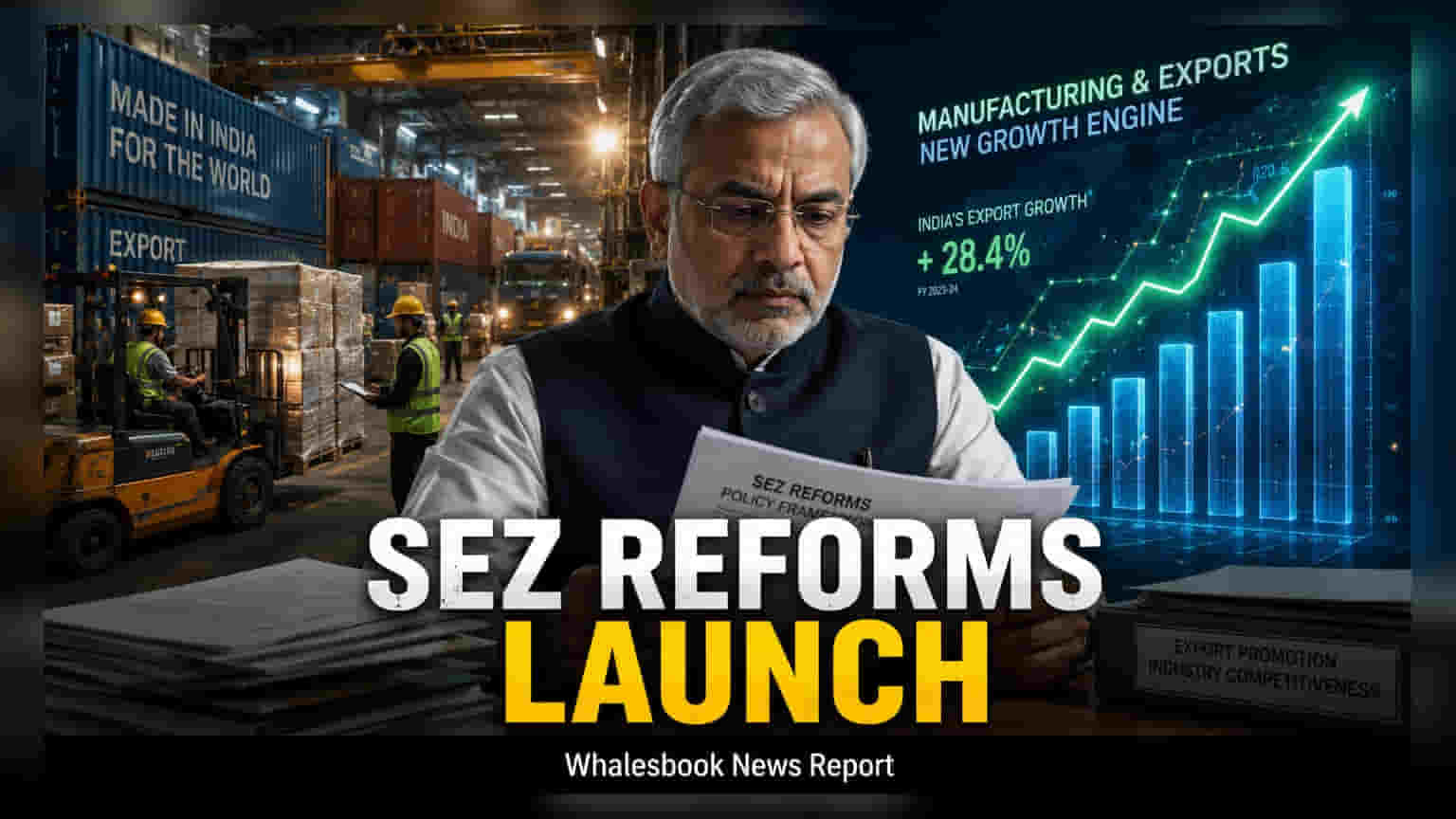
A government-appointed committee is preparing to submit reform recommendations for Special Economic Zones to the commerce ministry. The move aims to integrate various export schemes and boost domestic manufacturing. Investors should track these changes as they may simplify operations and tax structures for thousands of units currently operating within these zones.
A 17-member committee is nearing the completion of its report on reforming India's Special Economic Zone (SEZ) policy, with plans to submit its findings to the commerce ministry soon. This initiative seeks to modernize the framework established by the SEZ Act of 2005, which has seen significant changes in global trade and domestic industrial requirements over the last two decades. The government aims to revitalize these zones to foster local manufacturing, increase total exports, and lower the country's reliance on imported goods.
Integrating Export Promotion Frameworks
A central goal of the proposed reforms is the harmonization of multiple export-linked initiatives. Currently, businesses must navigate a complex landscape of various schemes including Export Oriented Units (EoUs), the Manufacturing and Other Operations in Warehouse (MOOWR) scheme, Advance Authorisation, Export Promotion for Capital Goods (EPCG), and Duty-Free Import Authorisation (DFIA). By bringing these under a more unified structure, the committee intends to reduce operational complexity and improve the ease of doing business for companies operating in these sectors.
Assessing Operational Hurdles and Fiscal Impact
The committee has been evaluating the regulatory and procedural bottlenecks that have constrained SEZ developers and individual units. Beyond operational efficiency, the review includes a detailed analysis of fiscal outcomes, specifically weighing the tax and duty concessions granted against the actual gains in exports, capital investment, and overall economic growth. This assessment is critical, as it informs the government's approach to balancing industrial incentives with fiscal prudence.
Performance Trends in the SEZ Sector
Data from the 2024-25 period shows that operational SEZs generated $172.27 billion in total exports, reflecting a 7.37% growth rate. India currently hosts 276 operational SEZs encompassing 6,279 distinct units. While these numbers illustrate the scale of the sector, the upcoming policy recommendations are expected to provide a roadmap for long-term adjustments. These may include potential legislative amendments to the SEZ Act and changes to existing rules to better align with contemporary trade dynamics. Investors will need to watch for the specific details of these policy shifts, as they could impact the future compliance requirements, operational costs, and competitive landscape for companies that rely heavily on these zones for their export businesses.