

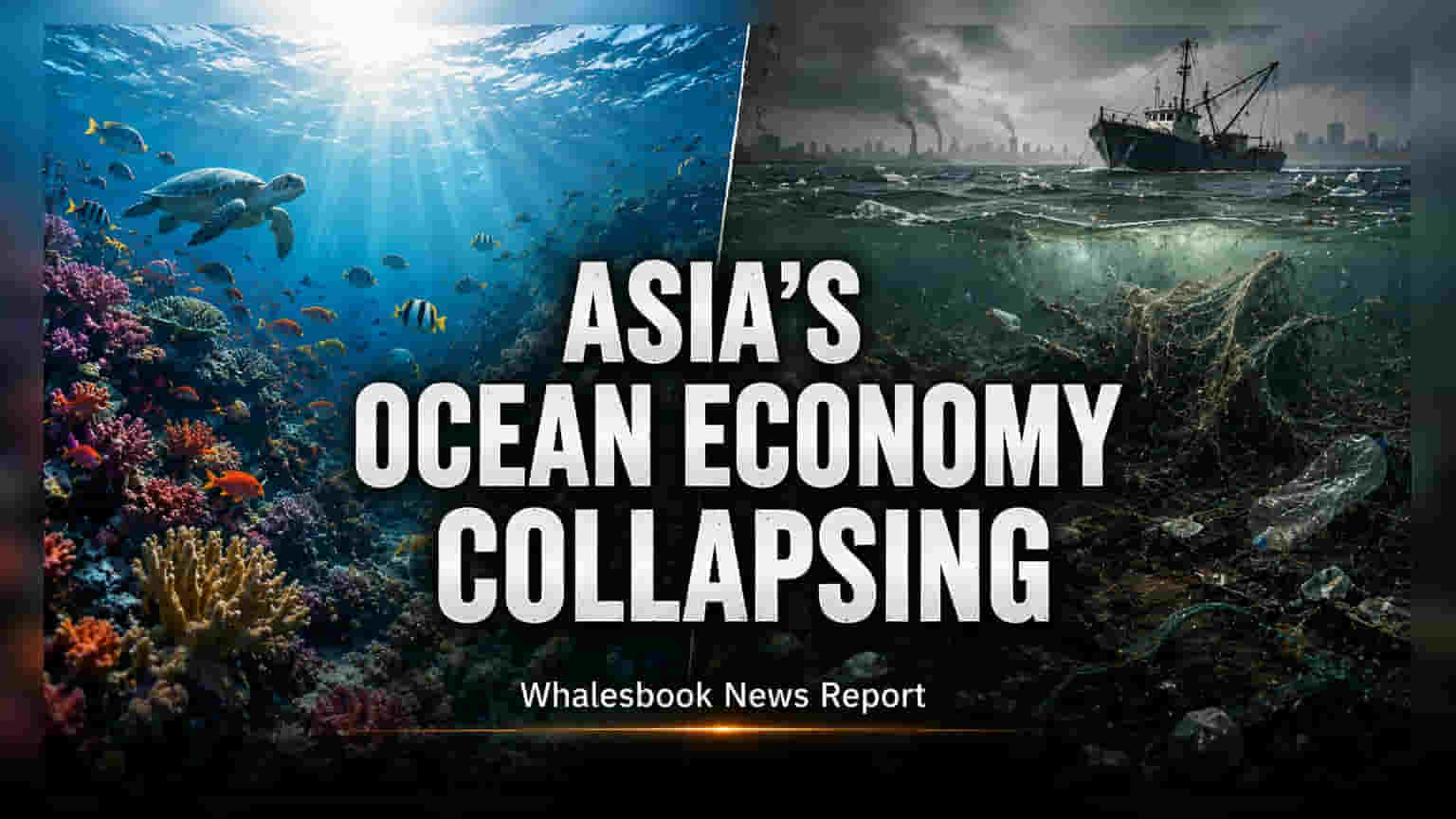
The OECD reports that Southeast Asia’s ocean-based industries require $2.1 trillion in sustainable funding by 2030. Current investment remains inadequate to combat environmental risks like overfishing and climate change, which threaten regional maritime trade and coastal livelihoods.
Detailed Coverage
A new report from the Organization for Economic Co-operation and Development (OECD) has highlighted a major financial challenge for Southeast Asia’s blue economy. As the region solidifies its status as a significant global economic player, its reliance on ocean-based industries—ranging from shipping and fisheries to tourism—has put these sectors under intense pressure. The OECD warns that a massive funding deficit is preventing the necessary transition toward sustainable ocean management.
The Scale of the Investment Deficit
The financial gap identified by the OECD is substantial, with an estimated requirement of $2.1 trillion by 2030 to secure a sustainable future for the region’s marine resources. Public funding has historically struggled to bridge this divide. Data from 2010 to 2023 shows that only 34% of Official Development Assistance (ODA) directed toward marine sectors in Southeast Asia actually supported sustainable initiatives. The remainder has primarily flowed into traditional, often extractive, marine activities. Private capital, which is essential for scaling up infrastructure and conservation projects, has also remained elusive, with just $128.4 million in mobilized private finance recorded for ocean and coastal activities in the region.
Why Investors Should Monitor Ecosystem Risks
The economic viability of many Southeast Asian nations depends on healthy coastal and marine ecosystems. Brunei, Indonesia, Malaysia, the Philippines, Singapore, Thailand, and Vietnam are particularly exposed to the dual pressures of environmental degradation and climate change. Activities like shipping and aquaculture rely on stable ecosystems that are currently being weakened by habitat destruction and pollution. Furthermore, climate change impacts—such as rising sea levels and more frequent, intense storms—pose a physical risk to port infrastructure and coastal tourism assets.
Path Toward Sustainable Finance
To address this, the OECD suggests that regional governments and financial institutions shift toward blended finance models. These structures aim to use public funds to reduce the risk profile of projects, making them more attractive to private investors. Proposed financial instruments include blue bonds, which are specifically designed to fund ocean-friendly projects, as well as debt-for-nature swaps and blue carbon markets. However, the successful adoption of these tools depends on strengthening local governance, creating clearer policy frameworks, and building the institutional capacity to manage complex, long-term environmental projects. Investors tracking the region may watch for updates on government policies regarding blue financing and the emergence of new sustainability-linked loan frameworks in these markets.