

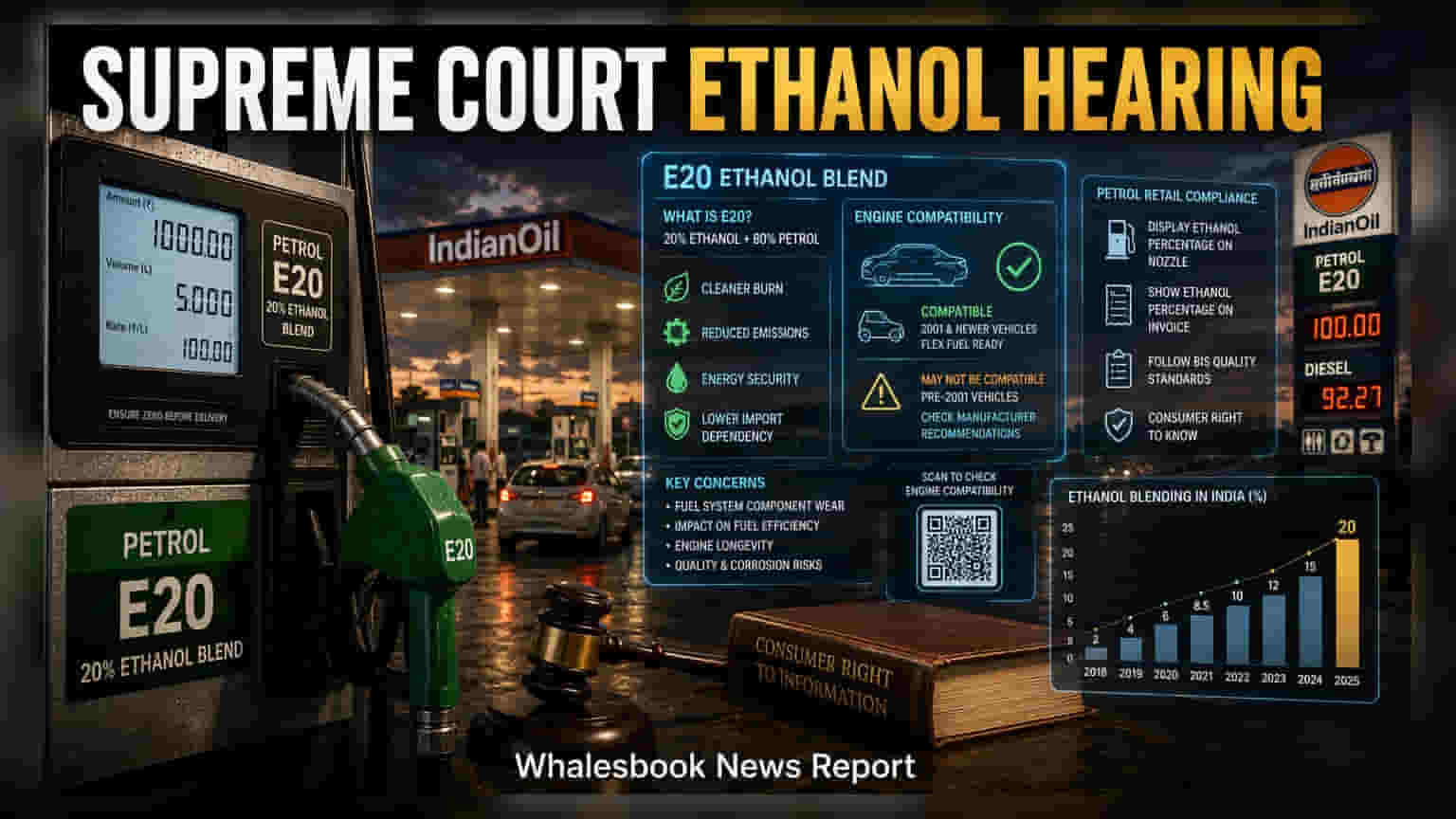
The Supreme Court will hear a petition on August 31, 2026, seeking mandatory disclosure of ethanol percentages on fuel nozzles and invoices. The plea aims to improve consumer transparency regarding engine compatibility with ethanol-blended petrol. If mandated, this could impact operational and compliance procedures for oil marketing companies.
The Supreme Court of India is scheduled to hear a petition on August 31, 2026, that challenges the current transparency levels regarding ethanol-blended petrol sold at retail outlets. A bench comprising Justices M.M. Sundresh and Prasanna B. Varale will examine the plea, which calls for clear labeling of ethanol percentages on all petrol dispensing nozzles and invoices across fuel stations.
Transparency and Technical Concerns
The petition, filed by advocate Narendra Kumar Goswami, emphasizes the need for greater consumer awareness as India transitions to higher ethanol blending standards. While the government has aggressively pursued its energy security goals—successfully hitting the 20% ethanol blending (E20) target in 2025—the plea argues that vehicle owners often lack sufficient information about whether their specific engines are fully compatible with these blends.
The filing suggests creating a national, searchable database that would allow consumers to check engine compatibility against manufacturer specifications for various ethanol concentrations. It also requests the formation of an independent expert committee to evaluate long-term impacts on engine longevity, fuel efficiency, and maintenance, given the potential for ethanol to affect fuel system components in older or incompatible vehicle models.
Impact on Oil Marketing Companies
For investors and the broader fuel retail sector, the outcome of this hearing carries potential implications for operational compliance. Major state-run Oil Marketing Companies (OMCs) like Indian Oil Corporation (IOCL), Bharat Petroleum (BPCL), and Hindustan Petroleum (HPCL) manage the vast network of retail outlets in India. If the court mandates a country-wide adoption of specific labeling protocols and creates new reporting requirements for invoices, these companies may face increased compliance costs and the need to upgrade infrastructure at thousands of retail sites.
While the petition does not challenge the government's ethanol-blending policy itself, the request for a defined transition framework for legacy vehicles—potentially including the availability of lower-ethanol fuel options—could impact procurement and blending strategies. Any regulatory requirement to maintain dual supply chains or implement strict quality disclosures would be a monitorable factor for OMC operating margins.
Industry and Regulatory Monitorables
Beyond the immediate legal proceedings, the broader sector is already adjusting to higher blending requirements. The Bureau of Indian Standards (BIS) continues to refine quality standards, including limits on chloride levels, to mitigate the risks of fuel contamination. Investors may track whether the court mandates specific changes to industry-wide fuel disclosure protocols or if it directs the government to strengthen existing consumer awareness programs. The primary watch-point for the market remains the potential for increased regulatory burden on fuel retailers and whether such mandates could lead to shifts in consumer demand patterns or fuel sourcing requirements.