

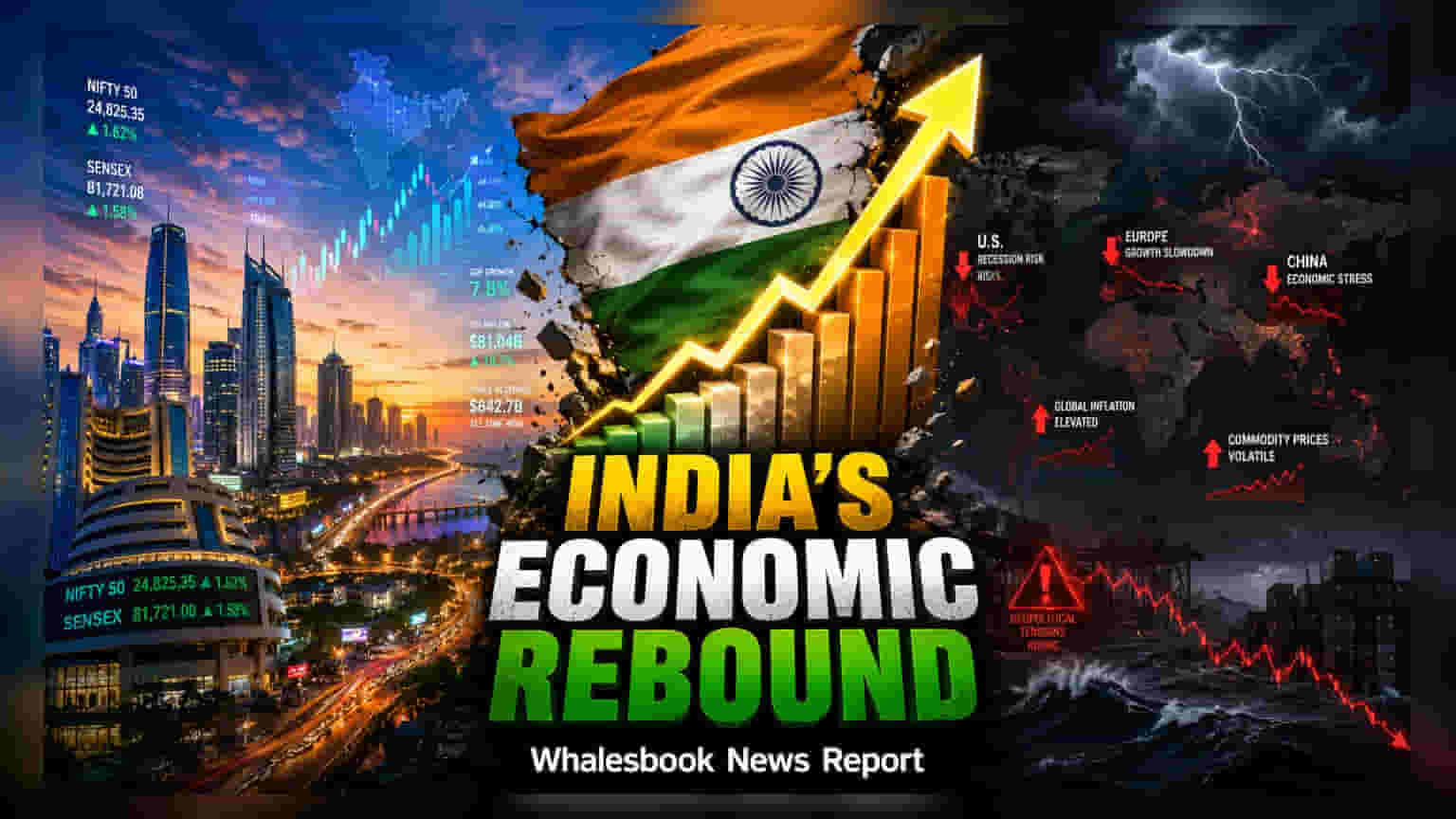
SBI Research estimates India’s real GDP grew by 8% in the first quarter of FY27, outperforming the Reserve Bank of India’s 7% forecast. This growth is driven by robust credit demand and government capital spending. However, the report highlights potential risks, including rupee volatility and fluctuating global commodity prices, which investors should monitor.
SBI Research has projected an 8% growth in India’s real GDP for the first quarter of the 2026-27 financial year. This estimate sits higher than the Reserve Bank of India’s earlier projection of 7%, signaling stronger-than-expected economic activity. The report highlights that India’s growth remains steady despite ongoing uncertainty in global markets.
The economic momentum is largely supported by a significant increase in credit demand, which grew by 19.3% as of the end of July 2026. A major contributor to this financial stability has been the Reserve Bank of India’s FCNR(B) deposit scheme, which successfully mobilized $52.3 billion. Combined with other foreign currency inflows, the total liquidity support has reached $56.8 billion, helping to stabilize foreign exchange reserves. Furthermore, the central government has maintained high momentum in its capital spending, utilizing 27.8% of the total budget estimates during the first quarter—a 23.7% increase compared to the same period last year.
The analysis is based on 54 high-frequency indicators, of which 86% showed acceleration in the first quarter of FY27, compared to 69% in the previous year. This suggests that the growth is not limited to just a few sectors but is broad-based across the economy. The monsoon rainfall situation, which had initial deficits, has also seen improvement throughout July and August 2026, narrowing the rainfall deficit to approximately 12%.
While the growth figures are positive, the report also identifies areas of concern that investors and policymakers should watch. The Indian rupee has faced downward pressure, recently breaching the 96-per-dollar level. This currency volatility, coupled with fluctuating global crude oil and commodity prices, continues to pose risks to domestic inflation. Additionally, geopolitical conflicts, particularly the ongoing crisis in West Asia, remain a potential problem for global and domestic economic stability. The report emphasizes that while the growth trend is strong, a careful policy approach is necessary to navigate these international uncertainties and maintain a stable balance of payments.
Moving forward, the focus for the economy will remain on how it manages these external pressures. Investors will track incoming data on inflation, the impact of these commodity prices on profit margins across industries, and how the economy adapts to the ongoing currency and geopolitical challenges.