

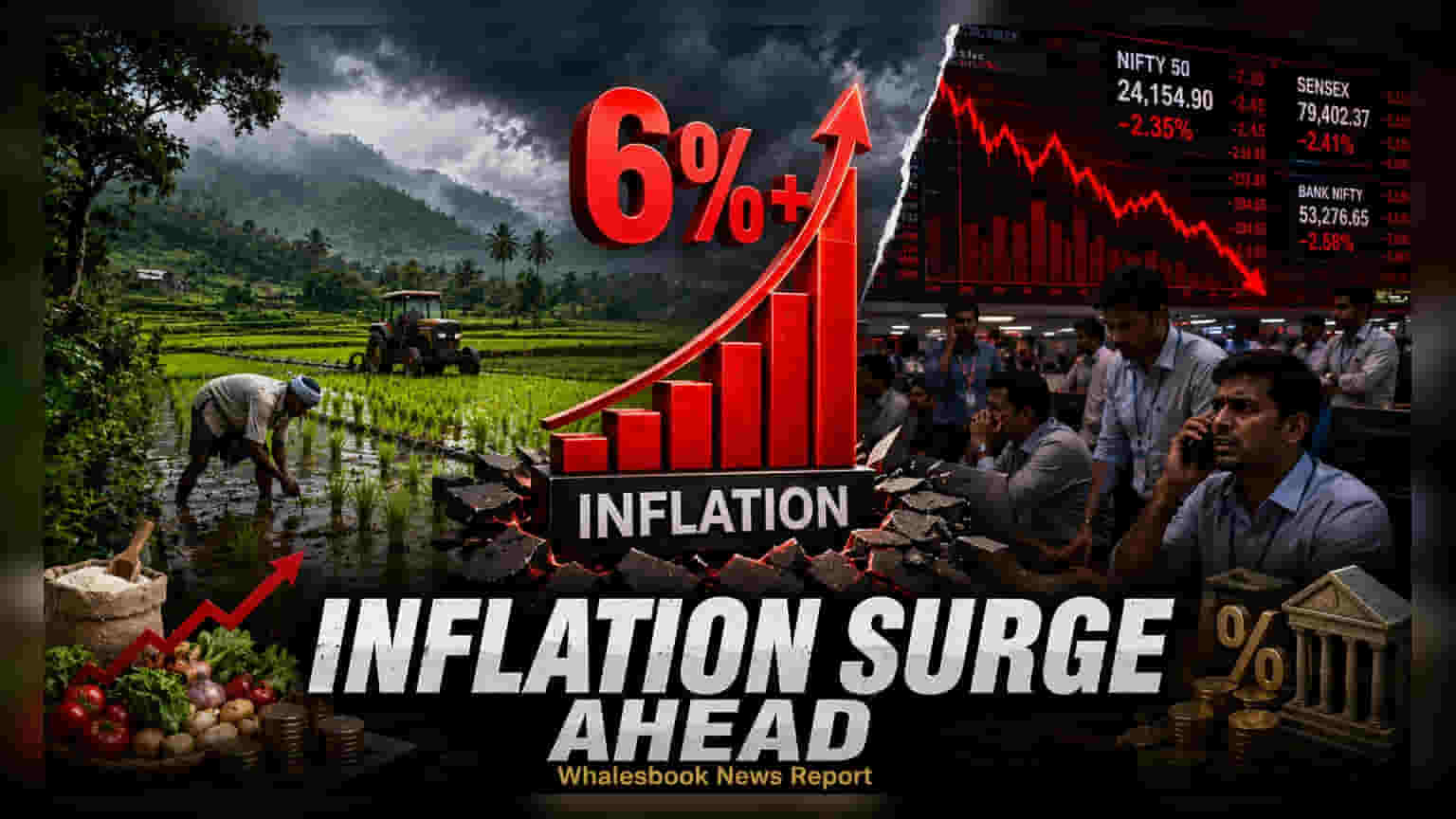
SBI Research projects India’s retail inflation will briefly exceed 6% in October and November 2026, up from the expected 4.7% in August. This trend suggests the Reserve Bank of India may maintain its cautious stance on interest rates for longer. Investors should track how this impacts borrowing costs and fixed income returns.
Retail inflation in India is projected to briefly surpass the 6% mark during October and November 2026, according to a latest report by SBI Research. The forecast marks an upward trend from the expected 4.7% level in August, compared to 4.45% in July. While this spike is anticipated to be temporary, with inflation expected to settle closer to 5% by the fourth quarter of the 2027 fiscal year, it introduces new dynamics for the Indian economy.
RBI Stance and Monetary Policy
The Reserve Bank of India (RBI) currently maintains the repo rate at 5.25%. Following the August 5, 2026, meeting, RBI Governor Sanjay Malhotra emphasized a data-dependent approach. The central bank has expressed a need for more clarity on whether inflation is becoming sticky—meaning prices stay high for a long time—before deciding on any interest rate changes. For investors, this implies that a reduction in interest rates may not happen immediately, as the RBI remains focused on ensuring inflation stays within its target range.
Factors Influencing the Outlook
The projected rise in inflation is primarily linked to potential food supply pressures. However, there are factors that may help contain the situation. Improving monsoon conditions, which have seen a recovery in rainfall since July, and a positive Indian Ocean Dipole—a weather phenomenon that can influence rainfall patterns—are expected to support foodgrain production. Additionally, the government's investment in irrigation infrastructure is helping to mitigate the impact of irregular rainfall in some agricultural regions.
Investor and Market Impact
For investors, the inflation trajectory is a critical monitorable. If inflation remains elevated for longer than expected, interest rates in the banking system may stay high. This scenario generally benefits savers, as fixed deposit rates tend to remain attractive, but it also means that the cost of loans for businesses and individuals remains higher.
Beyond domestic factors, global influences such as United States Federal Reserve policies also impact the Indian markets. Shifts in U.S. Treasury yields can affect foreign investment flows into India. Furthermore, there is a broader concern regarding the potential for "second-round effects," where rising food prices eventually lead to higher costs for other goods and services, making inflation harder to control. The SBI report also notes that financial markets are placing more weight on the RBI's actual policy actions rather than just forward-looking guidance, suggesting that any change in liquidity measures or repo rates will be scrutinized closely.
The most important data point for investors to track in the coming months will be the monthly consumer price index (CPI) releases. These reports will confirm whether inflation is indeed trending toward the 6% breach as predicted or if supply-side improvements are cooling price pressures faster than expected.