 Whalesbook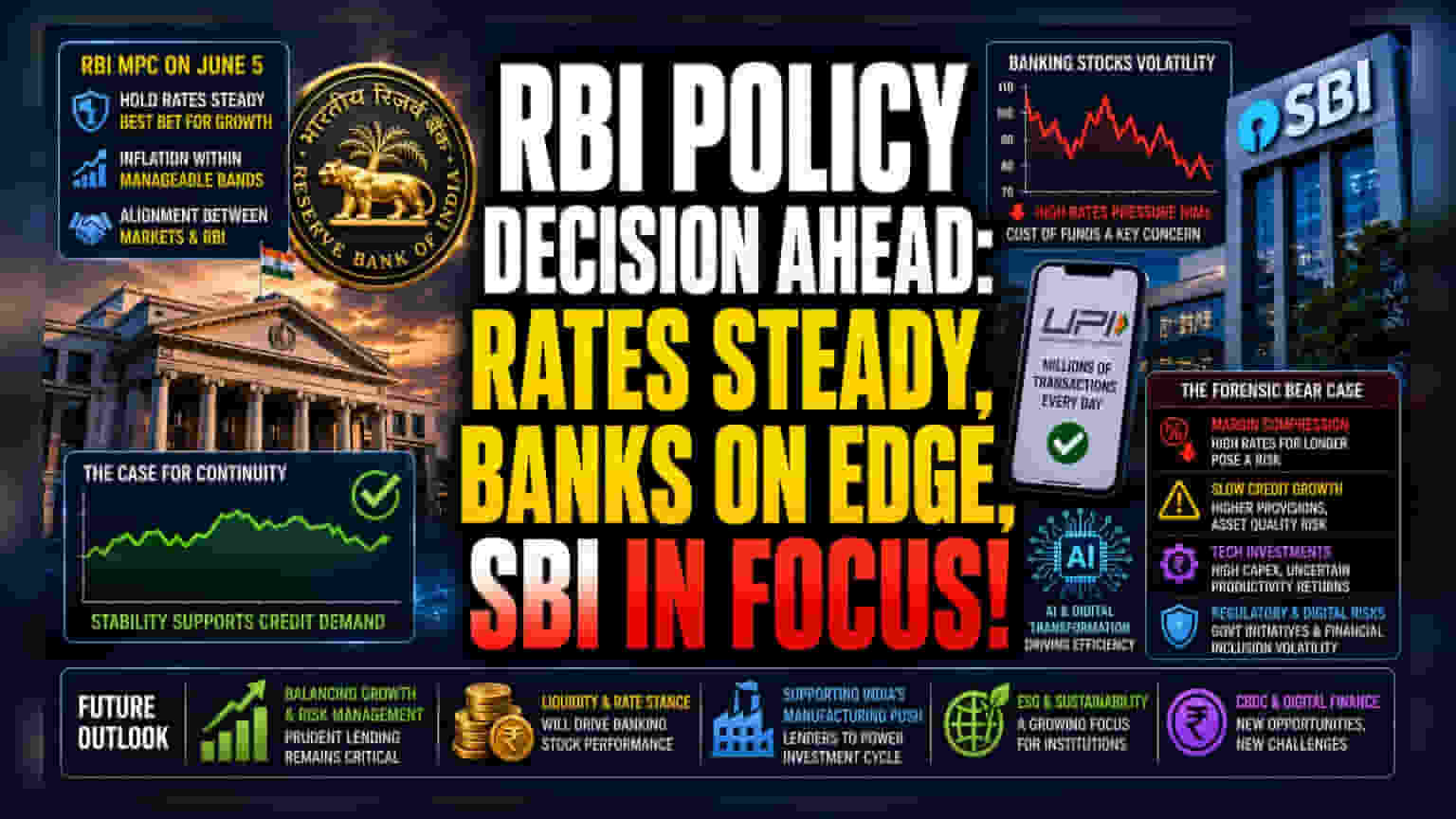


The Case for Monetary Continuity
As the Reserve Bank of India prepares for its upcoming Monetary Policy Committee announcement on June 5, market participants are closely monitoring signals regarding the trajectory of benchmark rates. The prevailing sentiment among major financial institutions suggests that holding rates steady is the most viable path to protecting current growth metrics. Maintaining the status quo serves as a critical buffer, allowing the economy to absorb recent shocks while keeping inflation within manageable bands. This alignment between private sector leadership and central bank expectations suggests a collective push to avoid sudden shifts that could destabilize credit demand.
Banking Sector Volatility and Institutional Benchmarks
State Bank of India continues to navigate a complex macroeconomic environment where its performance remains tethered to domestic interest rate cycles. Unlike smaller private lenders that can pivot rapidly to high-margin retail products, SBI faces the structural challenge of managing a massive asset base while competing for deposits in an era of tightening liquidity. Market data indicates that large-cap banking stocks often trade at a discount to their intrinsic value when investors fear a prolonged high-rate environment, as increased cost of funds puts pressure on Net Interest Margins. While digital transformation and AI integration drive operational efficiencies—evidenced by the bank's successful handling of millions of UPI transactions—the bottom line remains highly sensitive to the central bank's stance on liquidity injection and repo rates.
The Forensic Bear Case: Structural Dependencies
While the leadership remains optimistic, investors must contend with underlying risks that transcend standard interest rate debates. A primary concern for the banking sector is the potential for margin compression if the RBI chooses to maintain high rates for longer than the market anticipates. If credit growth slows in sectors like rural microfinance or infrastructure, institutions like SBI may face elevated provisioning requirements. Furthermore, the push toward aggressive AI adoption and large-scale digital infrastructure necessitates significant capital expenditure. Should these technology investments fail to deliver the expected productivity gains, the resulting overhead could drag on profitability. Additionally, the bank’s reliance on large-scale government-backed digital initiatives exposes it to regulatory scrutiny and the risks inherent in mass-market financial inclusion, where asset quality can be more volatile during economic downturns.
Future Outlook and Sectoral Trends
The broader financial sector is currently balancing the need for credit expansion with the imperative of maintaining prudent risk management. Analysts are keeping a close watch on how banks navigate the transition toward ESG compliance and the implementation of Central Bank Digital Currency. As India aims to strengthen its manufacturing base, the role of large-scale lenders will be to balance traditional credit delivery with these new, tech-driven financial frameworks. The consensus remains that while technological maturity is accelerating, the immediate trajectory of banking stocks will be dictated by the RBI’s ability to anchor inflation without stifling the nascent recovery in domestic investment.