

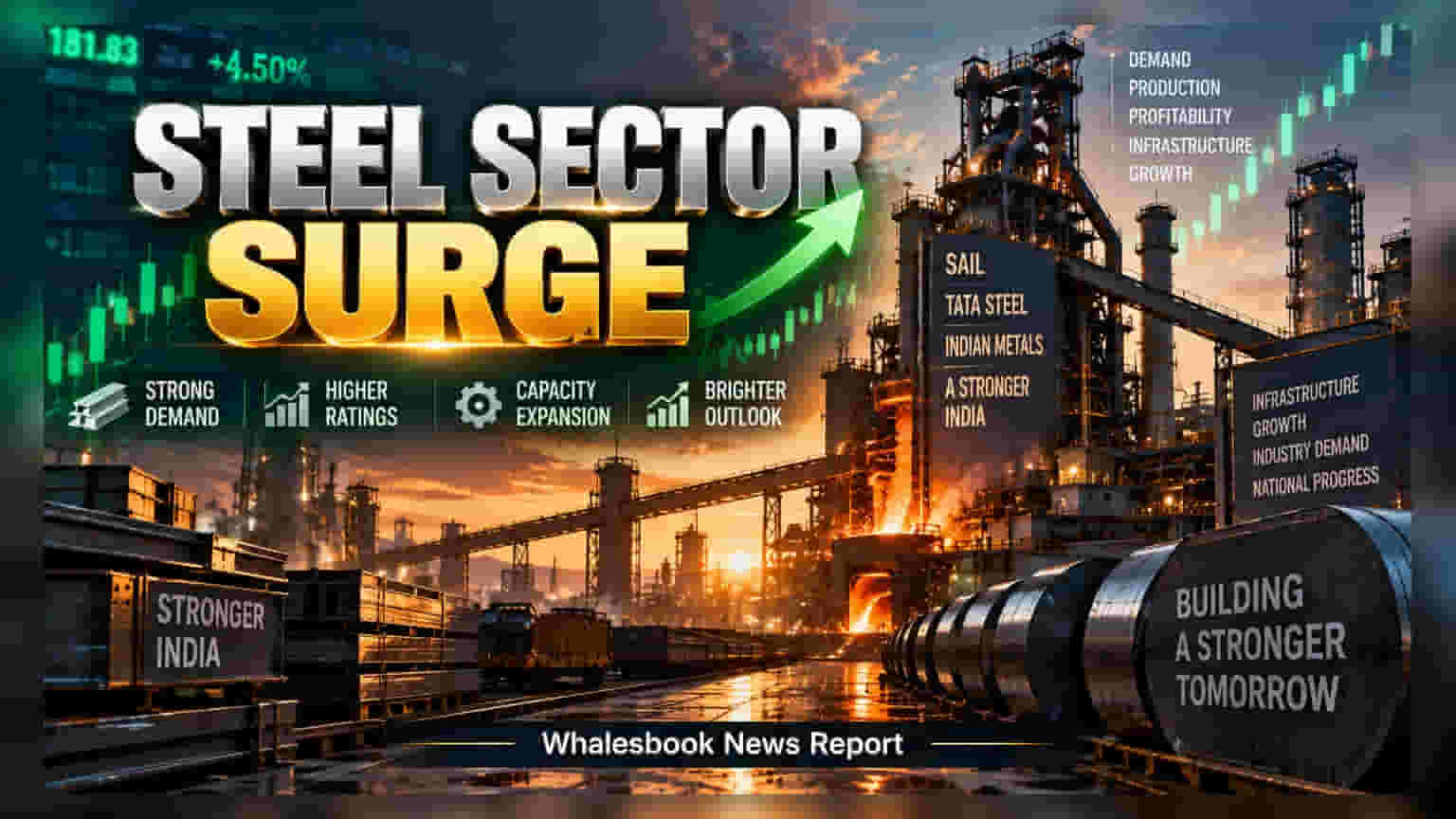
Steel Authority of India (SAIL) shares climbed 4.5% to ₹181.83 after receiving a credit rating upgrade to IND AA+ from India Ratings. The Nifty Metal index outperformed the broader market, driven by strong demand projections for 2027. Investors are now monitoring how companies manage rising input costs alongside their expansion plans.
On Wednesday, shares of Steel Authority of India (SAIL) rose 4.5% to ₹181.83 on the National Stock Exchange. This rally followed an announcement from India Ratings and Research, which upgraded the state-owned steelmaker’s long-term issuer rating to 'IND AA+' with a stable outlook. This rating upgrade highlights the company's improved profit margins and its aggressive plans for capital spending to increase capacity.
Operational Growth and Strategy
A central part of the company's strategy involves the plan to start operations at the Tasra and Rowghat mines by 2028. This move is significant for investors because it is expected to increase the company's control over its raw materials. By reducing reliance on external supplies, the company aims to improve its long-term profit margins. These projects are part of a broader industry shift where companies are investing in automation and moving toward more efficient production methods to align with national capacity targets.
Sector Trends and Demand Drivers
The Nifty Metal index performed well, reflecting positive sentiment across the steel sector. This is supported by expectations of strong growth in steel consumption. The World Steel Association has forecast that India's steel demand will accelerate by 9.2% in 2027. This growth is primarily linked to government infrastructure spending, including major rail and inland waterway projects. As India works toward long-term production capacity goals, the domestic market is expected to remain a key focus for steel manufacturers.
Risks and Market Pressures
While the demand outlook is positive, the steel industry faces notable challenges. Rising input costs are currently putting pressure on profit margins across the sector. Although domestic prices have remained firm, partly due to temporary supply limits, companies must manage these costs carefully through the remainder of the financial year.
Other major players like Tata Steel remain in focus for institutional investors. For companies like Tata Steel, the challenge involves maintaining a balance between strong domestic demand and the need to stabilize energy costs in their international operations. Investors tracking the steel sector should watch how these companies manage their capital spending to meet future demand while protecting their profit margins against inflationary pressures.