

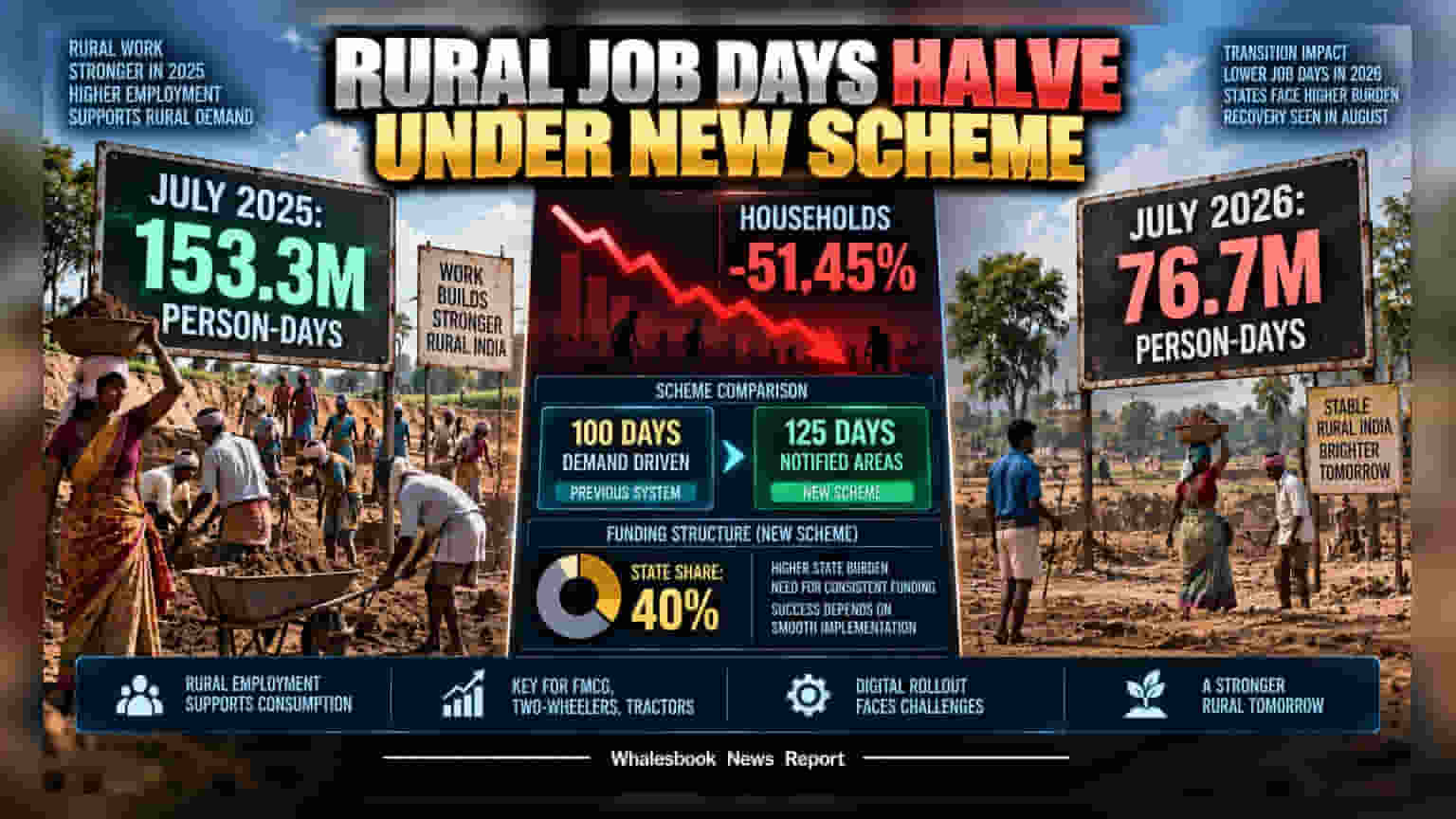
India’s new Viksit Bharat-Guarantee for Rozgar and Ajeevika Mission (VB-G RAM G) replaced MGNREGS on July 1, 2026. While initial July data showed a 50% drop in person-days, August figures indicate a 23.8% month-on-month recovery. Investors are watching this transition closely as it affects state fiscal burdens, rural consumption trends, and the efficiency of the newly digitized employment delivery system.
India’s rural employment framework underwent a major structural overhaul on July 1, 2026, with the implementation of the Viksit Bharat-Guarantee for Rozgar and Ajeevika Mission, or VB-G RAM G. This new initiative has replaced the long-standing Mahatma Gandhi National Rural Employment Guarantee Act (MGNREGS).
Under the previous system, the scheme provided a demand-driven right to work for up to 100 days annually. The new framework increases this statutory guarantee to 125 days per household but introduces a shift toward a more centrally controlled, normative-based model. It also includes a designated 60-day 'no-work' period during peak agricultural seasons, which is designed to prevent labor shortages for farming activities.
July Data and August Recovery
The immediate impact of this transition was reflected in the July 2026 employment figures. Government data showed that person-days generated in July fell to 7.67 crore, compared to 15.3 crore in July 2025. This sharp decline initially triggered concerns regarding the accessibility and stability of the new system.
However, administrative and implementation data from August 2026 provided a different picture, showing a 23.8% month-on-month increase in demand for work compared to July. This suggests that the initial July drop may have been partially influenced by the administrative transition phase, the rollout of new digital infrastructure, and the adjustment period for local authorities and beneficiaries.
State Fiscal Burden and Operational Risks
The new mission changes the financial structure of rural employment. States are now required to contribute 40% of the costs for unskilled labor wages. This shift increases the fiscal burden on state governments, leading to concerns that states with tighter budgets may face difficulties in maintaining consistent employment coverage.
Operational challenges have also emerged. The new scheme relies heavily on digital tools, including mandatory e-KYC and facial recognition. While these measures aim to reduce leakages, they have created access barriers in some regions due to server issues, connectivity problems, or difficulties for rural workers in navigating the digital documentation process. The reliability of these technical systems remains a primary focus for observers.
Investor Context: Why Rural Demand Matters
For investors, rural employment schemes are a crucial proxy for rural purchasing power. When employment generation is stable or rising, it typically supports consumption in sectors such as fast-moving consumer goods (FMCG), two-wheelers, tractors, and affordable retail. A sustained, sharp drop in employment generation could dampen rural consumption, potentially affecting the revenue growth of companies heavily exposed to the rural market.
As the new system stabilizes, market analysts and stakeholders will be tracking whether the August recovery trend continues. The key monitorables for the coming months will be the consistency of state funding, the success of the digital interface in minimizing service disruptions, and whether the new 125-day limit effectively supports rural income levels through the upcoming seasons.