

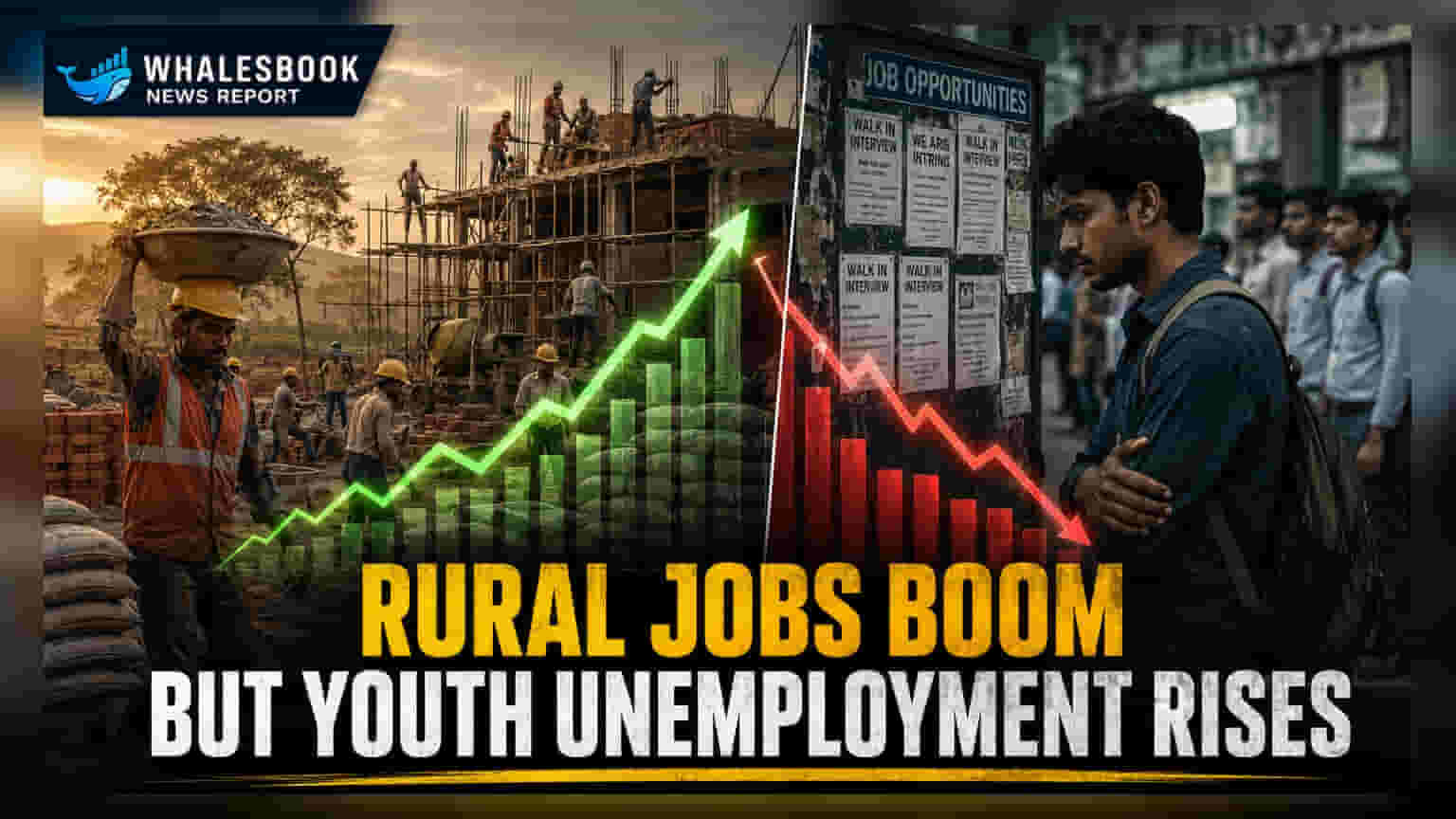
New research from ICRIER highlights that construction now absorbs nearly 40% of new male workers in rural India. While this sector drives employment, a rising reliance on unpaid female labor in agriculture and persistent youth unemployment underscore structural risks in the labor market.
What Happened
Recent data from the Indian Council for Research on International Economic Relations (ICRIER) reveals a significant transformation in rural employment patterns. Between the second quarter of 2018 and the end of 2025, the construction sector became the primary driver of job creation for rural men, taking in nearly 40% of the new workforce. This activity aligns with a 7.8% average annual growth in the sector’s Gross Value Added (GVA). Meanwhile, agriculture’s ability to generate new paid opportunities for men has stalled, leading to a shift in how rural households earn a living.
The Shift in Female Participation
While construction provides a growing income stream for men, the agricultural sector has seen a sharp increase in female labor participation. However, much of this growth is classified as unpaid family labor. Data indicates that the share of women in agriculture rose from 27% in 2017-18 to 44% in 2025. This rise is often a response to male out-migration, where women fill the labor gap on family-owned farms without receiving formal wages. This suggests that the increase in employment numbers may mask a lack of high-quality, paid work for women in rural areas.
Challenges in Youth Employment
Despite a nationwide decline in overall unemployment rates, the Indian economy faces a stubborn challenge regarding youth employment. The situation is particularly concerning for young women. Although aggregate unemployment metrics show improvement, the data suggests that in some cases, the decline in unemployment numbers stems from women exiting the labor force rather than finding productive jobs. For men, the trend is more tied to genuine employment gains, but the persistence of joblessness among the youth remains a key structural bottleneck for the country's economic potential.
Urban Labor Market Trends
In urban centers, the services sector continues to be the primary engine of job growth, responsible for roughly 66% of new positions. Men are finding opportunities primarily in trade, transport, hospitality, and construction. Women’s employment in cities is increasingly concentrated in healthcare, education, and professional services. However, a rise in casual labor and an uptick in urban agriculture suggest that the formal job market is struggling to match the pace of a growing, educated, and job-seeking population.
What Investors Should Track
The cooling of growth in both the agriculture and construction sectors is a critical monitorable for the coming quarters. If construction activity slows down, it may disproportionately affect rural male income levels, potentially impacting demand for consumer goods. Investors may also look for trends in formal versus casual employment data, as a shift toward casual labor often signals lower wage security and, consequently, more cautious consumer spending habits.