

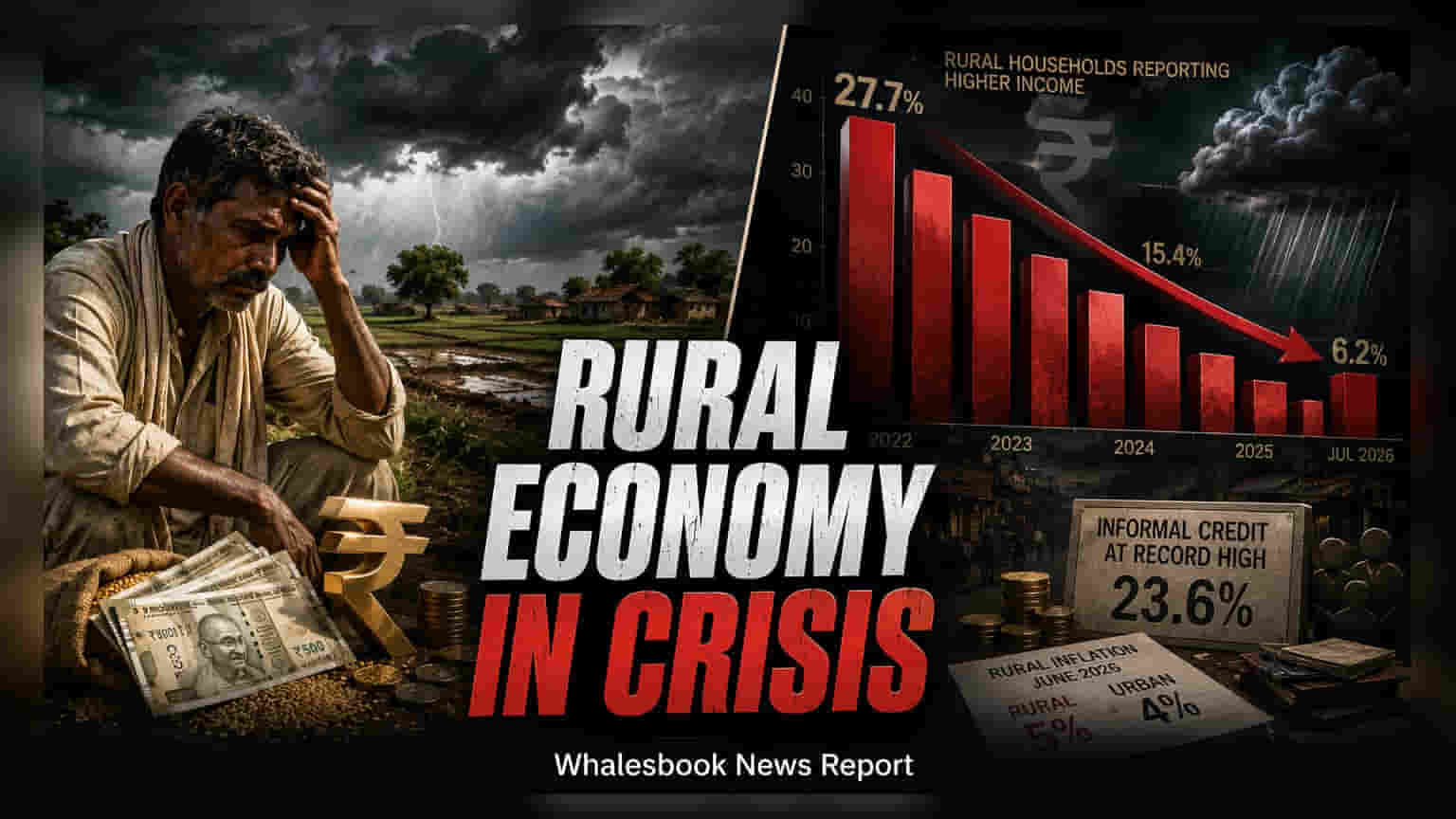
A July 2026 survey by NABARD shows rural household income growth has dropped, with over half reporting stagnant earnings. Increased reliance on informal loans and higher rural inflation are creating financial pressure, signaling potential headwinds for rural consumption demand in consumer-facing sectors.
The rural economy is showing signs of cooling, according to the latest survey released in July 2026 by the National Bank for Agriculture and Rural Development (NABARD). The Rural Economic Conditions and Sentiments Survey (RECSS) indicates that household income growth has slowed significantly, with only 27.7% of rural households reporting higher earnings compared to the previous year.
The findings highlight a growing sense of stagnation in rural India, as 52.6% of surveyed households reported no change in income. This shift is accompanied by a change in borrowing habits. The reliance on informal credit sources, such as loans from friends and relatives, has reached a record high of 23.6%. While formal financial institutions still cater to 51% of borrowing needs, the increasing shift toward informal channels—which often carry higher costs and fewer protections—suggests that families are facing greater financial pressure.
Several factors are contributing to this trend, including uncertainty surrounding monsoon rainfall, the effects of changing weather patterns, and the slow pace of Kharif crop sowing. These issues, combined with high commodity prices, are weighing on the broader rural economy. Furthermore, rural households are grappling with higher living costs. Rural inflation stood at 5% in June 2026, which is higher than the urban inflation rate of 4%. Because food items make up a larger portion of the rural spending basket, these rising prices are having a more direct impact on purchasing power in rural areas.
For investors, these data points are important as they provide a pulse check on rural consumption, which is a major driver for several listed sectors. Companies in the Fast-Moving Consumer Goods (FMCG) and automobile industries, particularly those selling two-wheelers and tractors, rely heavily on demand from rural India. If household incomes remain stagnant and inflationary pressure persists, it may dampen the sales volume of these companies in the coming quarters.
Looking ahead, the recovery of the rural economy will depend on a few key factors. Investors may track how monsoon progress affects agricultural output, as a strong harvest can help stabilize incomes. Additionally, any government intervention, such as increased spending on income support or employment guarantee schemes, could provide relief to household budgets. The sustainability of rural demand will be a primary monitorable for businesses with significant exposure to these regions in their upcoming quarterly results.