 Whalesbook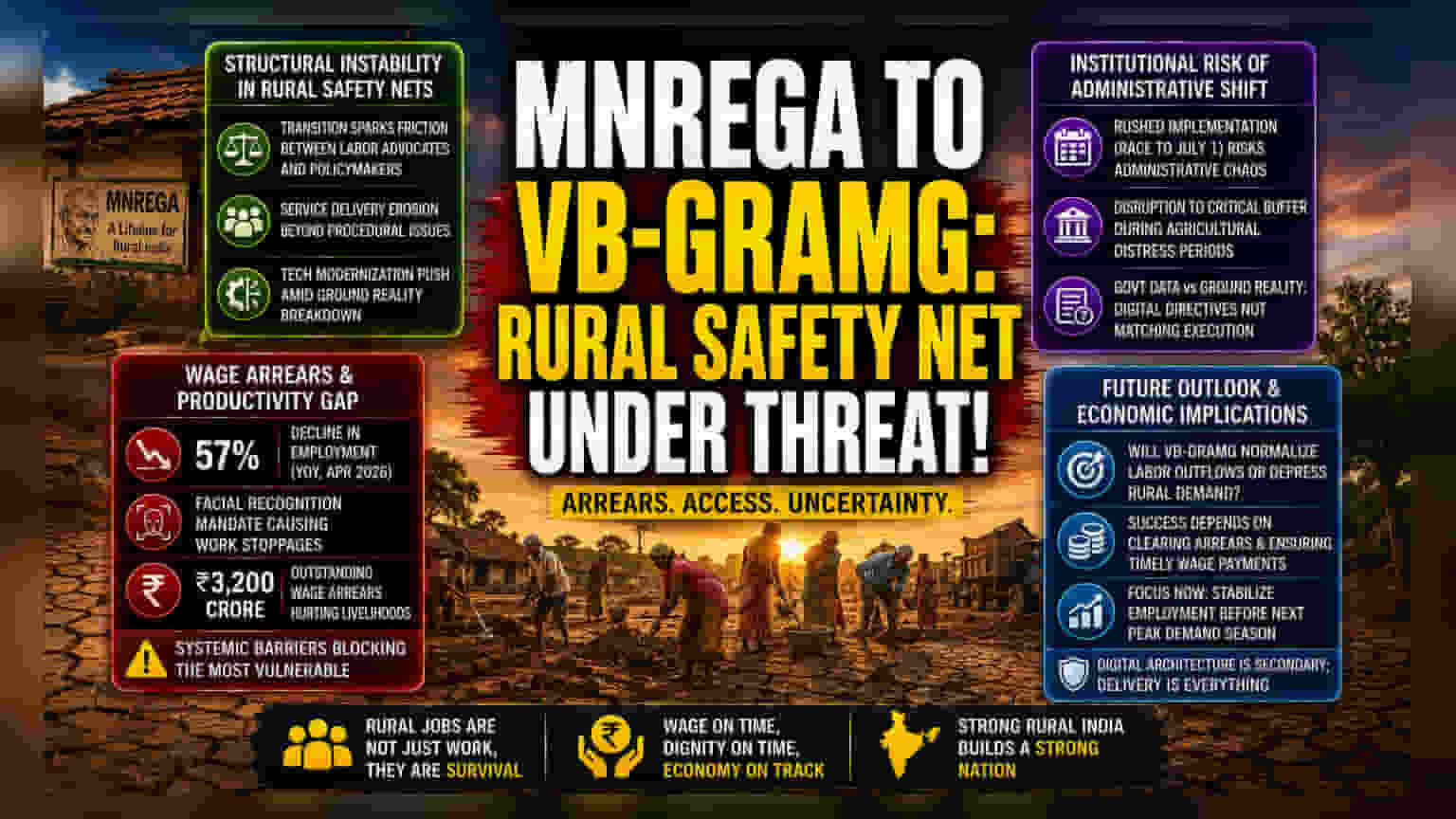


Structural Instability in Rural Safety Nets
The transition from the long-standing Mahatma Gandhi National Rural Employment Guarantee Act to the proposed VB-GRAMG framework has triggered significant friction between labor advocates and policymakers. Beyond the procedural complaints regarding the accelerated consultation timeline, the underlying tension stems from a observable erosion in service delivery. While the Ministry of Rural Development positions the new act as a technological modernization effort, the fiscal reality on the ground reflects a breakdown in the existing social safety mechanism.
The Wage Arrears and Productivity Gap
Data suggests that the current administrative transition is occurring amidst a broader contraction in rural labor participation. The reported 57% year-over-year decline in employment figures as of April 2026 indicates that systemic barriers—such as the mandatory integration of facial-recognition software—are disproportionately impacting the most vulnerable segments of the workforce. This digital transition, while intended to improve administrative oversight, has reportedly caused localized work stoppages. The persistence of ₹3,200 crore in outstanding payments suggests that fiscal constraints or bureaucratic inefficiencies are impeding the core mandate of rural wage support, creating a liquidity squeeze for laborers who rely on these transfers for basic subsistence.
The Institutional Risk of Administrative Shift
From a policy analysis perspective, the haste to implement a new legal structure while simultaneously managing a backlog of arrears presents a heightened operational risk. By prioritizing a July 1 implementation date over a more robust vetting process, the government faces the potential for widespread administrative confusion. Historically, rural employment schemes have served as a critical buffer for the Indian economy during periods of agricultural distress; any disruption to this mechanism could weigh on rural consumption patterns in the coming quarters. The disconnect between government data reporting, which often highlights technological adoption, and the reality of denied work applications suggests a lack of alignment between centralized digital directives and decentralized local execution.
Future Outlook and Economic Implications
Economists remain focused on whether the VB-GRAMG Act will eventually normalize labor outflows or if the current legislative momentum will trigger a sustained decrease in rural demand. The efficacy of the new mission will depend less on its digital architecture and more on its ability to address the chronic wage payment delays that have plagued the preceding system. Should the implementation proceed as scheduled despite mounting opposition, the focus will shift to the government's ability to stabilize employment volumes and clear the mounting wage arrears before the onset of the next peak demand season.