

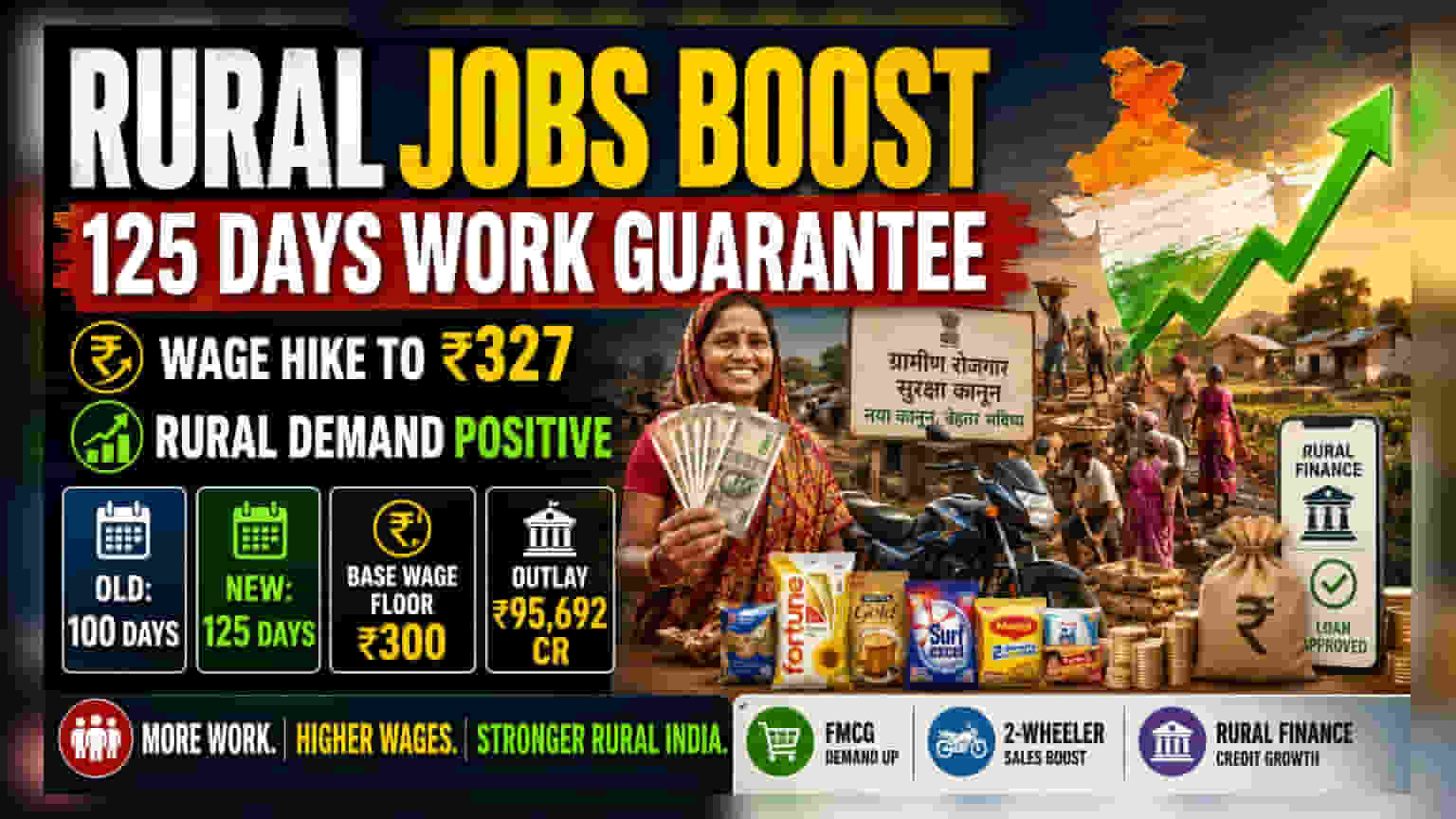
The Viksit Bharat – Guarantee for Rozgar and Ajeevika Mission (Gramin) Act has officially commenced, increasing guaranteed annual work to 125 days and raising average daily wages to Rs 327.4. With a new Rs 95,692 crore allocation, the policy aims to boost rural disposable income. Investors are tracking this for its potential impact on consumption sectors like FMCG, two-wheelers, and rural-focused financial services.
What Happened
The Viksit Bharat – Guarantee for Rozgar and Ajeevika Mission (Gramin) Act, 2025, has come into effect as of July 1, 2026. This new law significantly overhauls the existing rural employment guarantee framework. The most direct changes for beneficiaries are two-fold: the guaranteed annual work limit has been raised from 100 days to 125 days, and the national average daily wage has increased to Rs 327.4 from the previous Rs 298.8.
To ensure consistent pay across regions, the government has also introduced an interim base wage floor of Rs 300 per day. This adjustment brings many states, including Uttar Pradesh, Bihar, Jharkhand, West Bengal, and Assam, into a higher wage bracket, with some states seeing wage increases between 15% and 25%.
Impact on Rural Consumption
For the broader economy, this act is a major shift in rural purchasing power. When rural households have more guaranteed work days and higher daily wages, their disposable income generally increases. This typically creates a positive environment for consumer-facing companies.
Historically, higher rural income translates into increased demand for fast-moving consumer goods (FMCG), such as packaged food and personal care items. Additionally, the two-wheeler industry often tracks rural demand closely, as these vehicles are the primary mode of personal transport in rural areas. While this act does not guarantee success for these companies, it provides a supportive environment for volume growth in these specific segments.
The Financial Allocation
To execute this massive program, the government has set aside an interim allocation of Rs 95,692.31 crore. This funding is intended to cover the wage payments and operational costs across all states and Union Territories. For investors, the scale of this spending is important to note as it represents a significant fiscal outflow aimed at rural infrastructure development, water conservation, and empowerment projects.
Sectors Investors May Watch
Investors typically monitor how changes in rural employment policy affect specific listed sectors:
- FMCG: Companies with deep distribution networks in rural India often see sales volume improvements when rural income rises.
- Two-Wheelers: This segment is highly sensitive to rural prosperity. A steady income stream for rural workers can support vehicle replacement and new purchase cycles.
- Rural Financial Services: Non-Banking Financial Companies (NBFCs) and microfinance institutions that lend to rural households may see changes in credit demand and repayment trends as household cash flows stabilize.
What To Monitor Next
The actual benefit for the economy will depend on how efficiently this scheme is implemented on the ground. Key factors to watch include the speed of fund distribution to the states, the actual on-ground creation of employment, and whether the wage hikes lead to inflationary pressure in rural supply chains. Additionally, investors will be observing quarterly performance updates from consumption-oriented companies to see if rural demand trends begin to align with the higher wage and work guarantees provided under the new Act.