

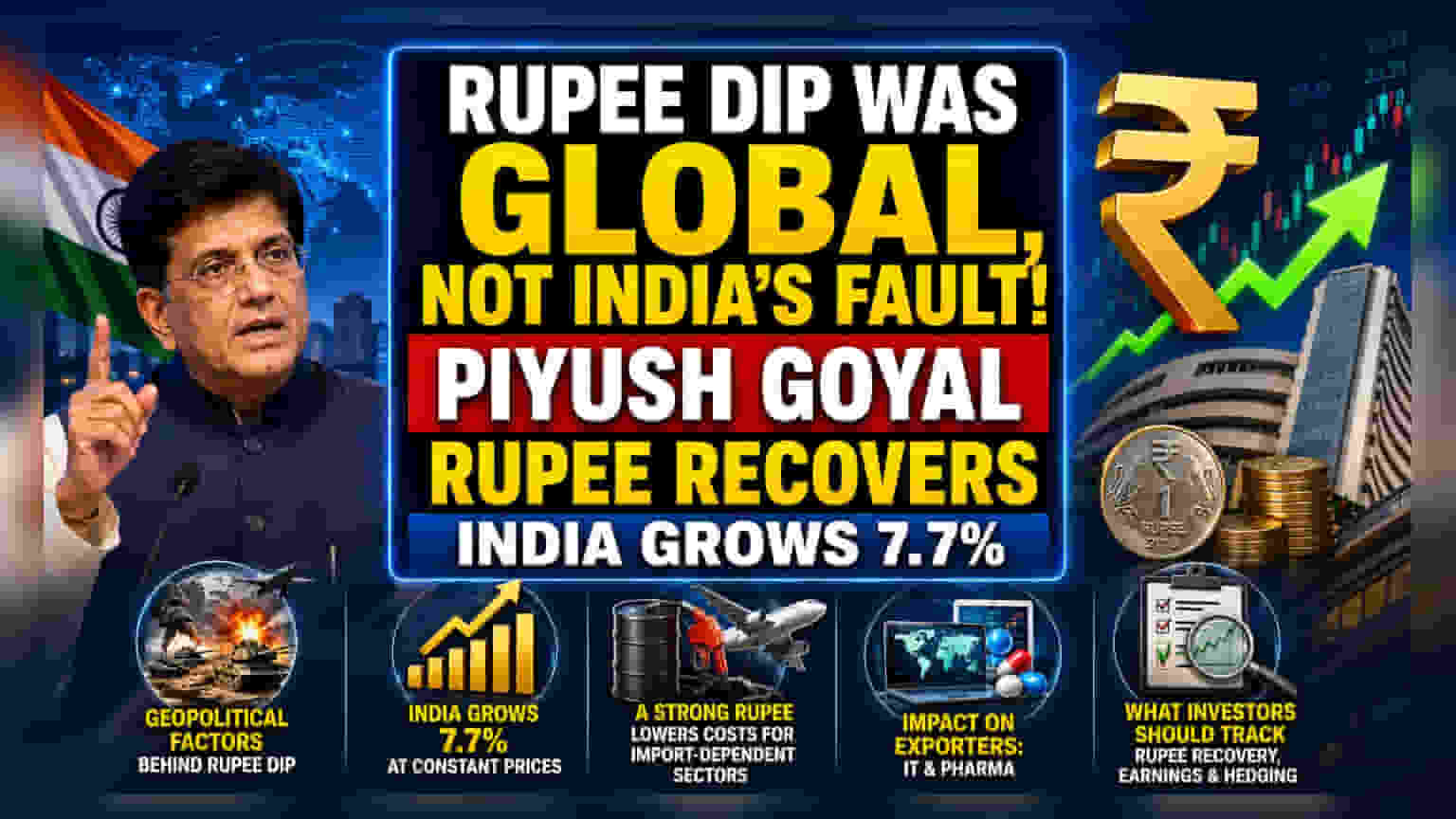
Commerce Minister Piyush Goyal attributed recent rupee volatility to global geopolitical developments, noting a recovery as tensions subside. He highlighted India's 7.7% economic growth during the previous year as proof of domestic resilience. For investors, currency stability typically influences import-heavy sectors and foreign investment flows, making the trend a key monitorable.
What Happened
Union Commerce and Industry Minister Piyush Goyal has stated that the recent depreciation of the Indian rupee was largely driven by global geopolitical factors rather than domestic economic issues. Speaking in Mumbai, the Minister noted that the currency has begun to recover as international tensions show signs of easing. He dismissed concerns that the volatility was caused by government policy missteps, emphasizing that the currency's movement aligns with shifts in the global environment.
The Economic Performance Backdrop
During his remarks, Minister Goyal highlighted India’s economic growth, citing a 7.7% expansion at constant prices over the last year. This figure, according to the Ministry, showcases the country's resilience compared to other major economies that have faced slowdowns or recessionary risks. The Minister attributed this performance to a consistent focus on infrastructure spending, economic reforms, and ongoing welfare programs, expressing confidence that this momentum will continue.
Why Currency Stability Matters for Investors
For Indian equity markets and businesses, the value of the rupee plays a significant role in profit margins. A strengthening rupee is generally viewed as favorable for companies that rely heavily on imports, such as oil marketing companies, aviation firms, and consumer electronics manufacturers. These businesses often pay for raw materials or fuel in dollars, so a stable or stronger rupee helps reduce input costs.
Conversely, sectors that generate a significant portion of their revenue in foreign currency—such as Information Technology (IT) services and certain pharmaceutical exporters—often see their margins fluctuate based on currency movements. When the rupee strengthens, the conversion of overseas earnings into rupees can appear lower, which investors typically weigh against operational growth.
Sector Trends and Investor Focus
Investors often monitor currency trends to gauge the potential impact on quarterly margins. While the government points to macroeconomic resilience, the actual impact on company earnings depends on how well businesses hedge against currency risk. Beyond the rupee, market participants are also closely watching how global inflation trends and interest rate decisions by major central banks influence foreign portfolio flows into India.
What Investors Should Track Next
The immediate monitorable for the market is the consistency of the rupee’s recovery against the dollar. If geopolitical calm persists, reduced volatility could provide more predictability for input costs in import-dependent sectors. Additionally, future quarterly results will reveal whether specific companies have effectively managed foreign exchange risks during the recent period of volatility.