Rupee SHOCKER: Crashes Below 90 Against Dollar! Is Your Investment Safe?

Overview
The Indian rupee has hit a record low, trading at 90.05 against the US dollar, down 9 paise. This follows a 42 paise fall yesterday. Factors include speculators, importers, a strong dollar, and delays in the India-US trade deal. Geojit Investments strategist expects a reversal post-deal, but the rupee's depreciation and lack of RBI intervention are worrying foreign investors.
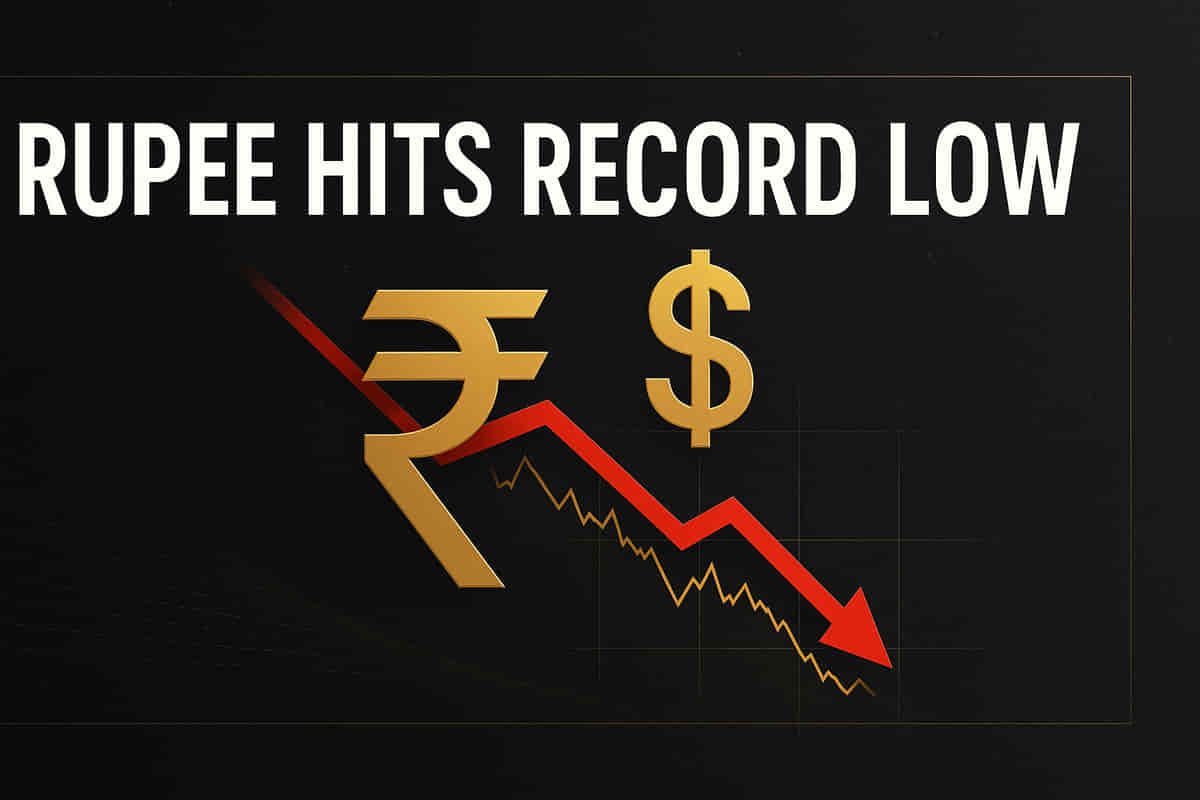
The Indian rupee has continued its downward slide, hitting a new low of 90.05 against the US dollar in early trade on Wednesday. This marks a significant depreciation, extending yesterday's fall of 42 paise, which saw the currency close at 89.95.
Reasons Behind the Fall
- The depreciation is being driven by a combination of factors, including speculators covering their short positions in the currency.
- Consistent buying of dollars by importers, who need them to pay for goods and services sourced from abroad, is also a major contributor.
- Market experts point to the overarching strength of the US dollar in global markets as a key external factor.
- A significant domestic concern is the continued delay in the finalization of the first tranche of the India-US Bilateral Trade Agreement (BTA).
Impact on Investors and FIIs
- VK Vijayakumar, Chief Investment Strategist at Geojit Investments Limited, noted that the slow drifting down of the market is partly due to the depreciating rupee.
- He highlighted a real concern: the lack of intervention from the Reserve Bank of India (RBI) to support the rupee.
- This perceived inaction is forcing Foreign Institutional Investors (FIIs) to sell Indian assets, despite improving domestic fundamentals like rising corporate earnings and strong GDP growth.
- The currency's weakness creates uncertainty, impacting investor sentiment and potentially leading to capital outflows.
Potential for Rupee Rebound
- According to VK Vijayakumar, the trend of rupee depreciation is likely to halt and could even reverse once the India-US trade deal is officially sealed.
- He anticipates this trade deal might materialize this month.
- However, the exact impact and details of the tariffs imposed on India as part of the deal will play a crucial role in determining the extent of the reversal.
Market Sentiment
- The continued fall of the rupee adds a layer of caution for the Indian stock market.
- While corporate earnings and GDP growth offer underlying strength, currency volatility can deter foreign investment.
- Investors will be closely watching the upcoming India-US trade deal negotiations for signs of stability.
Impact
- A weaker rupee increases the cost of imports, potentially leading to higher inflation for consumers and businesses.
- Conversely, it makes Indian exports cheaper and more competitive in international markets, benefiting export-oriented industries.
- For investors, a depreciating currency can erode the returns on foreign investments when converted back to their home currency.
- Continued FII selling due to currency concerns could put pressure on stock prices and market liquidity.
- The overall economic stability and attractiveness for foreign investment are at stake.
Impact Rating: 8/10
Difficult Terms Explained
- Depreciation: A decrease in the value of a currency relative to another currency.
- Speculators: Individuals or entities who trade financial instruments hoping to profit from short-term price fluctuations.
- Short Positions: A trading strategy where an investor borrows an asset and sells it, expecting to buy it back later at a lower price.
- Importers: Businesses or individuals who buy goods or services from foreign countries.
- FIIs (Foreign Institutional Investors): Institutional investors such as pension funds, mutual funds, or insurance companies that are based outside of India and invest in Indian financial markets.
- GDP (Gross Domestic Product): The total monetary or market value of all the finished goods and services produced within a country's borders in a specific time period.
- BTA (Bilateral Trade Agreement): A trade pact between two countries that reduces tariffs and other barriers to trade.
- RBI (Reserve Bank of India): The central bank of India responsible for the regulation of the Indian banking system. It manages the country's currency, monetary policy, and foreign exchange reserves.
Stock Investment Ideas Sector

Market Rallies Cautiously! Nifty 50 Snaps Losing Streak; Top Stock Picks Revealed!
Brokerage Reports Sector