 Whalesbook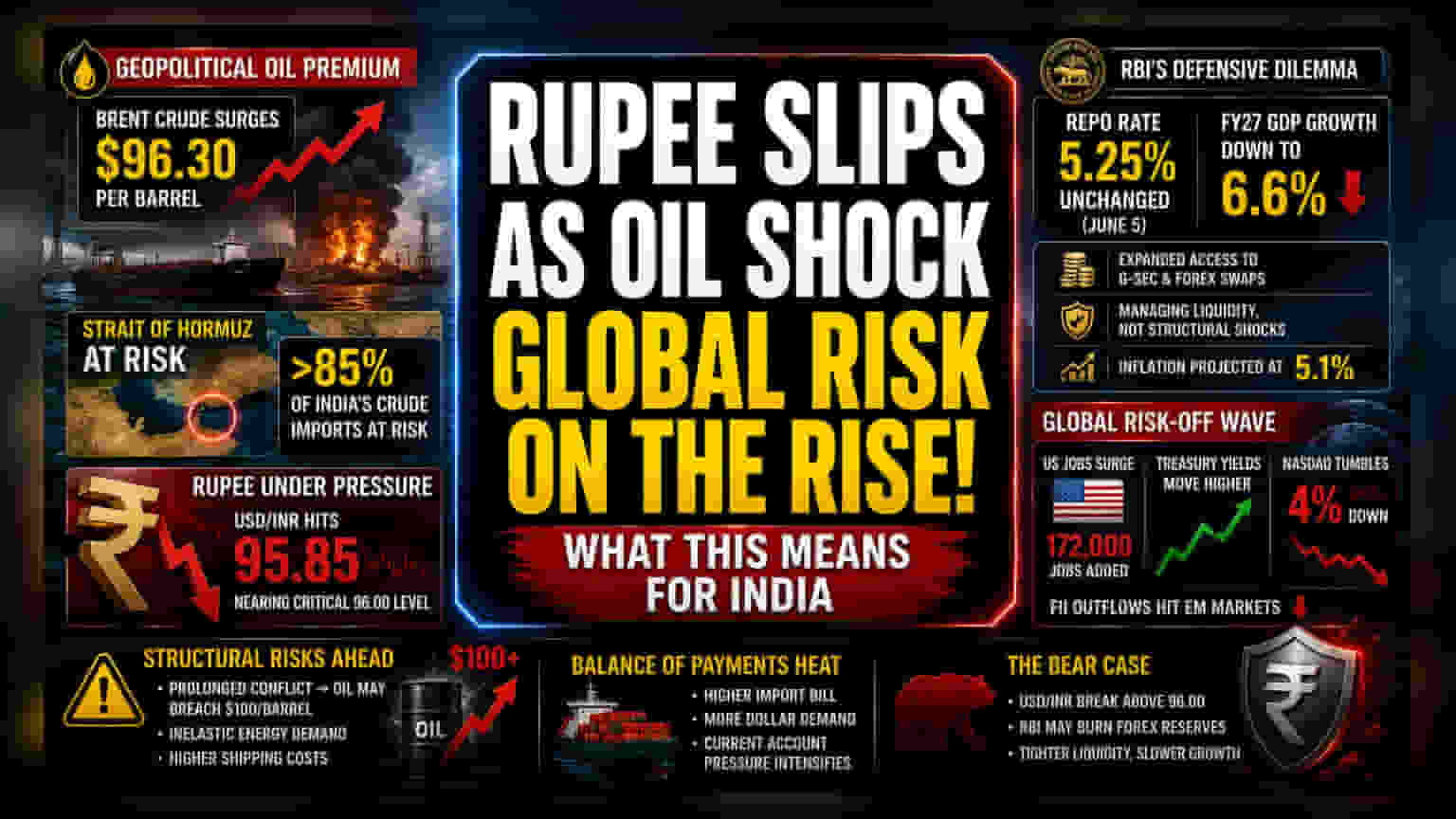


The Geopolitical Oil Premium
The immediate downward pressure on the Indian rupee originates from a sharp reversal in energy markets. Brent crude futures surged to $96.30 a barrel in early Asian trading on June 8, as escalating hostilities between Israel and Iran once again threatened the integrity of the Strait of Hormuz. This critical maritime bottleneck, which has faced intermittent disruption for weeks, remains the central variable for global energy supply chains. For India, a net importer of over 85% of its crude requirements, the mathematics of the oil-rupee relationship are unforgiving. Each sustained dollar increase in the price of crude exacerbates the country's import bill, directly amplifying demand for U.S. dollars in the foreign exchange market and structurally weighing on the domestic currency.
The RBI’s Defensive Dilemma
The central bank’s recent policy shift, which saw the repo rate held steady at 5.25% on June 5, is now under intense scrutiny. While the Reserve Bank of India has initiated a series of measures—including expanded access to long-term government securities and concessional forex swaps—these interventions are designed to manage liquidity rather than neutralize structural energy shocks. Furthermore, the committee's decision to revise FY27 GDP growth projections downward to 6.6% reflects a growing consensus that persistent inflationary pressure, fueled by energy and commodity costs, may dampen consumption for the remainder of the year. The central bank is now effectively balancing a hawkish need to curb inflation, currently projected at 5.1%, against the reality of a slowing industrial output.
Global Market Contagion
The rupee is not depreciating in a vacuum; it is struggling against a global "risk-off" cycle. Recent U.S. payroll data—showing a surprising addition of 172,000 jobs—has caused a recalibration in Federal Reserve rate expectations, pushing Treasury yields higher and triggering a flight from speculative assets. The tech-heavy Nasdaq Composite’s recent 4% plunge, fueled by disappointing semiconductor guidance, has reverberated across Asian equity markets. This shift in risk appetite is prompting foreign institutional investors to withdraw capital from emerging markets, adding a secondary layer of supply-side pressure to the rupee that is largely independent of domestic fundamentals.
Structural Risks and the Bear Case
Unlike periods of temporary volatility, the current environment presents a structural weakness. If the conflict in West Asia results in a prolonged closure of the Strait of Hormuz, the cost of crude oil could test the $100-per-barrel threshold again, a level not seen consistently since the early months of the 2026 regional crisis. The primary risk factor remains the inelasticity of India’s energy demand. Even with diversified import sources, the country remains highly susceptible to global shipping cost inflation. Should the rupee breach the 96.00 level against the dollar, the central bank may face increasing pressure to burn through foreign exchange reserves to defend the currency, a move that could inadvertently restrict domestic liquidity and further constrain economic expansion.