 Whalesbook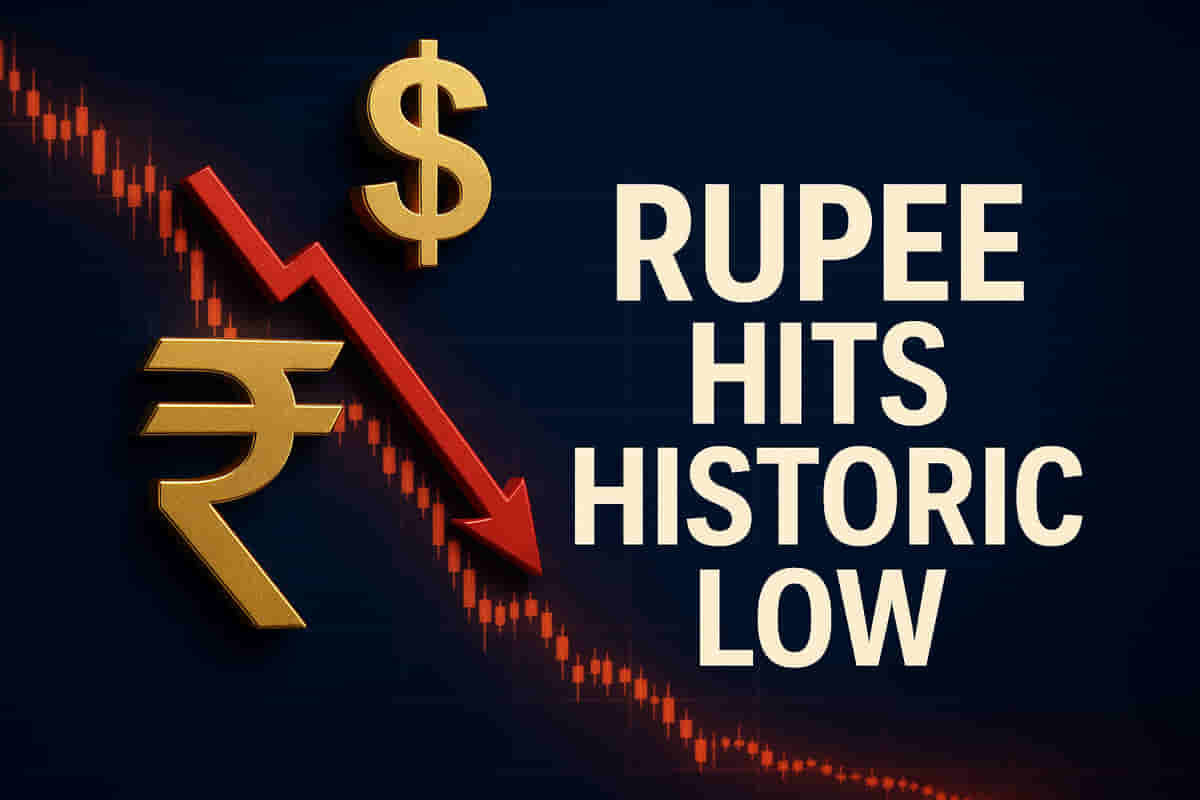


The Indian Rupee has reached an unprecedented low against the US dollar, breaching the psychologically important 90 per dollar mark for the first time in history. This marks the sixth consecutive day of decline for the Indian currency.
Historic Low Breached
- On Wednesday, the rupee opened at 89.97 against the US dollar, extending its losing streak to a sixth session.
- The currency had already touched the 90-per-dollar level in previous trading, with 90/$ now seen as a significant resistance level.
- Some market observers now predict the rupee could slide further, potentially reaching the 91-per-dollar mark.
Factors Driving Depreciation
- A primary driver cited for the rupee's sharp fall is the stalled trade deal negotiations between India and the United States.
- Another significant factor is the outflow of equities from the Indian market, indicating reduced foreign investor confidence.
Expert Analysis
- Dr. VK Vijayakumar, Chief Investment Strategist at Geojit Investments, highlighted the rupee's depreciation as a real concern impacting market sentiment.
- He noted that despite improving economic fundamentals, such as rising corporate earnings and strong GDP growth, foreign institutional investors (FIIs) are selling due to fears of further currency devaluation.
- Dr. Vijayakumar suggested that the rupee's decline is expected to halt and potentially reverse once the India-US trade deal is finalized, which is anticipated this month, although tariff details remain a key factor.
RBI MPC Meeting Underway
- The Reserve Bank of India's (RBI) Monetary Policy Committee (MPC) meeting commenced today, with currency stability likely a key agenda item.
- The rupee has been one of the worst-performing Asian currencies recently, prompting attention from the central bank.
- Economists hold differing views on whether the RBI will implement a rate cut. However, the persistent rupee decline coupled with robust GDP figures may influence the committee's decision-making.
Impact
- The depreciation of the Indian Rupee makes imports more expensive, potentially increasing inflation for consumers and businesses reliant on foreign goods.
- It can also make Indian exports cheaper, potentially boosting certain sectors.
- For investors, a weakening rupee often signals reduced attractiveness for foreign capital, leading to equity outflows and impacting overall market sentiment.
- Higher borrowing costs could also be a consequence if the RBI intervenes aggressively or if inflation concerns rise.
- Impact Rating: 8
Difficult Terms Explained
- Rupee: The official currency of India.
- US Dollar: The official currency of the United States of America, often used as a global reserve currency.
- GDP (Gross Domestic Product): The total monetary or market value of all the finished goods and services produced within a country's borders in a specific time period. It represents the size of a country's economy.
- FIIs (Foreign Institutional Investors): Institutional investors such as pension funds, mutual funds, insurance companies, and endowments that invest in the securities of another country.
- RBI MPC (Reserve Bank of India Monetary Policy Committee): A committee constituted by the Reserve Bank of India to decide on the policy repo rate based on an objective assessment of the macroeconomic situation in order to contain inflation while keeping in mind the objective of growth.