 Whalesbook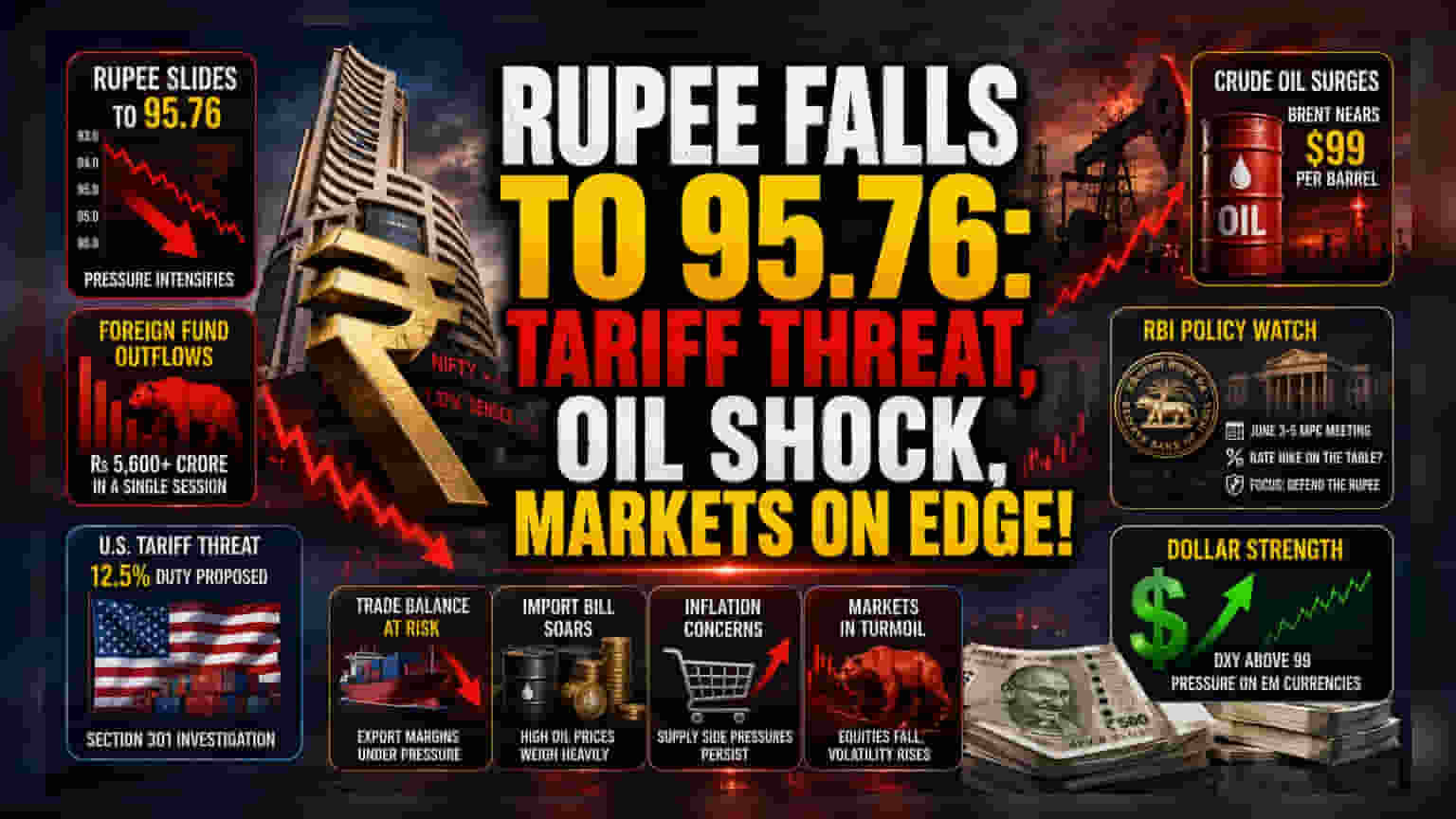


The Valuation Gap and Currency Depreciation
The rupee's slide to 95.76 reflects more than just a knee-jerk reaction to headlines; it reveals a fundamental shift in the risk-reward profile for emerging market assets. While the immediate catalyst involves the U.S. Trade Representative’s proposed 12.5% duty on imports, the deeper structural vulnerability lies in India’s ongoing current account sensitivity to energy costs. As Brent crude prices climb toward $99 per barrel, the nation’s import bill swells, necessitating higher dollar demand from domestic oil marketing companies precisely when capital flows are turning negative. This double-whammy of supply-side inflation and reduced liquidity creates a self-reinforcing downward momentum that technical support levels have struggled to contain.
Analytical Deep Dive: The Regional Context
When benchmarked against peers in the ASEAN and broader emerging market space, the rupee’s underperformance is notable. Unlike markets with higher fiscal buffers, India is currently grappling with a concentrated exit of foreign capital, totaling over Rs 5,600 crore in a single session. Historically, episodes of rapid currency depreciation accompanied by simultaneous equity outflows have necessitated aggressive intervention from the Reserve Bank of India. The market is currently pricing in a hawkish stance for the upcoming Monetary Policy Committee decision, not out of a desire for growth stimulus, but out of a desperate need to defend currency stability and anchor inflation expectations. The divergence between rising US Treasury yields and domestic interest rate trajectory continues to compress the carry trade appeal that previously supported the rupee.
The Forensic Bear Case: Structural Risks
The most immediate threat to the rupee is not just geopolitical noise but a potential shift in the trade balance. Should the US proceed with Section 301 investigations into labor practices and industrial overcapacity, Indian exporters—particularly in the textile and light manufacturing sectors—face a prolonged margin squeeze. If companies cannot pass these tariffs onto global consumers, earnings will contract, leading to further FII outflows. Furthermore, the reliance on external capital to finance infrastructure spending leaves the economy exposed to volatility in the dollar index. Should the index sustain levels above 99, the RBI will be forced to choose between depleting foreign exchange reserves or allowing further currency weakness, both of which serve as headwinds for long-term equity valuations.
The Future Outlook
All eyes are now fixed on the June 3-5 policy meeting. Market consensus is leaning toward a 'wait-and-see' approach regarding interest rates, though many strategists argue that a tactical hike or strict liquidity tightening may be required to stem the bleeding. If the central bank signals a prioritize-the-rupee stance, we may see a temporary floor at current levels. However, until crude oil prices stabilize and the uncertainty regarding the US interim trade agreement clarifies, volatility is expected to remain elevated.