

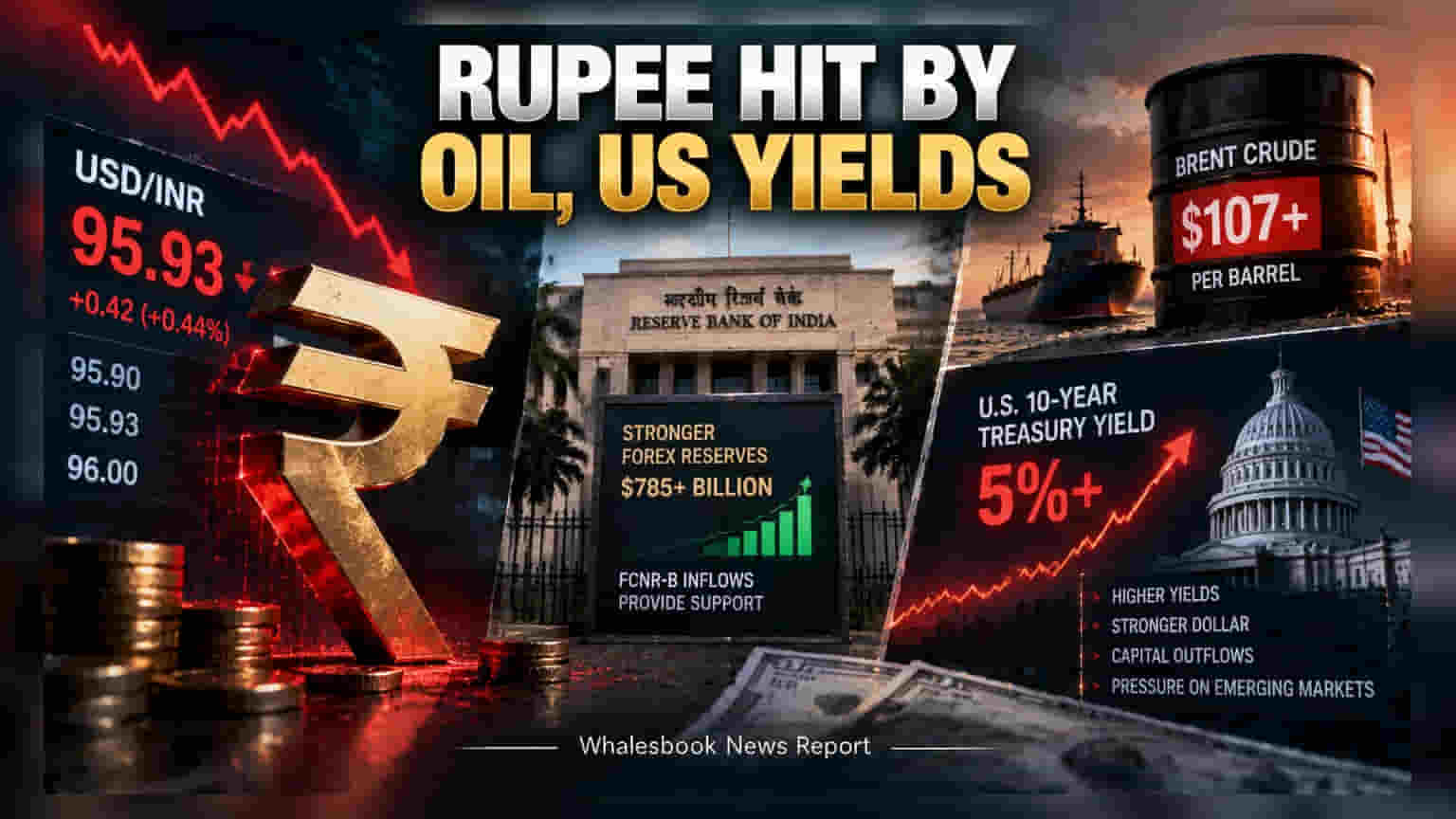
The Indian rupee is trading near the 96 level against the US dollar as high oil prices and rising US Treasury yields weigh on sentiment. Investors are monitoring how these global factors, combined with the upcoming Federal Reserve policy decision, may influence domestic inflation and the Reserve Bank of India's currency management strategy.
The Indian rupee has come under significant pressure, hovering near the 95.90–96.00 range against the US dollar on September 15, 2026. This depreciation follows a challenging global economic environment, driven primarily by a combination of high energy costs and rising returns on US government bonds.
The Double Pressure of Yields and Oil
The current weakness in the rupee is fueled by two major external factors. First, the US 10-year Treasury yield has reached approximately 5%, the highest level since 2007. When US government bonds offer such high, reliable returns, international investors often move capital out of emerging markets like India and into dollar-denominated assets. This shift increases demand for the US dollar, which pushes its value up against other currencies, including the rupee.
Second, Brent crude oil prices are trading above $107 per barrel due to supply concerns and geopolitical tensions. Since India imports nearly 85% of its crude oil requirements, higher oil prices mean the country must pay more in dollars for the same amount of energy. This creates a persistent structural demand for dollars, which adds further depreciation pressure on the rupee.
RBI Buffer Remains Strong
While the rupee is facing headwinds, the Reserve Bank of India (RBI) enters this period of volatility with a robust defense. India’s foreign exchange reserves reached a record high of over $785 billion for the week ended September 4, 2026. This significant stockpile acts as a buffer, allowing the central bank to intervene in the market to smooth out sharp, sudden movements in the currency. While these reserves are not intended to reverse the fundamental trend of the market, they provide the central bank with the necessary tools to prevent disorderly volatility.
Inflation and Policy Outlook
The pressure on the rupee has broader implications for the domestic economy, particularly regarding inflation. India’s retail inflation (CPI) was reported at 4.82% for August. If the rupee remains weak and global energy prices stay elevated, the cost of imported goods, especially oil, may feed into domestic price levels. This adds a layer of complexity for policymakers who must balance the need to support economic growth with the need to keep inflation in check.
Global investors are now shifting their focus toward the US Federal Reserve, with the market pricing in a high probability of a 25-basis-point interest rate hike in the upcoming policy meeting. The outcome of this meeting and the subsequent commentary from the Fed will be crucial. Investors should watch for the central bank’s communication on future interest rate paths, as this will influence whether global yields remain at these high levels or begin to stabilize. For now, the sustainability of oil prices and the RBI's strategy to manage liquidity and currency volatility remain the key developments to track.