

On Monday, the Indian rupee fell to a new record low of 96.18 against the US dollar. This marks a continued decline, with the currency depreciating by approximately 6% in 2026 alone. A key driver is the persistent surge in global energy prices, linked to conflicts and disruptions in major oil routes. As India imports 85-90% of its oil, higher prices sharply increase its import bill, driving demand for dollars and weakening the rupee. Escalating geopolitical tensions also push up global bond yields, making dollar assets more attractive and leading to capital leaving emerging markets.
The rupee has become Asia's worst-performing major currency in 2026. While other regional currencies have shown strength, the rupee's drop, nearing 10% in the fiscal year 2026, signals deeper issues. Historically, geopolitical oil price spikes have caused rupee drops, a pattern seen in past tensions. This situation is worsened by a growing current account deficit, expected to exceed 2% of GDP for FY27 due to higher energy import costs. This external pressure strains government finances, making the target fiscal deficit of 4.3% for 2026-27 harder to meet. Foreign investors have also pulled significant amounts from Indian stocks, further increasing dollar demand and pressuring the currency.
Economic Fragilities and Policy Challenges
The rupee's ongoing weakness highlights significant economic frailties. India's heavy reliance on imported energy leaves it highly exposed to geopolitical shocks, directly increasing its import costs and worsening its trade balance. This fuels imported inflation, complicating the Reserve Bank of India's (RBI) efforts to manage monetary policy. The RBI has sold dollars from its foreign exchange reserves to slow volatility, but these actions are costly and have depleted reserves. These interventions have limited effectiveness against sustained global pressures. The total government debt, including state borrowings, is around 81.92% of GDP, limiting the government's fiscal options. Prolonged high oil prices and currency depreciation could strain government finances further through higher subsidies and borrowing costs, as shown by the 10-year Indian government bond yield rising to 7.02%. Higher global yields mean a difficult environment for emerging market currencies like the rupee, which tend to see capital outflows during periods of market stress.Outlook for the Rupee
Forex analysts expect continued pressure on the Indian rupee, with potential for further record lows if oil prices stay high and geopolitical tensions continue. Imported inflation and capital outflows are likely to dominate market sentiment. The RBI will likely focus on managing extreme volatility rather than defending a specific exchange rate, as stated by Governor Sanjay Malhotra. Balancing fiscal management with economic support amid these external shocks will be key.
Rupee Hits Record Low on Energy Surge, Asia's Worst Performer
ECONOMY
Overview
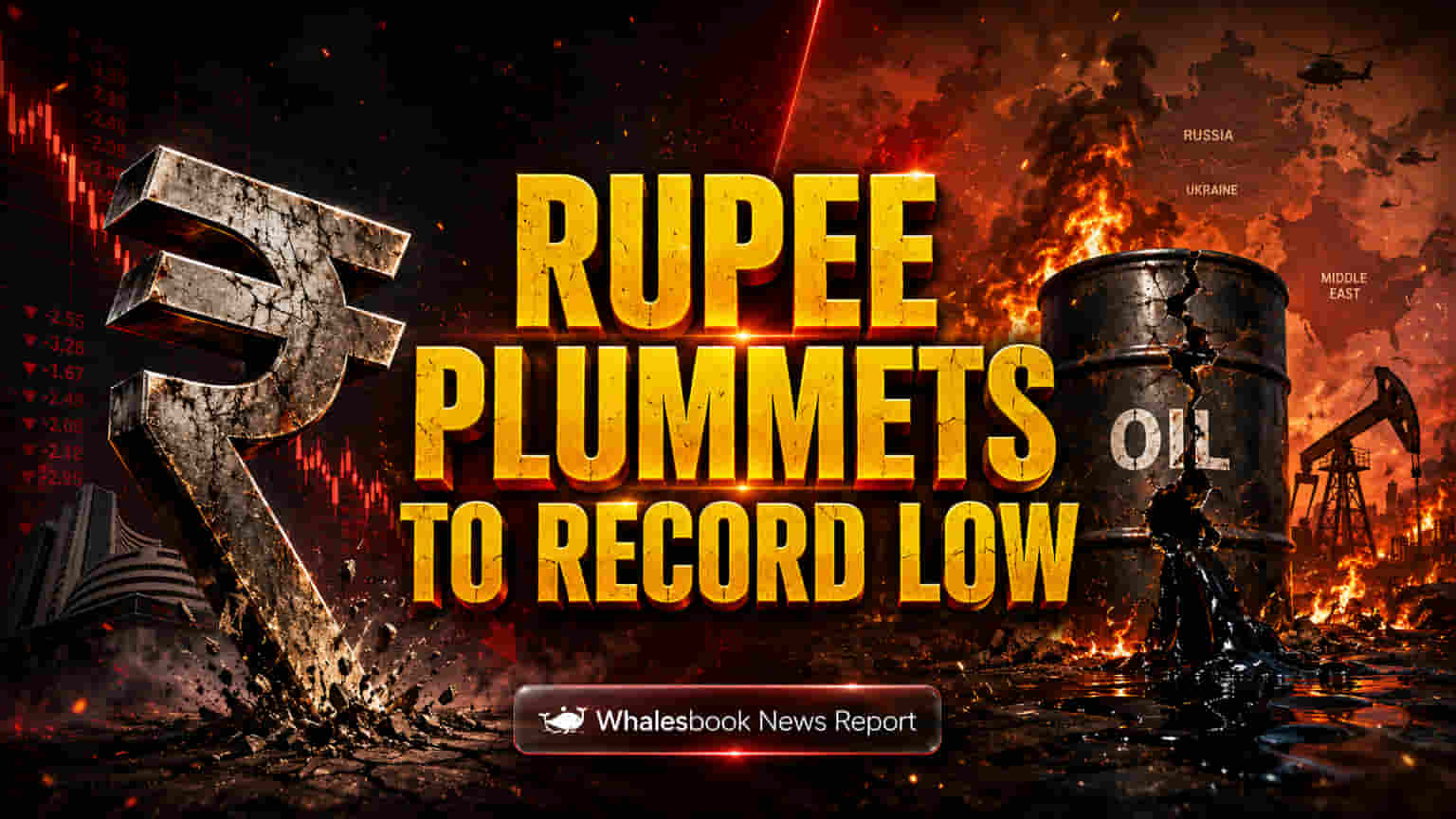
The Indian rupee hit an all-time low of 96.18 per dollar on Monday, marking its fifth consecutive session of record declines. Driven by soaring energy prices and geopolitical tensions, the rupee is Asia's worst-performing currency in 2026, down nearly 6% year-to-date. The sharp fall highlights India's exposure to global price shocks and increasing economic pressures.
Instant Stock Alerts on WhatsApp
Used by 10,000+ active investors
1
Add Stocks
Select the stocks you want to track in real time.
2
Get Alerts on WhatsApp
Receive instant updates directly to WhatsApp.
- ✓Quarterly Results
- ✓Concall Announcements
- ✓New Orders & Big Deals
- ✓Capex Announcements
- ✓Bulk Deals
- ✦And much more
Disclaimer:This content
is for educational and informational purposes only and does not constitute investment, financial, or
trading advice, nor a recommendation to buy or sell any securities. Readers should consult a
SEBI-registered advisor before making investment decisions, as markets involve risk and past performance
does not guarantee future results. The publisher and authors accept no liability for any losses. Some
content may be AI-generated and may contain errors; accuracy and completeness are not guaranteed. Views
expressed do not reflect the publication’s editorial stance.