 Whalesbook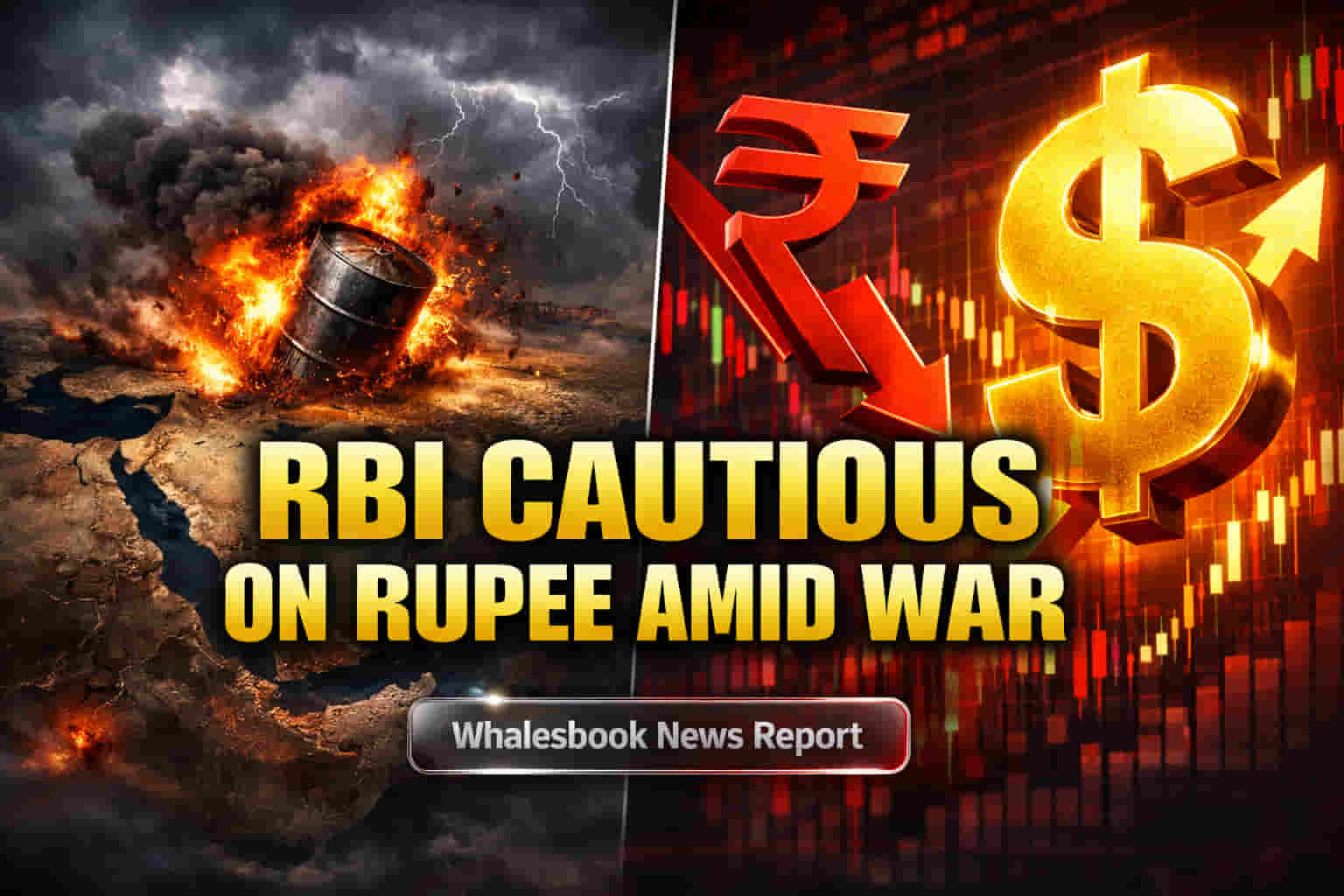


THE SEAMLESS LINK
The rupee's sharp depreciation to unprecedented levels is not merely a reaction to current geopolitical flare-ups; it is a stark manifestation of India's enduring structural vulnerabilities amplified by a global energy supply shock. While the Reserve Bank of India navigates the immediate aftermath by managing volatility, deeper economic fault lines are being exposed.
The Core Catalyst: Geopolitical Strife and the Oil Price Surge
The Indian rupee has fractured historic support levels, touching approximately 92.33 against the US dollar in early March 2026, a direct consequence of escalating Middle East conflicts and a resulting surge in crude oil prices. Brent crude futures have neared $118 per barrel, intensifying fears of supply disruptions via the Strait of Hormuz, a critical chokepoint for over 40% of India's oil imports. This oil price shock has predictably widened India's current account deficit (CAD), which reached $13.2 billion (1.3% of GDP) in Q3 FY2026, with economists estimating a $10 increase in oil prices could widen CAD by 30-40 basis points. The USD/INR pair traded at 92.4250 on March 9, 2026, marking a 0.53% increase from the previous session and a 5.84% decline over the last 12 months. Analysts project near-term trading within the 91-93 range, with some forecasting potential upward pressure towards 95 or higher if tensions persist [cite: source A, 11]. The Group of Seven (G7) finance ministers are reportedly discussing strategic oil reserve releases but have not yet acted, indicating a cautious approach to energy supply management [cite: source A].
The Analytical Deep Dive: Structural Weaknesses Under Fire
India's deep-seated reliance on imported energy forms the bedrock of its vulnerability. The nation imports nearly 89% of its crude oil requirements, a dependency that has only grown over the past decade. This makes the economy exceptionally susceptible to global price fluctuations, directly impacting the trade balance, inflation, and foreign exchange reserves. The current environment exacerbates this, with foreign portfolio investors (FPIs) exhibiting increasing caution towards emerging markets perceived as vulnerable to external shocks. Recent months have seen substantial FPI outflows, driven by concerns over inflation, CAD, and currency stability, with investors favoring the safe-haven US dollar. This sentiment is partly captured by the narrative of India being viewed as an 'anti-AI trade' destination, potentially leading to reduced foreign capital inflows [cite: source A].
Despite these pressures, India's foreign exchange reserves have reached a record $728.49 billion as of February 27, 2026, providing a significant buffer for the RBI to manage excessive currency volatility and support import financing. However, the RBI's stated policy is to curb volatility, not to defend a specific exchange rate [cite: source A]. The central bank's capacity for aggressive intervention is constrained by the external nature of the shock, as noted by analysts who suggest that such actions might be less effective than during domestically driven crises [cite: source A].
Compared to regional peers, Asian currencies have shown mixed performance in 2025, with high-yielders like the rupee facing headwinds from domestic growth concerns and tariffs, while low-yielders have outperformed. The US dollar has strengthened amid geopolitical risks, adding to the pressure on emerging market currencies.
⚠️ THE FORENSIC BEAR CASE
The current crisis, while driven by external factors, lays bare critical structural deficiencies in India's economic architecture. The near-90% oil import dependency is not a temporary issue but a persistent strategic liability. While the RBI possesses substantial foreign exchange reserves, its ability to unilaterally counter sustained global commodity price shocks is limited. Relying on these reserves for prolonged intervention could deplete them, leaving the economy exposed. The widening CAD and potential fiscal strain from higher import bills further diminish policy flexibility. Furthermore, the trend of FPI outflows signals a broader de-risking by global investors away from economies perceived as sensitive to geopolitical shocks or facing trade headwinds, a sentiment that could persist even if immediate tensions de-escalate. The sensitivity to the Strait of Hormuz represents a significant geopolitical risk that cannot be mitigated by monetary policy alone. If oil prices remain elevated, imported inflation could necessitate difficult policy choices between supporting growth and curbing price pressures, potentially leading to a scenario of stagflationary concerns. The expectation for the rupee to test levels around 92.30 or higher, as per some analysts, underscores the prevailing bearish sentiment and the challenges in achieving a sustainable appreciation without addressing these core structural impediments.
The Future Outlook
Looking ahead, the rupee's trajectory remains highly contingent on the de-escalation of geopolitical tensions and stability in global oil prices. While some analysts, like ING Bank, project a modest appreciation to 87.00 by the end of 2026, others, such as Wallet Investor, forecast a weaker rupee, potentially reaching 93.21. Goldman Sachs, following a US-India trade deal, upgraded India's 2026 GDP growth to 6.9% and reduced its CAD outlook, suggesting a more optimistic scenario if trade relations stabilize. HSBC Private Bank anticipates the rupee stabilizing and then appreciating modestly against the USD in the coming quarters, buoyed by domestic resilience and potential trade agreements. However, the immediate outlook suggests continued volatility, heavily influenced by the evolving geopolitical situation in the Middle East and the ongoing supply dynamics of crude oil.