

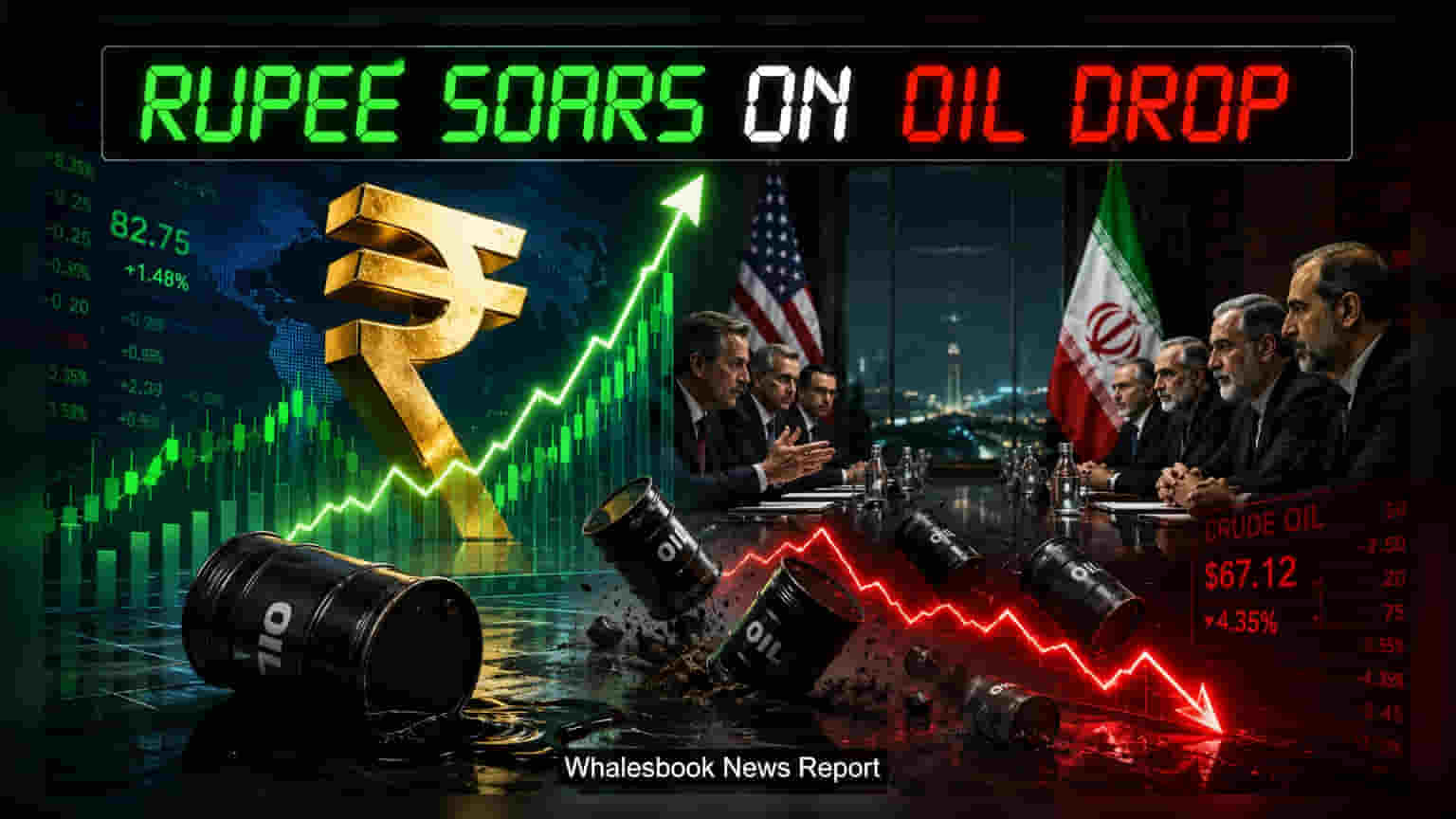
The Indian rupee reached a one-month high of 94.92 against the US dollar on August 5, 2026, driven by a sharp drop in global crude oil prices. As the Reserve Bank of India’s policy committee prepares to announce its rate decision today, investors are focused on the central bank's commentary regarding inflation and economic growth.
The Indian rupee showed strength in early trading on Wednesday, August 5, 2026, touching a one-month high of 94.92 against the US dollar. This move was primarily supported by a decline in global crude oil prices, which dipped below $80 per barrel. The dip in oil prices follows news of potential progress in diplomatic talks between the US and Iran, which helped calm concerns about energy supply disruptions.
Why Oil Prices Matter for the Rupee
For Indian investors, the relationship between crude oil and the rupee is vital. India imports a significant portion of its oil requirements. When global oil prices fall, it reduces the amount of foreign currency India needs to pay for these imports. This reduces pressure on the country's current account—the measure of trade in goods and services—and helps support the value of the rupee. Conversely, rising oil prices often put pressure on the rupee and can lead to imported inflation, where higher fuel costs raise the price of goods across the economy.
Focus on RBI Monetary Policy
Market attention is now centered on the Reserve Bank of India (RBI) Monetary Policy Committee (MPC) meeting, which concludes today. Economists and market participants widely expect the central bank to maintain the repo rate—the rate at which the RBI lends money to commercial banks—at 5.25 per cent.
While the interest rate decision is key, the market is paying closer attention to the RBI’s commentary. Investors are watching to see if the central bank expresses new concerns about inflation or provides a clearer outlook on economic growth and liquidity in the banking system. If the RBI signals that it will keep interest rates higher for longer to manage inflation, it could influence market sentiment and currency trends in the coming months.
Equity Market Reaction
The domestic equity markets, including the BSE Sensex and NSE Nifty, reacted positively to the currency's movement and the broader anticipation of the policy announcement. Indices opened higher, reflecting a level of stability as foreign institutional investors continue to monitor the balance between global energy prices and domestic interest rate policy.
Risks and Outlook
Despite the temporary relief from lower oil prices, risks remain. Geopolitical tensions in West Asia continue to create uncertainty, which could quickly reverse the trend in oil prices. Furthermore, while inflation appears manageable for now, any supply-side shocks or sudden increases in energy costs could complicate the RBI's future policy decisions. For investors, the immediate monitorable is the post-meeting press conference and the official statement from the RBI, which will provide clues on how the central bank plans to manage economic stability in an evolving global environment.