

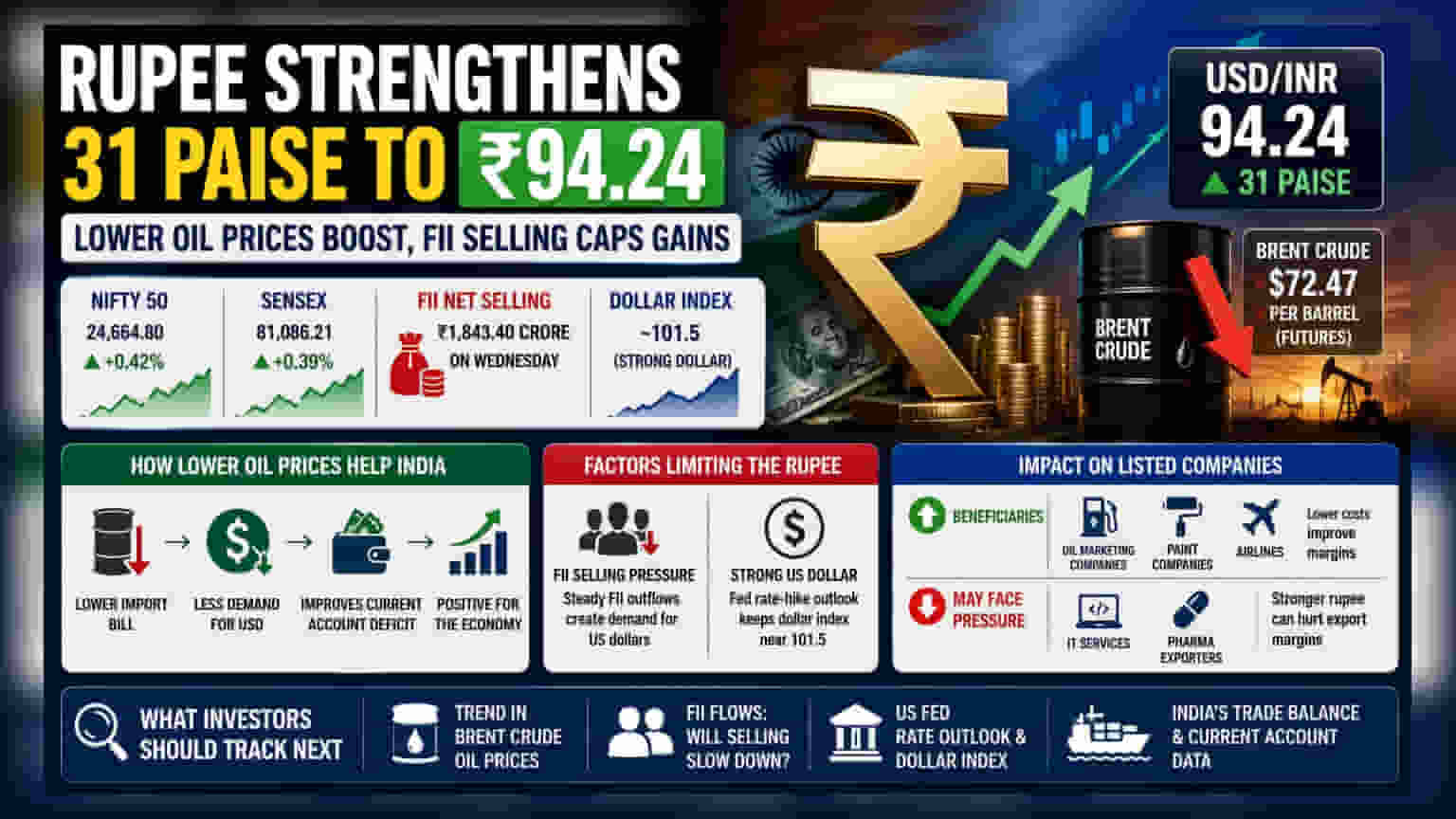
The Indian rupee appreciated to 94.24 against the US dollar on Thursday, supported by a significant decline in global crude oil prices. While lower import costs provide potential relief, persistent selling by foreign institutional investors and a strong dollar index are currently limiting the currency's gains.
What Happened
The Indian rupee strengthened on Thursday, rising 31 paise to trade at 94.24 against the US dollar. This move was primarily driven by a sharp drop in global crude oil prices. Brent crude, a key global oil benchmark, has fallen significantly in recent weeks, trading at approximately $72.47 per barrel in futures trade. While the domestic equity market showed positive movement with the Nifty and Sensex gaining ground, the rupee's rise was held back by steady selling from foreign institutional investors (FIIs).
How Lower Oil Prices Affect the Economy
India is one of the world's largest importers of crude oil. When global oil prices fall, the country needs fewer US dollars to pay for its energy imports. This reduces the demand for dollars and helps the rupee stabilize or strengthen. A decline in the import bill is generally viewed as a positive for the economy as it helps manage the Current Account Deficit, which is the difference between what a country imports and exports.
The Factors Limiting the Rupee
Despite the positive impact of cheaper oil, the rupee faced pressure from two main sources. First, consistent selling by FIIs has acted as a drag on the currency. On Wednesday alone, FIIs sold shares worth ₹1,843.40 crore, which creates a demand for US dollars as they move funds out of India. Second, the US dollar remains strong globally. The dollar index, which measures the greenback's strength against major currencies, is hovering near 101.5. This strength is partly due to market expectations that the US Federal Reserve may maintain a strict, high-interest-rate policy, making the dollar more attractive to investors.
Impact on Listed Companies
For investors, currency and oil price movements have specific sector impacts. When the rupee strengthens and oil prices fall, sectors that rely heavily on oil imports—such as Oil Marketing Companies (OMCs) and paint manufacturers—often see their input costs decrease, which can improve their profit margins. Similarly, airlines often benefit as fuel costs make up a significant portion of their expenses.
Conversely, export-oriented sectors like Information Technology (IT) and pharmaceuticals often prefer a slightly weaker rupee, as it increases their earnings when they convert foreign revenue back into rupees. If the rupee continues to gain strength, these export-heavy companies may face pressure on their margins.
What Investors Should Track Next
The key monitorables for the market include the trend in Brent crude oil prices and whether foreign institutional investor selling slows down or reverses. Investors should also track commentary from the US Federal Reserve regarding interest rates, as this will influence the strength of the dollar index. Lastly, any significant change in India's trade balance data will provide clarity on whether the fall in oil prices is translating into tangible economic benefits for the country.