

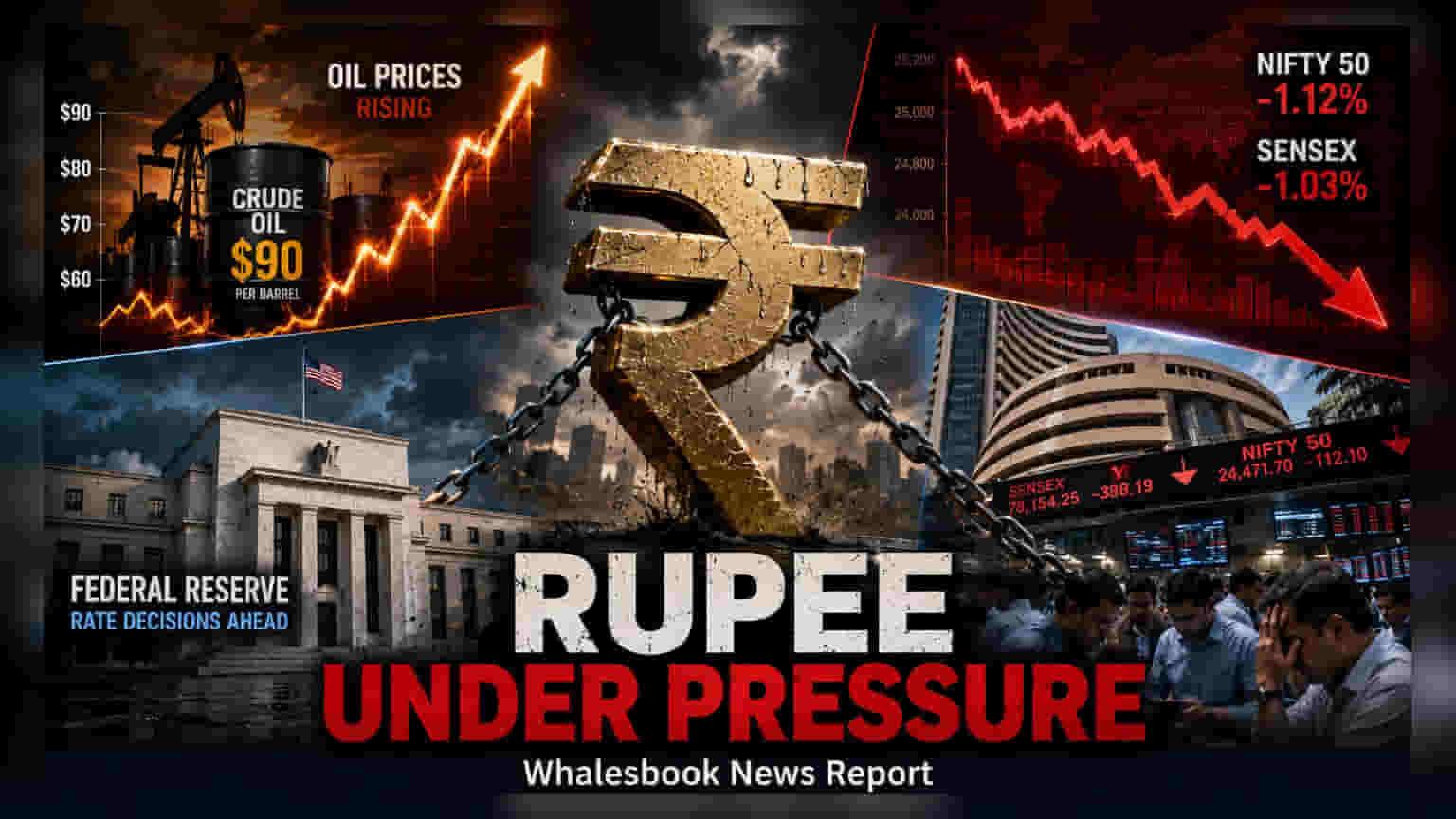
The Indian rupee closed at 95.43 against the US dollar on August 11, 2026, marking a 13-paise decline. Rising global crude oil prices near $90 per barrel weighed on the currency, while continued foreign investment provided a partial cushion. Market sentiment remains cautious as investors prepare for upcoming US inflation data, which will influence global interest rate expectations.
The Indian rupee settled at 95.43 against the US dollar on August 11, 2026, shedding 13 paise from the previous session. Throughout the trading day, the currency moved within a narrow range between 95.37 and 95.45, reflecting the ongoing struggle between global economic pressure and domestic demand.
The primary force behind the rupee's weakness is the rise in global crude oil prices. With rates approaching $90 per barrel, concerns regarding the energy import bill have returned to the forefront. India imports a significant portion of its oil requirements, and when global prices climb, the country needs more dollars to pay for these supplies. This increased demand for foreign currency naturally creates selling pressure on the rupee.
Despite these energy-related challenges, the rupee has maintained a level of resilience. This stability is largely supported by sustained foreign institutional investor (FII) inflows. Foreign investors have remained net buyers in the Indian equity market, and their buying activity creates demand for the rupee, which acts as a buffer against broader depreciation.
On the macroeconomic front, the country’s credit standing remains unchanged. On the same day, Fitch Ratings affirmed India's sovereign rating at 'BBB-' with a stable outlook. This decision offers some comfort to investors by confirming that, despite the global uncertainty, the nation's creditworthiness remains steady.
Looking ahead, market participants are keeping a close watch on the upcoming US inflation data. Inflation figures are a critical indicator for the US Federal Reserve when deciding on future interest rate policies. If the data shows higher-than-expected inflation, it could strengthen the dollar, which typically puts pressure on emerging market currencies like the rupee.
Investors are also tracking geopolitical developments, specifically in the Middle East, as these tensions continue to influence global oil supplies. The combination of energy price trends, the direction of the US dollar, and continued foreign investment will determine the rupee's movement in the coming days.