 Whalesbook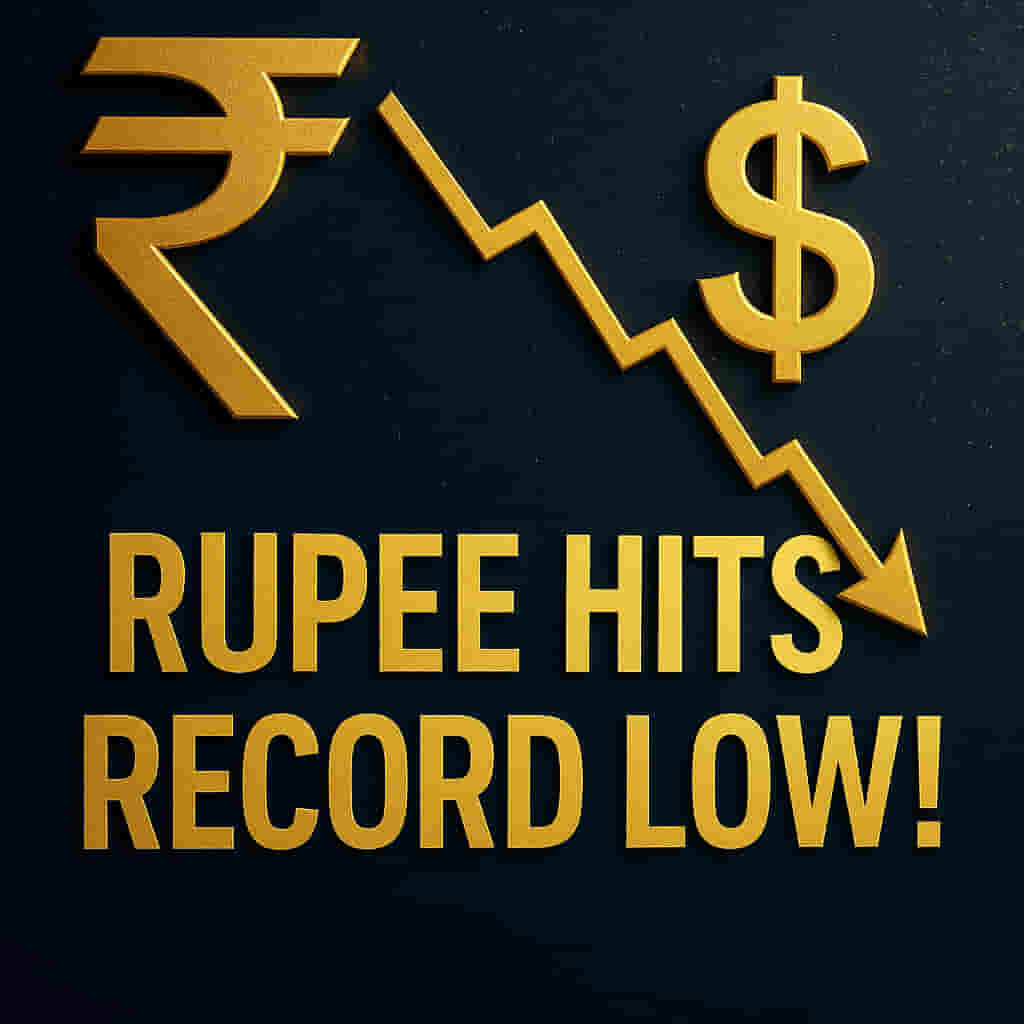
Indian equity markets opened Wednesday's trading session with a muted, slightly positive bias, overshadowed by the significant depreciation of the Indian Rupee against the US Dollar. The Rupee crossed the 90 mark against the USD for the first time in history, signaling potential headwinds for the economy and investors.
Market Opening
- The NSE Nifty 50 began the day 2 points higher at 26,034, while the BSE Sensex saw a marginal increase of 70 points, opening at 85,208.
- The Bank Nifty also experienced a slight uptick, opening 30 points higher at 59,304.
- Small and mid-cap stocks mirrored the broader market trend, with the Nifty Midcap opening marginally lower by 20 points at 60,890.
Rupee Depreciation Concerns
- VK Vijayakumar, Chief Investment Strategist at Geojit Investments, highlighted the continued depreciation of the Rupee as a significant concern impacting market sentiment.
- He pointed out that the Reserve Bank of India (RBI) is reportedly not intervening to support the Rupee, which is unsettling foreign investors.
- This lack of intervention is forcing Foreign Institutional Investors (FIIs) to sell their holdings, even as India's corporate earnings and GDP growth show positive trends.
Potential Reversal Factors
- Vijayakumar suggested that the Rupee's depreciation might halt and potentially reverse once an India-US trade deal materializes, which is anticipated this month.
- However, he cautioned that the actual impact will largely depend on the specific tariffs imposed on India as part of this deal.
Technical Outlook
- Vipin Kumar, Assistant Vice President of Technical Research at Globe Capital, provided a technical perspective.
- He stated that despite recent profit-taking in the past two trading sessions amidst volatile Asian market conditions, the Nifty's chart structure remains well-positioned on multiple time frames.
- This positive outlook is contingent on the Nifty trading above the critical support zone of 25,800-25,750 on a closing basis.
Key Movers
- In early trade, Dr Reddy’s Laboratories, Wipro, Hindalco Industries, TCS, and Infosys were among the top gainers on the Nifty 50.
- Conversely, Hindustan Unilever, HDFC Life Insurance, Shriram Finance, Maxhealthcare Institute, and Tata Motors PV were notable laggards.
- Infosys, TCS, Reliance Industries, Zomato (Eternal), and HDFC Bank were identified as major movers during the morning trade.
Impact
- The Rupee's sharp depreciation to historic lows can increase the cost of imports, potentially fueling inflation and impacting businesses that rely on foreign goods or services.
- For investors, it signals increased currency risk and can lead to volatility as FIIs reassess their positions in Indian markets.
- A sustained weak Rupee might affect India's foreign debt servicing capabilities and could also influence the pricing of commodities traded internationally.
- Impact Rating: 8/10
Difficult Terms Explained
- NSE Nifty 50: A benchmark stock market index representing the weighted average of 50 of the largest Indian companies listed on the National Stock Exchange.
- BSE Sensex: A benchmark stock market index representing the weighted average of 30 of the largest and most actively traded stocks on the Bombay Stock Exchange.
- Bank Nifty: A benchmark stock market index comprising the banking sector stocks listed on the National Stock Exchange of India.
- FIIs (Foreign Institutional Investors): Overseas entities that invest in the financial markets of another country, such as stocks and bonds.
- GDP (Gross Domestic Product): The total monetary or market value of all the finished goods and services produced within a country's borders in a specific time period.
- RBI (Reserve Bank of India): India's central bank and regulatory body responsible for the country's monetary policy and financial system.
- IPO (Initial Public Offering): The process by which a private company first sells shares of stock to the public.
- Tariffs: Taxes imposed on imported goods and services, designed to protect domestic industries and generate revenue.