

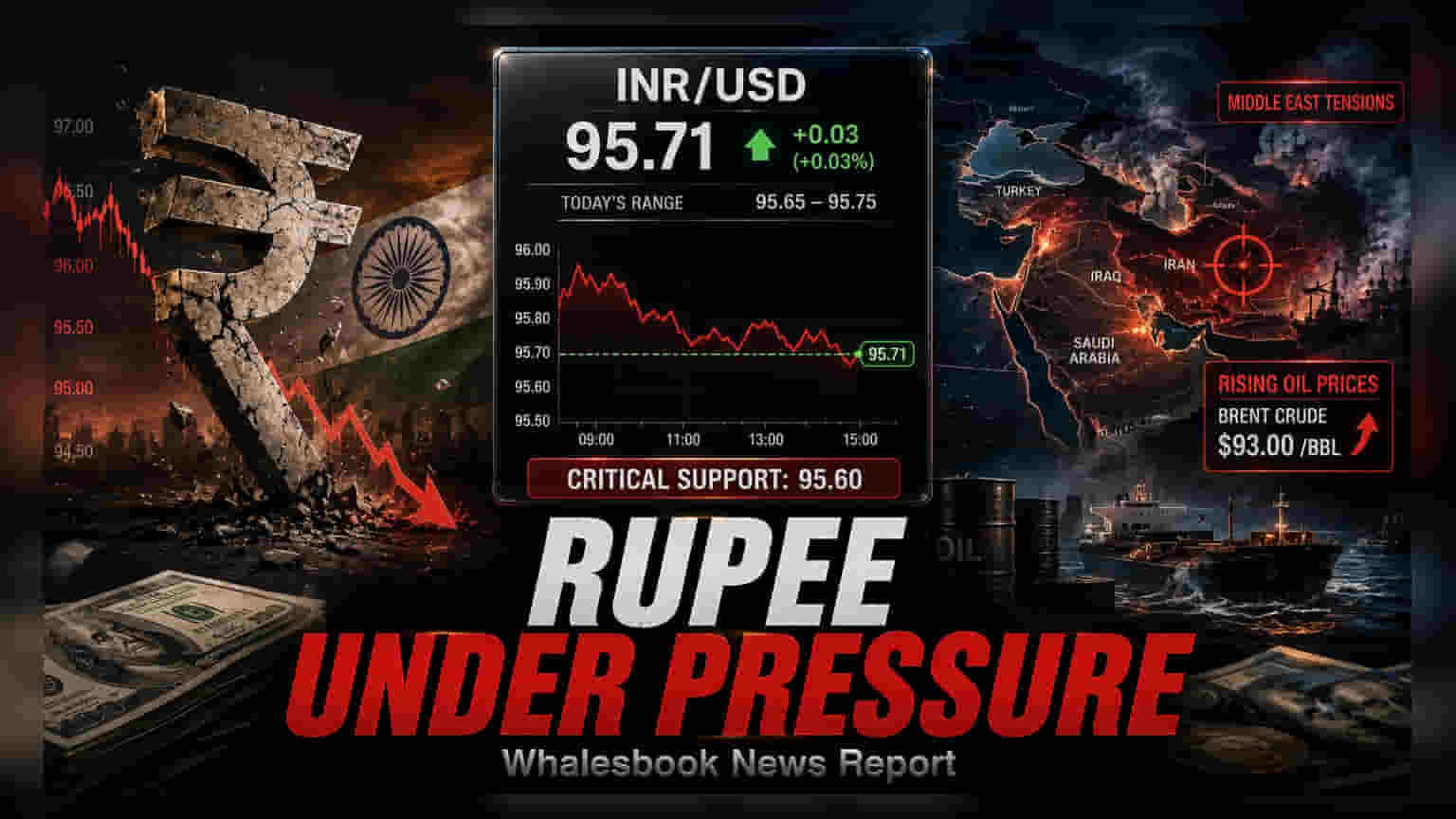
The Indian rupee ended at 95.71 against the dollar on August 21, 2026, marking a 3-paise gain. While a weaker US dollar provided support, rising geopolitical tensions between the US and Iran and elevated crude oil prices limited the currency's upward momentum.
The Indian rupee saw a modest appreciation on Friday, August 21, 2026, closing at 95.71 against the US dollar. This move represented a gain of 3 paise compared to the previous session's close of 95.74. Throughout the trading day, the currency fluctuated between a high of 95.65 and a low of 95.75, reflecting a cautious sentiment in the foreign exchange market.
Currency movement was driven by conflicting global forces. On one side, a softer US dollar index, which tracks the greenback against a basket of six major currencies, provided some relief to the rupee. When the dollar weakens, emerging market currencies often find support. However, this positive influence was largely offset by external economic pressures. Ongoing geopolitical tensions between the United States and Iran have created uncertainty in global markets, particularly affecting energy costs.
Since India relies on imports for roughly 88% of its crude oil requirements, rising global oil prices directly impact the country's import bill and currency stability. Brent crude futures remained elevated near $93 per barrel, a level that continues to pressure the rupee. Investors are closely watching these energy prices, as any significant spike could increase demand for dollars to pay for oil imports, thereby limiting the rupee's ability to gain strength.
On the domestic front, equity markets showed a mixed picture. While the Sensex and Nifty indices ended the day slightly higher, foreign institutional investors have remained sellers in the equity market. Net sales by these investors were recorded at Rs 583.36 crore on the previous day. Sustained selling by foreign investors often puts additional pressure on the rupee, as it indicates capital outflow from the Indian market.
Despite these short-term pressures, the central bank maintains a long-term outlook focused on managing volatility. The Reserve Bank of India, under Governor Sanjay Malhotra, has noted expectations of approximately $80 billion in foreign currency inflows, which could help buffer the currency against external shocks. However, analysts point out that the actual impact of these inflows on the rupee’s strength has remained limited given the current global geopolitical environment.
The near-term outlook for the currency remains tied to how the situation in the Middle East evolves and its subsequent impact on oil prices. Investors may track crude oil price movements, foreign institutional investment flows, and any further updates on US-Iran relations for cues on the rupee's direction.